Alex Lovejoy work email
- Valid
Alex Lovejoy personal email
- Valid
- Valid
- Valid
- Valid
- Valid
- Valid
- Valid
Alex Lovejoy phone numbers
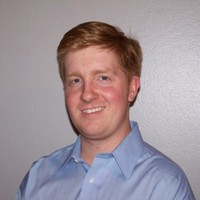
Alex Lovejoy is a Director, Molecular Research at Freenome at Freenome. He possess expertise in molecular biology, western blotting, genomics, high throughput screening, data analysis and 9 more skills.
-
 Director, Molecular ResearchFreenome Dec 2021 - PresentSouth San Francisco, California, Us
 -
Associate Director, Molecular ResearchFreenome Jun 2021 - Dec 2021South San Francisco, California, Us
-
 Sr. ManagerRoche Sequencing Sep 2020 - May 2021Indianapolis, Indiana, UsAs Oncology Applications Lead, I managed a group of assay development scientists to create future NGS assays for oncology diagnostics. Our main project areas included: (1) the development of innovative molecular biology methods to improve existing NGS assays for the detection of circulating nucleic acids, (2) the development of new content to cover additional cancer types and kinds of mutations, and (3) research studies on the utility of ctDNA NGS assays in samples from oncology clinical trials and academic collaborations.
 -
Principal Scientist IiRoche Sequencing Mar 2019 - Aug 2020Indianapolis, Indiana, Us
-
Principal Scientist IRoche Sequencing Mar 2017 - Mar 2019Indianapolis, Indiana, Us
-
Sr. ScientistRoche Sequencing Nov 2015 - Mar 2017Indianapolis, Indiana, Us
-
 Postdoctoral FellowStanford Cancer Institute Jun 2014 - Nov 2015Stanford, Ca, UsPIs: Max Diehn, MD, PhD and Ash Alizadeh, MD, PhDAs a postdoctoral fellow, I worked on CAPP-Seq, a high throughput sequencing-based assay for detection of circulating tumor DNA (ctDNA) in plasma. My work focused largely on technical advances--optimizing the assay to maximize sensitivity of ctDNA detection from clinically relevant sample sizes (typically 2-5 mL of plasma). This work was published here: http://www.nature.com/nbt/journal/v34/n5/full/nbt.3520.htmlIn addition, I worked with patient samples to show clinical use of ctDNA quantification in tracking tumor burden and prediction of recurrence across multiple tumor types. Some of this work was presented in a talk at ASTRO 2015: "Analysis of Circulating Tumor DNA in Esophageal Carcinoma Patients Treated With Chemoradiation Therapy" (http://online.myiwf.com/astro2015/Sessions.aspx?SID=10674), and some was presented in the paper "Early Detection of Molecular Residual Disease in Localized Lung Cancer by Circulating Tumor DNA Profiling": http://cancerdiscovery.aacrjournals.org/content/7/12/1394.long
 -
Postdoctoral ResearcherStanford Cancer Institute Jan 2014 - Jun 2014Stanford, Ca, UsPI: John Boothroyd, PhDPrevious screens identified a defect in asexual differentiation in Toxoplasma gondii due to mutations in a pseudouridine synthase gene. Using techniques I previously developed, we queried the role of pseudouridylation in Toxoplasma development during this fixed-term postdoc.
-
Graduate StudentStanford University Biochemistry Department Sep 2008 - Dec 2013PI: Patrick Brown, MD PhDAs a graduate student in Pat Brown's lab, the overall goal of my work was to identify and characterize modification of mRNAs in yeast. In doing this, I developed a high-throughput sequencing technique which can identify with single-nucleotide precision specific modifications of mRNA. Followup experiments focused on finding the enzymes and motifs necessary for such modifications, and determining the functional consequence of the modifications.I presented my work at local and national conferences, including an invited talk at the Gordon Research Conference on Editing and Modification of RNA and DNA in 2011.TA: BIO189 Biochemistry IIIn winter 2012, I was a TA for Dr. Alex Dunn's Biochemistry II class. Responsibilities included leading a weekly review/help session and grading homework and exams.
-
 TechnicianEmd Millipore Nov 2007 - Jul 2008Burlington, Ma, UsAs a technician at Millipore, I worked on developing and optimizing products related to immunodetection.
 -
Undergraduate ResearcherYale University May 2006 - May 2007PI: Joan Steitz, PhDAs an undergraduate researcher in Joan Steitz's lab, I worked on a biochemical research project related to RNA 3'-end processing. Working closely with the graduate student Kyle Friend, I performed an independent research project and contributed to a publication in Molecular Cell titled “U2 snRNP Binds Intronless Histone pre-mRNAs to Facilitate U7-snRNP-Dependent 3’ End Formation.”
Alex Lovejoy Skills
Alex Lovejoy Education Details
-
 Stanford University School Of MedicineBiochemistry
 -
Yale UniversityMolecular Biophysics And Biochemistry
Frequently Asked Questions about Alex Lovejoy
What company does Alex Lovejoy work for?
Alex Lovejoy works for Freenome
What is Alex Lovejoy's role at the current company?
Alex Lovejoy's current role is Director, Molecular Research at Freenome.
What is Alex Lovejoy's email address?
Alex Lovejoy's email address is af****@****hoo.com
What is Alex Lovejoy's direct phone number?
Alex Lovejoy's direct phone number is +190845*****
What schools did Alex Lovejoy attend?
Alex Lovejoy attended Stanford University School Of Medicine, Yale University.
What skills is Alex Lovejoy known for?
Alex Lovejoy has skills like Molecular Biology, Western Blotting, Genomics, High Throughput Screening, Data Analysis, Sequencing, Yeast, Dna Microarray, R, Perl, Rna, Biochemistry.
Free Chrome Extension
Find emails, phones & company data instantly
Download 750 million emails and 100 million phone numbers
Access emails and phone numbers of over 750 million business users. Instantly download verified profiles using 20+ filters, including location, job title, company, function, and industry.
Start your free trial