
AeroLeads people directory · profile
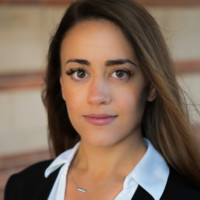
Alexandra Polasko, Ph.D. Email & Phone Number
Postdoctoral Fellow | Urology
at
Stanford University
LinkedIn matched
✓ Verified July 2026
3 data sources
Profile completeness 86%
Current company
Role
Postdoctoral Fellow | Urology
Location
Palo Alto, California, United States
Who is Alexandra Polasko, Ph.D.? Overview
A concise factual answer block for searchers comparing this professional profile.
Quick answer
Alexandra Polasko, Ph.D. is listed as Postdoctoral Fellow | Urology at Stanford University, based in Palo Alto, California, United States. AeroLeads shows a matched LinkedIn profile for Alexandra Polasko, Ph.D..
Alexandra Polasko, Ph.D. previously worked as Postdoctoral Fellow | Division of Oral Biology & Medicine at University Of California, Los Angeles and Graduate Researcher | Civil & Environmental Engineering at Ucla. Alexandra Polasko, Ph.D. holds Doctor Of Philosophy (Ph.D.), Civil And Environmental Engineering, 3.80 from University Of California, Los Angeles.
Company email context
Email format at Stanford University
This section adds company-level context without repeating Alexandra Polasko, Ph.D.'s masked contact details.
Stanford University
Review company-level records connected to Alexandra Polasko, Ph.D. before choosing the right outreach path.
Profile bio
About Alexandra Polasko, Ph.D.
My goal is to conduct urologic research that solves real-world health problems.I am a Postdoctoral Fellow at Stanford University’s School of Medicine in the Department of Urology, working in Dr. James Brooks's lab. My research is focused on understanding the mechanisms behind benign prostate hyperplasia, a common condition that affects nearly 80% of men over eighty. I hold an M.S. and Ph.D. in Civil and Environmental Engineering from UCLA, where I worked under Dr. Shaily Mahendra, and a bachelor's degree from UC Berkeley.Prior to Stanford, I was at UCLA’s School of Dentistry, Oral Biology Division, studying the role of motility as a virulence factor in oral pathogens under Dr. Hung Ton-That. I am also a co-inventor on three patents and was honored with UCLA’s Distinguished Teaching Award for Teaching Assistants in 2021. My career is dedicated to advancing medical science for practical outcomes.
Current workplace
Alexandra Polasko, Ph.D.'s current company
Company context helps verify the profile and gives searchers a useful next step.
7 roles · 18 years
Alexandra Polasko, Ph.D. work experience
A career timeline built from the work history available for this profile.
Postdoctoral Fellow | Urology
Current- Developing and characterizing a patient-derived xenograft (PDX) model of human benign prostate hyperplasia (BPH). To produce the BPH PDX model, fresh prostate tissue will be acquired from patients and implanted at a subrenal site in immunodeficient mice.- Characterizing the role of BMP5, a stromal signature associated with BPH symptom severity and expanding fibroblasts, in a PDX of BPH and the effect of select inhibitors.
Sep 2022 - Present

Postdoctoral Fellow | Division Of Oral Biology & Medicine
• Mitigating the virulence of the oral pathogen and cancer accelerant, Fusobacterium nucleatum, through defining the biosynthesis pathways that generates novel lipopolysaccharide (LPS) structures. Both cell membrane integrity and LPS structures will be characterized using viable F. nucleatum mutants.• Examining the role of F. nucleatum LPS in interspecies interaction, biofilm formation and bacterial virulence with the ultimate goal of aiding the development of diagnostic, preventative, and therapeutic strategies.
Jul 2021 - Sep 2022
Graduate Researcher | Civil & Environmental Engineering
• Constructed an unconventional microbial community comprised of anaerobic (Dehalococcoides mccartyi 195) and aerobic bacteria (Pseudonocardia dioxanivorans CB1190) to remove chlorinated solvent and 1,4-dioxane mixtures over varying redox conditions. Deployed this culture to a field site in situ and successfully removed these recalcitrant pollutants from groundwater.- Inventor on a patent for the application of this culture• Characterized Psuedonocardia dioxanivorans CB1190’s ability to biodegrade the known carcinogen and water pollutant, vinyl chloride. VC incorporation by CB1190 was confirmed via metabolomics of 13C-labeled VC and tracked the production of isotopically labeled amino acids, keto acids, and sugar phosphate molecules.• Prevented pathogenic microbial attachment to surfaces via a novel superhydrophilic coating and successfully demonstrated the application of this material on Foley catheter segments and their ability to resist microbial adhesion.- Inventor on patent for the application of this material, which is now FDA-approved • Developed a multipronged approach for systematic in vitro quantification of catheter-associated biofilms.
Aug 2015 - Jul 2021
Undergraduate Research Assistant
Performed research in Dr. Lisa Alvarez-Cohen’s laboratory, studying an isolated consortium’s capabilities to anaerobically biodegrade trichloroethene (TCE) under various environmental conditions. Studied the effects of sulfate or sulfide on TCE biodegradation by Dehalococcoides consortium. Measured TCE and byproducts of reductive dechlorination using gas chromatography. Identified sulfate and sulfide via ion chromatography as well as measured microbial populations using quantitative polymerase chain reaction (qPCR). Presented results at the American Geophysical Union conference.
Nov 2011 - May 2015

High School Research Assistant
Performed research in Dr. Rosa Krajmalnik-Brown’s laboratory at ASU Biodesign Institute for more than 400 hours. Assisted Ph.D. student with research related to trichloroethylene anaerobic biodegradation. Performed molecular analysis of the microbial community, conducted chemical analyses using gas chromatography and ion chromatography, prepared anaerobic media, set up microcosms in anaerobic glove box, and provided assistance with reactor operation. Presented results at the Arizona Science and Engineering Fair in 2010 and 2011.
2009 - 2011
~2 yrs
High School Research Assistant
Performed research for more than 15 hours per week in Dr. Craig Criddle’s laboratory at Stanford University. Assisted Ph.D. students with research related to the production of polyhydroxybutyrate (PHB) as a biopolymer, which is produced by many bacteria when they have access to surplus carbon but lack an essential nutrient, such as phosphorus. Under these conditions, the bacteria accumulate the carbon and store it as intracellular PHB granules. Commercially, PHB granules have value as plastics or resins, with properties similar to petrochemical plastics. Prepared anaerobic media, measured methane production using gas chromatography and monitored biomass production.
May 2010 - Aug 2010
3 education records
Alexandra Polasko, Ph.D. education
Doctor Of Philosophy (Ph.D.), Civil And Environmental Engineering, 3.80
Master'S Degree, Civil Engineering, 3.80
Bachelor’S Degree, Environmental Science, 3.47
FAQ
Frequently asked questions about Alexandra Polasko, Ph.D.
Quick answers generated from the profile data available on this page.
What company does Alexandra Polasko, Ph.D. work for?
Alexandra Polasko, Ph.D. works for Stanford University.
What is Alexandra Polasko, Ph.D.'s role at Stanford University?
Alexandra Polasko, Ph.D. is listed as Postdoctoral Fellow | Urology at Stanford University.
Where is Alexandra Polasko, Ph.D. based?
Alexandra Polasko, Ph.D. is based in Palo Alto, California, United States while working with Stanford University.
What companies has Alexandra Polasko, Ph.D. worked for?
Alexandra Polasko, Ph.D. has worked for Stanford University, University Of California, Los Angeles, Ucla, Uc Berkeley, and Arizona State University.
How can I contact Alexandra Polasko, Ph.D.?
You can use AeroLeads to view verified contact signals for Alexandra Polasko, Ph.D. at Stanford University, including work email, phone, and LinkedIn data when available.
What schools did Alexandra Polasko, Ph.D. attend?
Alexandra Polasko, Ph.D. holds Doctor Of Philosophy (Ph.D.), Civil And Environmental Engineering, 3.80 from University Of California, Los Angeles.
Find 750M verified contacts
Search by job title, company, industry, location, and seniority. Export verified B2B contact data when you need it.
Start free trial