
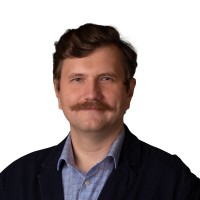
AeroLeads people directory · profile
Anton Sinitskiy Email & Phone Number
Founder and Owner
at
ML LC
1 work email found
@stanford.edu
LinkedIn matched
✓ Verified August 2026
4 data sources
Profile completeness 100%
Current company
Role
Founder and Owner
Location
Cambridge, Massachusetts, United States
Company size
Who is Anton Sinitskiy? Overview
A concise factual answer block for searchers comparing this professional profile.
Quick answer
Anton Sinitskiy is listed as Founder and Owner at ML LC, a with 1 employees, based in Cambridge, Massachusetts, United States. AeroLeads shows a work email signal at stanford.edu and a matched LinkedIn profile for Anton Sinitskiy.
Anton Sinitskiy previously worked as Lecturer at Northeastern University and Founder & Owner at Ml Lc. Anton Sinitskiy holds Doctor Of Philosophy (Phd), Chemistry from University Of Chicago.
Company email context
Email format at ML LC
This section adds company-level context without repeating Anton Sinitskiy's masked contact details.
{first}.{last}@stanford.edu
86% confidence
AeroLeads found 1 current-domain work email signal for Anton Sinitskiy. Compare company email patterns before reaching out.
Profile bio
About Anton Sinitskiy
With a robust expertise uniquely situated at the crossroads of Machine Learning / Artificial Intelligence, Natural Sciences—especially Chemistry—and Drug Design, I am committed to forging innovative paths in scientific discovery. My passion lies in leveraging this multidisciplinary knowledge to create cutting-edge methods and tools that pioneer advancements in the field. Through an analytical approach, driven by a desire to understand and improve the world around us, I am consistently exploring the potential of these intersecting domains to expand our knowledge.
Listed skills include Chemistry, Biophysics, Physics, Science, and 25 others.
Current workplace
Anton Sinitskiy's current company
Company context helps verify the profile and gives searchers a useful next step.
Ml Lc
6 roles
Anton Sinitskiy work experience
A career timeline built from the work history available for this profile.

Lecturer
CurrentTeaching a course entitled “Protein Principles in Biotech”, one of the core courses in the Master’s level Biotechnology Program at Northeastern. A highly practice-oriented program, designed to prepare graduates for success in biotech.
Jan 2024 - Present
Founder & Owner
CurrentConsulting in Chemistry and Machine Learning. I'm the only founder of this LLC company.
May 2023 - Present

Machine Learning Research Scientist
Optimization of chemical compounds and chemical reactions with ML: • I designed, trained and deployed new ML models of various architectures (including, but not limited to: 3D CNN, LSTM/GRU/multi-head-attention-based, FCNN, SVM, RF), and engineered appropriate ML descriptors (quantum-chemistry-, 3D-geometry-, structure-based, etc.). • Carried out projects on various chemical and physico-chemical property predictions: potency (protein-ligand interactions), log D (lipophilicity), pKa (acidity), regioselectivity, reaction yield, etc. • Closely collaborated with project teams to iteratively optimize target properties of drug discovery leads and their synthetic schemes in a computationally guided way.Generative Chemistry: • Developed a new ML model and internalized several models from the literature to efficiently generate high-quality virtual structures. • Worked with project teams to create tailor-made computation workflows. • Hundreds of compounds I suggested were synthesized on four drug design projects, some proved to be highly active.Quantum Chemistry modeling: • Built, optimized and deployed a regioselectivity prediction model, • Explored opportunities for reactivity prediction (in the context of late stage functionalization) based on transition state modeling.Computational infrastructure: • Extensively used Python (PyTorch, scikit-learn, etc.), Bash, SLURM, Git in my work. • Created and maintained Jupyter notebooks so that colleagues without computational background could use our models themselves.Mentored 3 interns: • An undergrad student from U Toronto: a project on potency prediction with ML. • An undergrad student from MIT: generative chemistry. • A grad student from MIT: quantum chemical modeling.
Sep 2019 - May 2023

Postdoc
At Stanford, I developed a deep learning framework for accurate computation of electron densities and energies of organic molecules. Computations with this method are more accurate and take much less time than corresponding DFT calculations. I also initiated and worked on a project on the structure, dynamics and function of NMDA receptors, which exhibit complex allostery and play important roles in learning, memory formation, as well as various neurological disorders. It is difficult to study the structure and function of NMDARs at atomic resolution due to their large size and fast dynamics. Computer simulations offer unique opportunities for studying these receptors.Publications at Stanford:• Sinitskiy, A. V. & Pande, V. S. (2019) Physical machine learning outperforms 'human learning' in Quantum Chemistry. arXiv:1908.00971.• Sinitskiy, A. V. & Pande, V. S. (2018) Deep neural network computes electron densities and energies of a large set of organic molecules faster than Density Functional Theory (DFT). arXiv:1809.02723.• Sinitskiy, A. V. & Pande, V. S. (2018) Computer simulations predict high structural heterogeneity of functional state of NMDA receptors. Submitted. Biophys. J., 115, 841-852.• Sinitskiy, A. V. & Pande, V. S. (2017) Theoretical restrictions on longest implicit timescales in Markov state models of biomolecular dynamics. J. Chem. Phys., 148, 044111.• Sinitskiy, A. V. & Pande, V. S. (2017) Simulated dynamics of glycans on ligand-binding domain of NMDA receptors reveals strong dynamic coupling between glycans and protein core. J. Chem. Theory Comput., 13, 5496-5505.• Sinitskiy, A. V., Stanley, N. H., Hackos, D. H., Hanson, J. E., Sellers, B. D. & Pande, V. S. (2017) Computationally discovered potentiating role of glycans on NMDA receptors. Sci. Rep., 7, 44578.
Nov 2014 - Sep 2019

Graduate Student
At UChicago, I developed new computational tools and methods and applied them to various molecular and biomolecular systems on scales inaccessible to experimental or previously existing computational techniques. My Ph.D. thesis was entitled “Multiscale modeling of large biomolecular systems,” and contained applications to actin filaments and other systems of biological importance.• Sinitskiy, A. V. & Voth, G. A. (2017) Quantum mechanics / coarse-grained molecular mechanics (QM/CG-MM). J. Chem. Phys., 148, 014102.• Madsen, J.*, Sinitskiy, A. V.*, Li, J.* & Voth, G. A. (2017) Highly coarse-grained representation of transmembrane proteins. J. Chem. Theory Comput., 13, 935-944. [* Authors contributed equally]• Hocky, G. M., Baker, J. L., Bradley, M. J., Sinitskiy, A. V., De La Cruz, E. M. & Voth, G. A. (2016) Cations stiffen actin filaments by adhering a key structural element to adjacent subunits. J. Phys. Chem. B, 120, 4558-4567.• Sinitskiy, A. V. & Voth G. A. (2015) A reductionist perspective on quantum statistical mechanics: Coarse-graining of path integrals. J. Chem. Phys., 143, 094104. • Davtyan, A., Dama, J. F., Sinitskiy, A. V. & Voth G. A. (2014) The theory of ultra-coarse-graining. 2. Numerical implementation. J. Chem. Theory Comput., 10, 5265-5275.• Jang, S., Sinitskiy, A. V. & Voth, G. A. (2014) Can the ring polymer molecular dynamics method be interpreted as real time quantum dynamics? J. Chem. Phys., 140, 154103.• Dama, J. F.*, Sinitskiy, A. V.*, McCullagh, M., Weare, J., Roux, B., Dinner, A. R. & Voth, G. A. (2013). The theory of ultra-coarse-graining. 1. General principles. J. Chem. Theory Comput., 9, 2466-2480.• Sinitskiy, A. V. & Voth, G. A. (2013). Coarse-graining of proteins based on elastic network models. Chem. Phys., 422, 165-174.• Sinitskiy, A. V., Saunders, M. G. & Voth, G. A. (2012). Optimal number of coarse-grained sites in different components of large biomolecular complexes. J. Phys. Chem. B, 116, 8363–8374.
Aug 2009 - Oct 2014
Team & coworkers
Colleagues at ML LC
Other employees you can reach at northeastern.edu. View company contacts for 1 employees →
KK
 Karthik Kolla
Colleague at Ml LcGunupur, Odisha, India
View →
KA
Karthik Kolla
Colleague at Ml LcGunupur, Odisha, India
View →
KA
 Ksenia Antonowa
Colleague at Ml LcGreater Boston, United States
View →
MR
Ksenia Antonowa
Colleague at Ml LcGreater Boston, United States
View →
MR
 Mary Rab
Colleague at Ml LcSomerville, Massachusetts, United States
View →
RK
Mary Rab
Colleague at Ml LcSomerville, Massachusetts, United States
View →
RK
 Ruta Kale
Colleague at Ml LcBoston, Massachusetts, United States
View →
AW
Ruta Kale
Colleague at Ml LcBoston, Massachusetts, United States
View →
AW
 Akira Watanabe
Colleague at Ml LcBoston, Massachusetts, United States
View →
NA
Akira Watanabe
Colleague at Ml LcBoston, Massachusetts, United States
View →
NA
 Najiba Akbar
Colleague at Ml LcNew York City Metropolitan Area, United States
View →
EM
Najiba Akbar
Colleague at Ml LcNew York City Metropolitan Area, United States
View →
EM
 Edwin Marengo
Colleague at Ml LcBoston, Massachusetts, United States
View →
AL
Edwin Marengo
Colleague at Ml LcBoston, Massachusetts, United States
View →
AL
 Andy Lubershane
Colleague at Ml LcSouth Portland, Maine, United States
View →
ST
Andy Lubershane
Colleague at Ml LcSouth Portland, Maine, United States
View →
ST
 Shichao Tian
Colleague at Ml LcNew Westminster, British Columbia, Canada
View →
GB
Shichao Tian
Colleague at Ml LcNew Westminster, British Columbia, Canada
View →
GB
 Grayson Bunting
Colleague at Ml LcBoston, Massachusetts, United States
View →
Grayson Bunting
Colleague at Ml LcBoston, Massachusetts, United States
View →
Karthik Kolla
Colleague at Ml LcGunupur, Odisha, India
View →
KA
Ksenia Antonowa
Colleague at Ml LcGreater Boston, United States
View →
MR
Mary Rab
Colleague at Ml LcSomerville, Massachusetts, United States
View →
RK
Ruta Kale
Colleague at Ml LcBoston, Massachusetts, United States
View →
AW
Akira Watanabe
Colleague at Ml LcBoston, Massachusetts, United States
View →
NA
Najiba Akbar
Colleague at Ml LcNew York City Metropolitan Area, United States
View →
EM
Edwin Marengo
Colleague at Ml LcBoston, Massachusetts, United States
View →
AL
Andy Lubershane
Colleague at Ml LcSouth Portland, Maine, United States
View →
ST
Shichao Tian
Colleague at Ml LcNew Westminster, British Columbia, Canada
View →
GB
Grayson Bunting
Colleague at Ml LcBoston, Massachusetts, United States
View →
3 education records
Anton Sinitskiy education
Doctor Of Philosophy (Phd), Chemistry

Cand. Econ. Sci. (2007), M.S. (2004), Economics, Gpa 4.00
Bachelor Of Science (B.S.), Chemistry, Gpa 4.00
FAQ
Frequently asked questions about Anton Sinitskiy
Quick answers generated from the profile data available on this page.
What company does Anton Sinitskiy work for?
Anton Sinitskiy works for ML LC.
What is Anton Sinitskiy's role at ML LC?
Anton Sinitskiy is listed as Founder and Owner at ML LC.
What is Anton Sinitskiy's email address?
AeroLeads has found 1 work email signal at @stanford.edu for Anton Sinitskiy at ML LC.
Where is Anton Sinitskiy based?
Anton Sinitskiy is based in Cambridge, Massachusetts, United States while working with ML LC.
What companies has Anton Sinitskiy worked for?
Anton Sinitskiy has worked for Ml Lc, Northeastern University, Pfizer, Stanford University, and The University Of Chicago.
Who are Anton Sinitskiy's colleagues at ML LC?
Anton Sinitskiy's colleagues at ML LC include Karthik Kolla, Ksenia Antonowa, Mary Rab, Ruta Kale, and Akira Watanabe.
How can I contact Anton Sinitskiy?
You can use AeroLeads to view verified contact signals for Anton Sinitskiy at ML LC, including work email, phone, and LinkedIn data when available.
What schools did Anton Sinitskiy attend?
Anton Sinitskiy holds Doctor Of Philosophy (Phd), Chemistry from University Of Chicago.
What skills is Anton Sinitskiy known for?
Anton Sinitskiy is listed with skills including Chemistry, Biophysics, Physics, Science, Physical Chemistry, Computational Chemistry, Molecular Dynamics, and Biochemistry.
Find 750M verified contacts
Search by job title, company, industry, location, and seniority. Export verified B2B contact data when you need it.
Start free trial