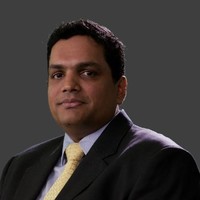
Dr. Avinash
AeroLeads people directory · profile

Dr. Avinash Email & Phone Number

Marie Skłodowska-Curie Fellow
Location: Tirupati Urban, Andhra Pradesh, India 5 work roles 1 school
1 work email found @europa.eu LinkedIn matched
✓ Verified Jul 2026 4 data sources Profile completeness 86%

Contact Signals · 1 work email

Work email a****@europa.eu
LinkedIn Profile matched
3 free lookups remaining · No credit card
Role
Marie Skłodowska-Curie Fellow
Location
Tirupati Urban, Andhra Pradesh, India

Who is Dr. Avinash? Overview

A concise factual answer block for searchers comparing this professional profile.

Quick answer

Dr. Avinash is listed as Marie Skłodowska-Curie Fellow based in Tirupati Urban, Andhra Pradesh, India. AeroLeads shows a work email signal at europa.eu and a matched LinkedIn profile for Dr. Avinash.

Dr. Avinash previously worked as MARIE SKŁODOWSKA-CURIE FELLOW at European Commission and SPECIALIST RESEARCHER at Vilniaus Universitetas / Vilnius University. Dr. Avinash holds Doctor Of Philosophy - Phd, Cellular, Molecular Biology & Biochemistry With Professional Expertise In Neuroscience, Le Grade De Docteur from Inserm - Université De La Réunion.

Company email context

Email format at europa.eu

This section adds company-level context without repeating Dr. Avinash's masked contact details.

*@europa.eu
68% confidence

AeroLeads found 1 current-domain work email signal for Dr. Avinash. Compare company email patterns before reaching out.

Profile bio

About Dr. Avinash

>>>Ever Since the Origin of Human Race, Research & Transfer of Knowledge are what Advancing Human Era. So, I Build Innovative Scientific Models [330,600 Euros] to Re-Search and Scientifically Address Neuropsychiatric and Neurodegenerative Problems of the Human Society ⟨™⟩ - AVINASH>>>>>>>

Listed skills include Research.

5 roles

Dr. Avinash work experience

A career timeline built from the work history available for this profile.

Marie Skłodowska-Curie Fellow

Vilniaus, Lithuania

Marie Skłodowska-Curie Researcher in Neuropsychiatry:Glycobiology of Synaptic Pruning in a Developing Brain [Neuron-Microglia Interactions]: Sialic acids on neuronal glycocalyx acts as spare-me signal and prevents synaptic pruning through Siglec receptors. Aberrant regulation of sialic acid causes neuronal loss and embryonic lethality. It is also becoming evident that sialic acid plays a key role in neurodevelopment, but the cellular and molecular mechanisms by which it regulates neurodevelopment are yet to be explored. This makes sialic acid an ideal candidate to evaluate its role in neurodevelopment. Hence I aimed to interrogate:Project-A] Developmental Profile of Sialidases and Glycocalyx Recognizing Genes: Investigated the developmental profile of novel candidate targets which are first of its kind, in order to examine whether sialidases and glycocalyx recognizing targets are developmentally regulated.Project-B] Glycocalyx-Modifying Sialidase Activity [Live Brain Model - An Innovative Approach]:Implemented fluorescent metabolic labelling to investigate glycocalyx-modifying sialidase activity in CA1 Synapse of the Hippocampus in live brain tissue slices both in young and adult circuitry, by employing a novel model previously built by Avinash.This paved a path to fathom and identify cellular and molecular mechanisms by which glycocalyx composition defines neuron-microglia interactions and thus circuit refinement through synaptic pruning. Operating this grant equipped me with new knowledge and technical skills as well as the scientific, bureaucratic, administrative, social and economic aspects of EU-MSCA grant management.Innovative ideas, results, finesse, knowledge and skills encrypted in this project may accelerate the investigation of synaptic pruning in neurodevelopment; and have tremendous translational value where synaptic pruning is contributing to neuropathology; and are expected to be patentable which may be commercially/ industrially exploited.
Nov 2020 - Mar 2022

Specialist Researcher

Vilniaus, Lithuania

[VU's Specialist Researcher Position Upgraded as Prestigious EU’s Marie Skłodowska-Curie Fellow].Specialist Researcher in Biochemistry: Glycobiology of Synaptic Pruning in a Developing Brain [Neuron-Microglia Interactions]:Identifying neuronal signals that discriminate weak from the stronger synapses are one of the upcoming frontiers in cellular neuroscience. Any undiscriminated recognition of synapses ultimately destined to microglial mediated phagocytosis [Aberrant Synaptic Pruning] leads to various Neurodevelopmental disorders like Autism, Schizophrenia and Epilepsy. Hence, analyzing the role of neuron-microglial interactions defining synaptic pruning was the prime focus of my project, which comprises of: Project-A] Modeling Cerebellum:Validated a novel model towards visualizing synaptic pruned postnatal circuit refinement in the cerebellum. Project-B] Modeling Hippocampus:A custom designed-novel fluorescent metabolic labelling model was built to evaluate glycocalyx-modifying sialidase activity in CA1 synapse of live brain tissue slices, after sketching several ideas and validating various prototypes under rigorous conditions. Altogether this was a whole new expertise for me and even for the lab. Hence a highly detailed protocol was written before conducting actual experiment.Above two projects remain as a Resourceful Models for the current project, upcoming MSCA grant besides the laboratory. Technology employed and results collated through this project facilitated me to decipher and investigate the mechanisms underlying microglial-mediated synaptic pruning, with a spotlight on glycobiology distinguishing between raw & unpruned circuitry with refined & pruned circuit during neurodevelopmental context.

Sep 2019 - Oct 2020

Post-Doctoral Research Associate

Massachusetts, United States

Post-Doctoral Associate in Pulmonary & Critical Care Medicine: Impact of Diabetes and Hyperlipidemia on Host Defence [Host-Pathogen Interactions]: Since multidrug resistant antibiotics are on a high rise, there is a dire need in finding out new therapeutic strategies on host defence mechanisms that influence the outcome of TB aggression. Project-A] Metformin as Host Directed Therapeutic Candidate for Treating Diabetes Aggravating TB: Exploiting one of the U.S FDA approved drugs Metformin, known for its inhibitory effect on hepatic glucose production activated via AMPK pathway was tested for its efficacy to see whether it could control acute and chronic inflammation, bacterial burden, lesion sterilization; besides investigating the antigen specific CD8+ T cell expansion immune response when challenged with highly virulent Erdmann Mycobacterium tuberculosis under hyperglycemic and hyperlipidemic [Triple Trouble] conditions in aerosol model at state-of-the-art BSL-3/ABSL-3 suite was one of the prime focus of my projects.Project-B] Role of RAGE Knockouts during DM-TB Context: Hyperglycemia and hyperlipidemia wear out the functionality of immune cells [macrophages, T-cells and its subsets] which further incapacitate the protective immunity against Mtb infection. Hyperglycemia leads to the accumulation of advanced glycated end products which acts through RAGE receptor [highly implicated in obesity induced diabetic-immunocompromised conditions]. Hence manipulating RAGE will be one interesting idea and evaluating the impact of RAGE deficiency in the context of triple trouble was another focus of my project. Technology employed and data obtained from these projects pushed the knowledge limitations in comprehending the protective potential of host directed therapies besides identifying the immunological and biochemical mechanisms of host-pathogen interactions during TB-DM settings [Pre-Clinical] that should culminate in Clinical trials towards treating Mtb infection.

Apr 2018 - May 2019

Doctorat - Inserm Umr1188-Détroi.

Reunion, France

Doctoral Researcher in Neuroscience: Anti-Inflammatory Properties of Factors Produced by the Fat tissue. Potential Applications in Neuroinflammation and Neurodegeneration [Central - Peripheral Immune System Interactions]: Understanding the nexus between factors secreted by adipose tissue and its potential impact targeting glial cells [microglia, astrocytes] under CNS vulnerability was the prime concern of my thesis, which was composed of:Project-A] Adiponectin, Autotaxin and Resistin expression in neuroinflammation and neurodegeneration: Investigated the nexus between adipocytokines and its potential impact targeting glial cells under CNS vulnerability.Project-B] Autotaxin [ATX] downregulates LPS-induced microglia activation and pro-inflammatory cytokine production:Performed gene overexpression studies to discover ATX’S protective potential over LPS induced microglial activation. Project-C] Role of Adiponectin [ADIPO] on astrocytes under oxidative stress situation:Implemented gene overexpression studies to determine ADIPO’S overexpression over H2O2 induced oxidative stress. Results generated during my doctoral research gave significant scientific production [2 Research, 2 Reviews, 1 Book Chapter] that laid a concrete foundation in establishing nexus between peripheral [fat tissue] & CNS mediated through adipocytokines. Final analysis from my thesis endorsed: A] Peripheral infection will induce a transient inflammatory response in distinct regions of brain that involved inflammation & oxidative stress. B] Autotaxin [ATX] exhibited neuroprotective potential in microglia under inflammatory settings. C] Adiponectin [ADIPO] as well showcased neuroprotective potential in astrocytes under oxidative stress. Technology employed and results generated through these novel models endorse and corroborated our hypothesis that Autotaxin and Adiponectin may play a role in modulation of neuroinflammation by regulating glial activation during neurodegenerative settings.

Apr 2014 - Jun 2015

Doctorant - Geico Ea4516

Reunion, France

[GEICO EA4516 Upgraded as INSERM UMR1188-DéTROI].Thèse de Doctorat: Propriétés Anti-Inflammatoires de Facteurs Produits Par Le Tissu Adipeux - Applications Potentielles dans la Neurodégénérescence.

Apr 2012 - Mar 2014
1 education record

Dr. Avinash education

  • Inserm - Université De La Réunion
    Inserm - Université De La Réunion
    Le Grade De Docteur
FAQ

Frequently asked questions about Dr. Avinash

Quick answers generated from the profile data available on this page.

What is Dr. Avinash's role at their current company?

Dr. Avinash is listed as Marie Skłodowska-Curie Fellow.

What is Dr. Avinash's email address?

AeroLeads has found 1 work email signal at @europa.eu for Dr. Avinash.

Where is Dr. Avinash based?

Dr. Avinash is based in Tirupati Urban, Andhra Pradesh, India.

What companies has Dr. Avinash worked for?

Dr. Avinash has worked for European Commission, Vilniaus Universitetas / Vilnius University, University Of Massachusetts Medical School, Inserm, and Université De La Réunion.

How can I contact Dr. Avinash?

You can use AeroLeads to view verified contact signals for Dr. Avinash, including work email, phone, and LinkedIn data when available.

What schools did Dr. Avinash attend?

Dr. Avinash holds Doctor Of Philosophy - Phd, Cellular, Molecular Biology & Biochemistry With Professional Expertise In Neuroscience, Le Grade De Docteur from Inserm - Université De La Réunion.

What skills is Dr. Avinash known for?

Dr. Avinash is listed with skills including Research.

Find 750M verified contacts

Search by job title, company, industry, location, and seniority. Export verified B2B contact data when you need it.

People with similar names

Check these profiles if this is not the Dr. Avinash you were looking for.

View similar profiles