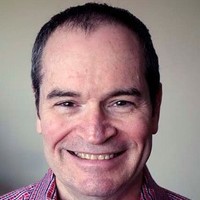
I am an engineer with a passion for solving problems quickly and well. I studied electrical engineering at MIT, graduating in 1975, and I have been programming computers since 1968. My career has paralleled the computer industry since then. I have written programs in assembly language, Basic, FORTRAN, C/C++, Perl, and SQL on supercomputers, microcomputers, minicomputers, embedded processors, and all flavors of the IBM PC since the 1984 PC/XT. I've displayed and cleaned research data for NASA, created inventory control applications, done process control, built real-time systems, and written applications and device drivers for DOS and Windows. I've designed graphics generation hardware, and built combined software/hardware systems for number theory research. I've created signal processing hardware for improving video editing and post-production. I've built strong cryptography into casino slot machines.For the last ten years I've been in the finance industry. Working in both Windows and Linux, I built tools for managing hedge funds, including implementing mathematical models, performing LP/QP optimization and backtesting, account reconciliation, risk management, and performance attribution. I've built heuristics for finding errors in financial data, and I've done statistical analysis on terabytes of that data. I have learned to make Microsoft Excel do just about anything through the creation of VBA macros and C++ DLL extensions. I have created C# CLR routines to give Microsoft SQL Server capabilities that it just can't do in SQL.As technologies come and go, as problems that once seemed impossibly difficult transition into a matter of routine, I continually absorb new knowledge and use it to create solutions for new problems that come with those technologies.
-
Chief Technology OfficerPhasecapital Lp Jan 2017 - Jan 2018Greater New York City AreaI joined PhaseCapital as part of a significant reorganization. A new CEO and a new Chief Investment Officer came on board, and a short time later the company moved its offices from Boston to Manhattan. A number of senior developers left around that time. When I came on board the company's data center consisted of virtualized servers running on leased HP clusters.My challenge was to build a modernized and more powerful data center on Amazon Web Services, transfer the existing functionality to the new system, securely decommission the old data center, design and implement a more scalable architecture, transfer functionality to that new architecture, set up the corporate infrastructure in our new offices, and do all this without any interruption to client services.Interesting times.
-
Vice President, Quantitative AnalysisAlliancebernstein Apr 2006 - Feb 2016My work at AB would best be described, I think, with a Venn diagram. The various overlapping areas included quantitative analysis, tool development, risk management, performance attribution, and -- to be blunt -- putting out brush fires.Managing multi-asset portfolios means doing a lot of analysis on a daily basis, and anybody who has ever been involved in that arena will roll their eyes in exasperated agreement when I say that a lot of the work has involved building tools and heuristics and techniques for making sure that the megabytes of data that we absorbed every day -- data on holdings, on transactions, on individual securities -- didn't contain any errors significant enough to skew the calculations.We lived and died by MSSQL Server, and I was heavily involved in getting daily and historical data into the database, creating the SQL queries for managing and accessing that data, creating the tools for analyzing the data, creating additional tools for processing the data for portfolio management, risk management, and performance attribution, and creating yet more tools for presenting that information, both in broad and in in-depth detail, for portfolio management purposes. On a daily basis I created SQL queries, wrote C++ programs, wrote occasional Perl scripts, created seemingly-endless Excel spreadsheets (which involved many supporting VBA macros and C++ DLLs), and performed last-minute "We have a potential client coming in this afternoon!" analyses (which inevitably led to even more Excel spreadsheets).This work allowed me to use my computer systems and computer programming skills, and provided a tremendous opportunity to learn a lot about finance and math. It was a great experience with great people, and I'm glad I worked there. -
PresidentDubner International, Inc. Jan 1993 - Apr 2006When I moved on from Dubner Computer Systems, I took the opportunity to form a company that supplied products to the video post-production industry. In particular, we created the Scene Stealer, a videotape logging system built around a video scene-change detector that plugged into PC-compatible computers.We also did engineering consulting, involving both hardware design and software development. Jobs that come to mind include things like helping out with analysis of video captured by the US Navy's Surface Warfare Laboratory during whole-vessel blast shock testing. (That was fun. I only wish I could have seen the test itself.)
-
Consulting EngineerBally Technologies 1999 - 2006I consulted to Bally Gaming and Systems, whose primary product was casino slot machine systems. Our major project involved transitioning Bally systems to an embedded Windows architecture from their existing proprietary hardware. I created a number of USB gadgets that acted as bridges between the off-the-shelf CPU boards and the extensive hardware in the slot machines. I did the embedded programming on those gadgets, wrote the Windows device drivers for them, and developed application level software to operate those gadgets. In order to protect the software environment of the slot machines from both inadvertent and malicious corruption, I developed strong cryptographic techniques for protecting the the entire software chain, from the board-resident BIOS up through the highest level application software. An engineering job I remember with great fondness came when Bally redesigned the spinning reels for one of those machines. The mass and diameter of the reel changed enough to render useless the existing stepper motor acceleration curves. By building test jigs and measuring the system characteristics I was able to calculate the moment of inertia of the new reel and the restoring force of the new stepper motor. With those figures I was able to build a mathematical model of the new system and create a simulator for it, and with that in hand I was able to rigorously construct the new acceleration curves. -
Vp EngineeringDubner/Gvg 1971 - 1992This was a long run at a great company. A lot of good memories, and a lot of good friends. And it was run by a great guy: Harvey Dubner, my dad.The early 1970s were the consulting years. Dubner did a lot of work for a lot of companies. ABC Television was a standout, for whom we built a number of control systems and, very especially the election coverage system (which was also used, with surprisingly minor changes to the software, for covering college football.) Technicon looms large as well; they built automated blood analysis equipment. They hired us to do the transition from the electromechanical version (controlled by cam-operated microswitches) to computer control using a newfangled thing called a microprocessor built by some little company named Intel. As a college student, and right out of college, I got to play a supporting role in a lot of those efforts.The late 1970s into the early 1980s were the CBG years. ABC asked us to build a "Color Background Generator" for election coverage; the hardware and software we designed turned out to be much more powerful than that, and it became the remarkably successful and misleadingly-named CBG "Character/Background Generator." It was actually a full-fledged real-time graphics system made possible by very clever hardware and software design that got the most out of the relatively limited processing power and memory size that was available at that time. Along the way it earned a couple of technical Emmy awards.The mid 1980s into the early 1990s were the Grass Valley years. The purchase of Dubner by GVG gave them a video graphics generation capability to complement their world-class line of video processing equipment. During this period, I was the principal hardware design engineer of much of Dubner's product line. I was the lead engineer for the 5K, 10K, 20K, 30K, and the Graphics Factory graphics generators, among other things.
Bob Dubner Skills
Bob Dubner Education Details
-
Electrical Engineering
Frequently Asked Questions about Bob Dubner
What is Bob Dubner's role at the current company?
Bob Dubner's current role is Software Architect at Symas Corporation.
What schools did Bob Dubner attend?
Bob Dubner attended Massachusetts Institute Of Technology, Albert Einstein College Of Medicine Of Yeshiva University.
What skills is Bob Dubner known for?
Bob Dubner has skills like C++, Software Development, Sql, Project Management, Alternative Investments, Quantitative Analytics, System Design, Embedded Systems, Engineering, Software Design, Numerical Analysis, Testing.
Not the Bob Dubner you were looking for?
-
-
1yahoo.com
Free Chrome Extension
Find emails, phones & company data instantly
Aero Online
Your AI prospecting assistant
Select data to include:
0 records × $0.02 per record
Download 750 million emails and 100 million phone numbers
Access emails and phone numbers of over 750 million business users. Instantly download verified profiles using 20+ filters, including location, job title, company, function, and industry.
Start your free trial