
AeroLeads people directory · profile
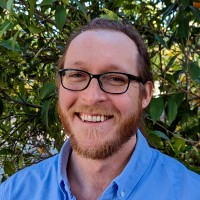
Bennett Widyolar, Ph.D. Email & Phone Number
Sr Thermal Mechanical Engineer
at
Raytheon
LinkedIn matched
✓ Verified July 2026
3 data sources
Profile completeness 86%
Current company
Role
Sr Thermal Mechanical Engineer
Location
Tucson, Arizona, United States
Company size
Who is Bennett Widyolar, Ph.D.? Overview
A concise factual answer block for searchers comparing this professional profile.
Quick answer
Bennett Widyolar, Ph.D. is listed as Sr Thermal Mechanical Engineer at Raytheon, a with 118 employees, based in Tucson, Arizona, United States. AeroLeads shows a matched LinkedIn profile for Bennett Widyolar, Ph.D..
Bennett Widyolar, Ph.D. previously worked as Chief Technology Officer at Winston Cone Optics and Assistant Project Scientist at University Of California, Merced. Bennett Widyolar, Ph.D. holds Doctor Of Philosophy (Phd), Environmental Systems from University Of California, Merced.
Company email context
Email format at Raytheon
This section adds company-level context without repeating Bennett Widyolar, Ph.D.'s masked contact details.
Raytheon
Review company-level records connected to Bennett Widyolar, Ph.D. before choosing the right outreach path.
Profile bio
About Bennett Widyolar, Ph.D.
Bennett Widyolar, Ph.D. is a Sr Thermal Mechanical Engineer at Raytheon.
Current workplace
Bennett Widyolar, Ph.D.'s current company
Company context helps verify the profile and gives searchers a useful next step.
Raytheon
8 roles · 13 years
Bennett Widyolar, Ph.D. work experience
A career timeline built from the work history available for this profile.

Sr Thermal Mechanical Engineer

Sr Thermal Mechanical Engineer

Chief Technology Officer
Developed a novel asymmetric nonimaging optical design which "collapsed" the traditionally symmetric compound parabolic concentrator into an equivalent design with a flat, horizontal aperture. The flat horizontal aperture prevents self-shading, eliminating the need for row-to-row spacing and allowing collectors to be installed adjacent to one another, maximizing land-use efficiency. This also minimizes solar field cost (reducing total length of pipe, insulation, jacketing, and volume of heat transfer fluid) and maximizes solar field efficiency (reduces unnecessary heat losses and thermal mass allowing the system to reach operating temperatures faster).Fabricated 6-tube, 5 m2 prototype and performed one full year (2022) of performance testing while operating at approximately 100 C and generating low-pressure (atmospheric) steam. Performed comparitive testing between collectors with evacuated receiver tubes and those which had failed and lost vacuum. Also performed stagnation testing, demonstrating 300+ C stagnation.Subsequently fabricated and installed a 50 m2 pilot array with automatic temperature control using a controlled air-fluid heat exchanger. Developed hot water storage system and arduino-based PLC controller with HMI interface, successfully load-shifted collected solar energy with control valves and recirculation loop, delivered constant 185 F, 24 hours a day, over 3-month period.Designed, fabricated, and installed a 91 m2 solar thermal system on a local dairy which raises 1,000 gallons of hot water from 70F to 180F each day, prior to entering the dairy's hot water system where it is used for Clean-in-place sanitation of milking equipment and tanks. Performed thermal energy audit of dairy hot water system, proposed and implemented recommendations which lowered client’s fuel consumption by 50%.
Jul 2021 - Jul 2023

Assistant Project Scientist
Managed two R&D grant projects through COVID.1) Developed a novel "seagull" nonimaging optical concentrator using MATLAB which more than doubled the concentration ratio from a commercial solar parabolic trough (from 23X to 50X). Verified optical performance using LightTools. Procured a SkyFuel SkyTrough DSP module and assembled and installed it at UC Merced's Castle Research Facility. Secured civil, structural, and electrical stamped engineering drawings. Built multiple 4-meter-long receiver prototypes, with selectively-coated absorber tubes, secondary reflector optics, and glass enclosures with custom-made end-caps with bellows and vacuum ports. Experimentally tested receiver tubes under high-vacuum (10e-4 mbar) at high temperatures with receiver tube maintained at 650 C for over 100 continuous hours, measured thermal emissivity of selective coating and minimal degradation over test. Experimentally verified optical performance on-sun.2) Developed a low-cost solar thermal collector using a selectively-coated aluminum minichannel absorber and a nonimaging optical reflector applied onto the outside of an evacuated glass tube. Fabricated and assembled multiple prototypes (spray-silvered) and tested performance up to 120 C using RhoGuard multi-metal (aluminum-safe) propylene glycol. Assembled a 27 m2 solar field of 240 tubes and tested array-level performance up to 120 C, demonstrating potential to achieve a levelized cost of heat of 1.5 cents per kWh at these temperatures over a 20 year lifetime.
Dec 2019 - Jun 2021
Postdoctoral Researcher
Worked on a combined heat and power (CHP) solar collector, a hybrid combination of photovoltaic and thermal (PV/T) systems. We cut interdigited back-contact Sunpower solar cells into strips, soldered them into 13-cell strings, and applied them to both the top and bottom of an aluminum minichannel, separated by a double-sided silicone adhesive tape. The bottom half-cylinder exterior was silver-coated, creating a nonimaging optical reflector which directed sunlight to the bottom string of solar cells. These solar cells generated electricity from incident sunlight. Energy which was not converted to electricity caused the solar cells to heat up, and this thermal energy was captured by circulating a mixture of propylene glycol and water through the minichannels. Together, the collector operated with a 57% solar-to-thermal efficiency and a simultaneous 12% solar-to-electrical efficiency for a combined efficiency of almost 70% at ambient temperatures. The collector reached a maximum (stagnation) temperature of ~ 80 C.Also worked on solar thermal evaporation of wastewater, using a 45 m2 array of compound parabolic concentrators and an ENCON thermal evaporator.
Dec 2018 - Dec 2019
Phd Graduate Student
Worked on a Spectral Beam Splitting (SBS) high temperature hybrid photovoltaic / thermal solar system funded by the ARPA-E FOCUS program. Designed a compound parabolic concentrator (CPC) secondary optic to further concentrate light from a 45-degree rim angle primary parabolic trough. The secondary CPC was coated with dual junction InGaP/GaAs solar cells to generate electricity. Photons which were unused were re-directed by the back-reflector behind the cells toward the central thermal receiver, which was selectively coated to maximize absorption of photons in the solar spectrum and minimize thermal re-radiation. Optical performance was measured by testing the receivers on-sun using water as the heat transfer fluid. We subsequently tested the system experimentally, on-sun, up to 650 C, using a particulate-based heat transfer fluid developed by the Gas Technology Institute.
May 2013 - May 2018
Tech Transfer Consultant
Travelled to Ulaanbaatar, Mongolia to install two pilot solar thermal systems. The first was on the roof of Mongolia National University (MNU), the second was at a Ger resort in the outskirts of the city.
2014 - 2015
~1 yr
Team & coworkers
Colleagues at Raytheon
Other employees you can reach at raytheon.com. View company contacts for 118 employees →
DS
 Douglas Silverman
Colleague at RaytheonUnited States
View →
JM
Douglas Silverman
Colleague at RaytheonUnited States
View →
JM
 Janet Mccarthy
Colleague at RaytheonBillerica, Massachusetts, United States
View →
DM
Janet Mccarthy
Colleague at RaytheonBillerica, Massachusetts, United States
View →
DM
 Dan Morgan
Colleague at RaytheonLittleton, Colorado, United States
View →
MO
Dan Morgan
Colleague at RaytheonLittleton, Colorado, United States
View →
MO
 Martin Oesterle
Colleague at RaytheonSahuarita, Arizona, United States
View →
RS
Martin Oesterle
Colleague at RaytheonSahuarita, Arizona, United States
View →
RS
 Richard Song
Colleague at RaytheonSouth Korea, Korea, Republic Of
View →
PN
Richard Song
Colleague at RaytheonSouth Korea, Korea, Republic Of
View →
PN
 Paul Nichols
Colleague at RaytheonBurlington, Massachusetts, United States
View →
MA
Paul Nichols
Colleague at RaytheonBurlington, Massachusetts, United States
View →
MA
 Mudasar Ali
Colleague at RaytheonPakistan
View →
DT
Mudasar Ali
Colleague at RaytheonPakistan
View →
DT
 Dan Tom
Colleague at RaytheonFort Wayne, Indiana, United States
View →
MN
Dan Tom
Colleague at RaytheonFort Wayne, Indiana, United States
View →
MN
 Miles North
Colleague at RaytheonGreater Indianapolis, United States
View →
HG
Miles North
Colleague at RaytheonGreater Indianapolis, United States
View →
HG
 Hillary Goldberg
Colleague at RaytheonQueen Creek, Arizona, United States
View →
Hillary Goldberg
Colleague at RaytheonQueen Creek, Arizona, United States
View →
Douglas Silverman
Colleague at RaytheonUnited States
View →
JM
Janet Mccarthy
Colleague at RaytheonBillerica, Massachusetts, United States
View →
DM
Dan Morgan
Colleague at RaytheonLittleton, Colorado, United States
View →
MO
Martin Oesterle
Colleague at RaytheonSahuarita, Arizona, United States
View →
RS
Richard Song
Colleague at RaytheonSouth Korea, Korea, Republic Of
View →
PN
Paul Nichols
Colleague at RaytheonBurlington, Massachusetts, United States
View →
MA
Mudasar Ali
Colleague at RaytheonPakistan
View →
DT
Dan Tom
Colleague at RaytheonFort Wayne, Indiana, United States
View →
MN
Miles North
Colleague at RaytheonGreater Indianapolis, United States
View →
HG
Hillary Goldberg
Colleague at RaytheonQueen Creek, Arizona, United States
View →
4 education records
Bennett Widyolar, Ph.D. education
Doctor Of Philosophy (Phd), Environmental Systems
University Of California, Merced
Master'S Degree, Mechanical Engineering
University Of California, Merced
Bachelor Of Applied Science (B.A.Sc.), Environmental Engineering
University Of California, Merced
Education record
University High School, Irvine Ca
FAQ
Frequently asked questions about Bennett Widyolar, Ph.D.
Quick answers generated from the profile data available on this page.
What company does Bennett Widyolar, Ph.D. work for?
Bennett Widyolar, Ph.D. works for Raytheon.
What is Bennett Widyolar, Ph.D.'s role at Raytheon?
Bennett Widyolar, Ph.D. is listed as Sr Thermal Mechanical Engineer at Raytheon.
Where is Bennett Widyolar, Ph.D. based?
Bennett Widyolar, Ph.D. is based in Tucson, Arizona, United States while working with Raytheon.
What companies has Bennett Widyolar, Ph.D. worked for?
Bennett Widyolar, Ph.D. has worked for Raytheon, Winston Cone Optics, University Of California, Merced, and Uc Solar.
Who are Bennett Widyolar, Ph.D.'s colleagues at Raytheon?
Bennett Widyolar, Ph.D.'s colleagues at Raytheon include Douglas Silverman, Janet Mccarthy, Dan Morgan, Martin Oesterle, and Richard Song.
How can I contact Bennett Widyolar, Ph.D.?
You can use AeroLeads to view verified contact signals for Bennett Widyolar, Ph.D. at Raytheon, including work email, phone, and LinkedIn data when available.
What schools did Bennett Widyolar, Ph.D. attend?
Bennett Widyolar, Ph.D. holds Doctor Of Philosophy (Phd), Environmental Systems from University Of California, Merced.
Find 750M verified contacts
Search by job title, company, industry, location, and seniority. Export verified B2B contact data when you need it.
Start free trial