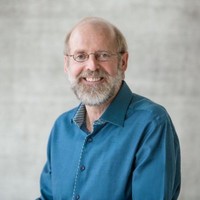
I have, in recent years, analyzed human thought at a level that now provides a more careful, more disciplined approach to strategic planning. One of my central concerns involves finding better ways to address the challenges of the human future. Yet, these new modes of strategic thought that I’ve developed are equally relevant in the corporate world, and in the life of the individual, and I love sharing and comparing insights with anyone who is ready to think at this new level and help build a better future.My work on challenges of the human future starts with concerns about a “crisis of complexity” that we face as society struggles to address the challenges of the Anthropocene (https://carlpabo.com/2020/01/30/civilization-and-the-complexity-trap/). There’s a dangerous mismatch between the capacity of the human mind and the complexity of the modern world, and this only gets amplified in an age of AI. This complexity crisis is particularly dangerous for government leaders and policymakers. New approaches are desperately needed, since — under current conditions — it’s almost impossible for governments to develop and implement policies that can effectively address the challenges of the Anthropocene. My current work explores how rapid developments in AI raise the stakes: There will be ways in which AI can help us deal with complexity. Yet — at the same time — AI introduces serious new challenges for society and new risks for democratic governance, and we must act quickly to ensure a livable human future.I had, prior to this work on thought and the human future, spent several decades doing research on the structure and design of DNA-binding proteins, making fundamental contributions to the field and getting elected to the National Academy of Sciences and to the American Academy of Arts and Sciences. Yet in 2001, I decided to resign my positions as a tenured professor at MIT and as an investigator at the Howard Hughes Medical Institute so as to look at some critical questions about the power and limits of human thought. After a decade of studying thought, I came to see the existential risk posed by the crisis of complexity now facing humanity. I’ve since dedicated my life to addressing these challenges and am eager to work with other, like-minded individuals and groups seeking to address the challenges of the Anthropocene.