
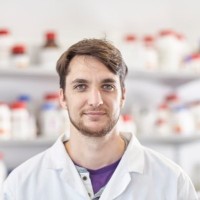
AeroLeads people directory · profile
Corin Liddle Email & Phone Number
Experimental Officer of Light Microscopy
at
University of Exeter
1 work email found
@hw.ac.uk
LinkedIn matched
✓ Verified July 2026
4 data sources
Profile completeness 100%
Current company
Role
Experimental Officer of Light Microscopy
Location
Exeter, England, United Kingdom
Company size
Who is Corin Liddle? Overview
A concise factual answer block for searchers comparing this professional profile.
Quick answer
Corin Liddle is listed as Experimental Officer of Light Microscopy at University of Exeter, a with 10234 employees, based in Exeter, England, United Kingdom. AeroLeads shows a work email signal at hw.ac.uk and a matched LinkedIn profile for Corin Liddle.
Corin Liddle previously worked as Research Fellow at University Of Exeter and The effects of freshwater environmental processes on waterborne silver nanomaterials fate & exposure at Heriot-Watt University. Corin Liddle holds Doctor Of Philosophy (Ph.D.), Environmental Science/Biology from Heriot-Watt University.
Company email context
Email format at University of Exeter
This section adds company-level context without repeating Corin Liddle's masked contact details.
cliddle@hw.ac.uk
76% confidence
AeroLeads found 1 current-domain work email signal for Corin Liddle. Compare company email patterns before reaching out.
Profile bio
About Corin Liddle
After obtaining a degree in Environmental Biology at Plymouth University, I worked as a research assistant at the Ecotoxicology Research & Innovation Centre (ERIC; part of Professor Richard Handy's lab), Plymouth University, where I developed my use of basic microscopy while imaging zebrafish.Subsequently, I undertook my PhD research (within Professor Teresa Fernandes's and Professor Theodore B Henry's labs) at Heriot-Watt University, Edinburgh, where I studied the fate and bioavailability of silver nanomaterials within freshwater systems (AgNM). Then I worked as a research fellow at Exeter University (within Professor Tamara Galloway's and Professor Charles Tyler's labs), where I led research investigating the interaction and transfer of nanoplastics within a simple food web. I extensively applied fluorescence and confocal imaging, image quantitation and processing techniques during this project.Since February 2020, I have led the light microscopy applications within Exeter's Bioimaging Centre. Over the last few years, my responsibilities have expanded within Exeter Bioimaging Centre. I now also lead Bioimagings light microscopy teaching responsibilities and lead the facility's developments in advanced light microscopy modalities, such as: Structured illumination microscopy (SIM), fluorescence lifetime imaging (FLIM & FLIM-FRET)), and fluorescence correlation microscopy (FCS & FCCS), single-molecule localisation microscopy (SMLM; dSTORM, DNA-PAINT and PALM), photostimulation and ablation and lightsheet and two-photon applications. I come from a diverse educational background and am interested in many areas of society. I was born on a farm and have worked on farms from a young age. Being involved in farming has exposed me to the complexities of anthropogenic impacts and our consequential interactions with the environment. Originally, this awareness and a desire to enhance humanity's interface with our biosphere led me to study Environmental Biology. Crafts and music have always been a hobby; the creativity involved in these arts has aided me in developing many transferable skills, which have proved helpful in the lab.
Listed skills include Environmental Science, Research, Molecular Biology, Data Analysis, and 22 others.
Current workplace
Corin Liddle's current company
Company context helps verify the profile and gives searchers a useful next step.
University Of Exeter
7 roles · 18 years
Corin Liddle work experience
A career timeline built from the work history available for this profile.
Experimental Officer Of Light Microscopy
I am a research technical professional with expertise in environmental biology and light microscopy, specialising in widefield, confocal, light-sheet, 2-photon, SMLM, SIM and FCS techniques. Since 2020, I have led microscopy teaching and imaging applications at the University of Exeter's Bioimaging Centre. My background includes a PhD from Heriot-Watt University, focusing on silver nanomaterials in freshwater, and postdoctoral work on nanoplastics in aquatic systems. I have collaborated on… Show more I am a research technical professional with expertise in environmental biology and light microscopy, specialising in widefield, confocal, light-sheet, 2-photon, SMLM, SIM and FCS techniques. Since 2020, I have led microscopy teaching and imaging applications at the University of Exeter's Bioimaging Centre. My background includes a PhD from Heriot-Watt University, focusing on silver nanomaterials in freshwater, and postdoctoral work on nanoplastics in aquatic systems. I have collaborated on interdisciplinary research across neurodegenerative diseases, cancer biology, and more, resulting in co-authored publications. Additionally, I lead an MSc module on advanced light microscopy, demonstrating my commitment to research and education. Show less
Research Fellow
The aim of this collaborative project was to understand how environmental transformations changed the absolute and relative reactivity, bioavailability, and toxicity of nanomaterials with different starting characteristics, specifically over time, in different UK-relevant environmental (water, sediment, soil) conditions and at realistic exposure concentrations. Our integrated workplan was designed to provide a robust test of our overall hypothesis that transformations prior to, during, and… Show more The aim of this collaborative project was to understand how environmental transformations changed the absolute and relative reactivity, bioavailability, and toxicity of nanomaterials with different starting characteristics, specifically over time, in different UK-relevant environmental (water, sediment, soil) conditions and at realistic exposure concentrations. Our integrated workplan was designed to provide a robust test of our overall hypothesis that transformations prior to, during, and following environmental release produced NMs with less reactive and convergent characteristics and toxicities as compared to pristine NMs of similar core compositions. Show less
Apr 2016 - Oct 2018

The Effects Of Freshwater Environmental Processes On Waterborne Silver Nanomaterials Fate & Exposure
Nanotechnology is involved in the production of many mainstream consumer products, as well as industrial processes and medicine. Given the widespread use of nanomaterials (NM) in many applications their release (whether accidental or intentional) into the environment is inevitable. At this point it is still unclear where NMs will end up in the environment, and how much of threat they may pose. My project aims to provide a comprehensive study on the assessment of the fate and toxicity of Ag NMs… Show more Nanotechnology is involved in the production of many mainstream consumer products, as well as industrial processes and medicine. Given the widespread use of nanomaterials (NM) in many applications their release (whether accidental or intentional) into the environment is inevitable. At this point it is still unclear where NMs will end up in the environment, and how much of threat they may pose. My project aims to provide a comprehensive study on the assessment of the fate and toxicity of Ag NMs in simulated aquatic sedimentary systems. In order to address this research involves practical experiments assessing, the aggregation state and removal rates of specific nanomaterials in “natural” hydraulic-sediment-ecology systems. This research also involves conducting toxicity and bioavailability assessments of NM, with the aim of investigating the effects environmental aging processes have on on aqueous phase exposure. Show less
2013 - Jan 2016

Ecotoxicology Research & Innovation Centre (Eric) Research Assistant
MARINA Project - Managing Risks of NanomaterialsOVERVIEW: The aim of MARINA is to develop and validate the Risk Management Methods for Nanomaterials. To do this, MARINA will address the four central themes for the Risk Assessment and Management of Nanomaterials: Materials, Exposure, Hazard, and Risk.Within this post, I continued work started during my placement:-Furthering method development-lab work, data collection-data analysis-report writing
Oct 2012 - Jan 2013
Research Assistant Placement
Research assistant, MARINA (managing risks of nanoparticles) role: During this post the aims were: 1. Carry out existing OECD test 210 Zebra Fish Embryo and Early life stage test and critique and evaluate its suitability for assessing the toxicity of nanoparticles. 2. Revise and develop solutions to issues that arose in step one and retest materials. The work was done on manufactured nanoparticle (MNPs) TiO2 and Ag nanoparticles provided by the Joint Research Centre (JRC). The main issues… Show more Research assistant, MARINA (managing risks of nanoparticles) role: During this post the aims were: 1. Carry out existing OECD test 210 Zebra Fish Embryo and Early life stage test and critique and evaluate its suitability for assessing the toxicity of nanoparticles. 2. Revise and develop solutions to issues that arose in step one and retest materials. The work was done on manufactured nanoparticle (MNPs) TiO2 and Ag nanoparticles provided by the Joint Research Centre (JRC). The main issues encountered that nullified tests conforming to OECD guidelines were: issues maintaining nanoparticle exposures concentrations. Within this work, the use of sublethal morphometric endpoints, were also investigated. The results were analysed and internal and external reports were written for the MARINA project, which I contributed to. Ongoing work continues, designing and making prototype mixing chambers, intended for maintaining nanoparticle concentrations during toxicity tests. Show less
May 2012 - Sep 2012
Environmental Biology (Hons)
2009 - 2012
~3 yrs
Team & coworkers
Colleagues at University of Exeter
Other employees you can reach at exeter.ac.uk. View company contacts for 10234 employees →
CW
 Chee Wong
Colleague at University Of ExeterGreater Exeter Area, United Kingdom
View →
DW
Chee Wong
Colleague at University Of ExeterGreater Exeter Area, United Kingdom
View →
DW
 Daniel Williams
Colleague at University Of ExeterExeter, England, United Kingdom
View →
AZ
Daniel Williams
Colleague at University Of ExeterExeter, England, United Kingdom
View →
AZ
 Andrei Zhirnov
Colleague at University Of ExeterExeter, England, United Kingdom
View →
JS
Andrei Zhirnov
Colleague at University Of ExeterExeter, England, United Kingdom
View →
JS
 Joanne Smith
Colleague at University Of ExeterExeter, England, United Kingdom
View →
TW
Joanne Smith
Colleague at University Of ExeterExeter, England, United Kingdom
View →
TW
 Timothy Wilkinson
Colleague at University Of ExeterGreater Exeter Area, United Kingdom
View →
SP
Timothy Wilkinson
Colleague at University Of ExeterGreater Exeter Area, United Kingdom
View →
SP
 Srikanth Peddireddy
Colleague at University Of ExeterUnited Kingdom
View →
KB
Srikanth Peddireddy
Colleague at University Of ExeterUnited Kingdom
View →
KB
 Katie Briggs
Colleague at University Of ExeterNewton Abbot, England, United Kingdom
View →
RP
Katie Briggs
Colleague at University Of ExeterNewton Abbot, England, United Kingdom
View →
RP
 Rachel Petty
Colleague at University Of ExeterUnited Kingdom
View →
MK
Rachel Petty
Colleague at University Of ExeterUnited Kingdom
View →
MK
 Mark Kelson
Colleague at University Of ExeterExeter, England, United Kingdom
View →
TJ
Mark Kelson
Colleague at University Of ExeterExeter, England, United Kingdom
View →
TJ
 Tong Jiajun
Colleague at University Of ExeterGreater Exeter Area, United Kingdom
View →
Tong Jiajun
Colleague at University Of ExeterGreater Exeter Area, United Kingdom
View →
Chee Wong
Colleague at University Of ExeterGreater Exeter Area, United Kingdom
View →
DW
Daniel Williams
Colleague at University Of ExeterExeter, England, United Kingdom
View →
AZ
Andrei Zhirnov
Colleague at University Of ExeterExeter, England, United Kingdom
View →
JS
Joanne Smith
Colleague at University Of ExeterExeter, England, United Kingdom
View →
TW
Timothy Wilkinson
Colleague at University Of ExeterGreater Exeter Area, United Kingdom
View →
SP
Srikanth Peddireddy
Colleague at University Of ExeterUnited Kingdom
View →
KB
Katie Briggs
Colleague at University Of ExeterNewton Abbot, England, United Kingdom
View →
RP
Rachel Petty
Colleague at University Of ExeterUnited Kingdom
View →
MK
Mark Kelson
Colleague at University Of ExeterExeter, England, United Kingdom
View →
TJ
Tong Jiajun
Colleague at University Of ExeterGreater Exeter Area, United Kingdom
View →
5 education records
Corin Liddle education
Doctor Of Philosophy (Ph.D.), Environmental Science/Biology
Bachelor Of Science (Bsc) Hons, Environmental Biology

Foundation In Natural Science, Animal Physiology, Chemistry, Geology, Climate Change
Ocn Level 2&3, English, Art, Music, Environmental Science, Crafts
Waldorf College, Stroud
Steiner Curriculum:, Art, English, Maths, Biology, Chemistry, Photography
South Devon Steiner School
FAQ
Frequently asked questions about Corin Liddle
Quick answers generated from the profile data available on this page.
What company does Corin Liddle work for?
Corin Liddle works for University of Exeter.
What is Corin Liddle's role at University of Exeter?
Corin Liddle is listed as Experimental Officer of Light Microscopy at University of Exeter.
What is Corin Liddle's email address?
AeroLeads has found 1 work email signal at @hw.ac.uk for Corin Liddle at University of Exeter.
Where is Corin Liddle based?
Corin Liddle is based in Exeter, England, United Kingdom while working with University of Exeter.
What companies has Corin Liddle worked for?
Corin Liddle has worked for University Of Exeter, Heriot-Watt University, and Plymouth University.
Who are Corin Liddle's colleagues at University of Exeter?
Corin Liddle's colleagues at University of Exeter include Chee Wong, Daniel Williams, Andrei Zhirnov, Joanne Smith, and Timothy Wilkinson.
How can I contact Corin Liddle?
You can use AeroLeads to view verified contact signals for Corin Liddle at University of Exeter, including work email, phone, and LinkedIn data when available.
What schools did Corin Liddle attend?
Corin Liddle holds Doctor Of Philosophy (Ph.D.), Environmental Science/Biology from Heriot-Watt University.
What skills is Corin Liddle known for?
Corin Liddle is listed with skills including Environmental Science, Research, Molecular Biology, Data Analysis, Microscopy, Science, Biochemistry, and Biology.
Find 750M verified contacts
Search by job title, company, industry, location, and seniority. Export verified B2B contact data when you need it.
Start free trial