Chloé Guennou Email and Phone Number
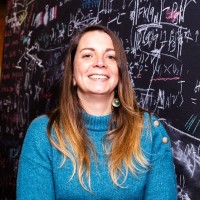
Currently Research Engineer in scientific visualisation at Sorbonne University and CTO at AR[t] Studio, a development studio dedicated to art & culture // Research Engineering Activities: Developing scientific visualisation tools using game engines - Unreal Engine & Unity // CTO AR[t] Studio Activities: project management for mobile app development, lead developer on Unity AR apps, manage art & techs projects and exhibitions // Former Astrophysicist (solar physics)
Ar[T] Studio
View-
FounderAr[T] Studio Jul 2021 - PresentConcarneau, Brittany, FranceCo-Founder and CTO of the company.AR[t] Studio is a design and development studio for mobile applications, web, games, and virtual experiences, dedicated to the world of art and culture. Its main activities include creating, designing, developing, and optimizing mobile applications, websites, and virtual experiences. Born two years ago, its cornerstone project is the @BavartApp application. -
Research EngineerSorbonne Université Oct 2020 - Oct 2023Paris, Île-De-France, FranceScientific Visualisation engineer.Developping scientific visualisation tools using game engines - Unreal Engine & Unity.Working on multidisciplinary applications, for archeology, forensic, or fundamental sciences. -
Cto/ AssociateSacrebleu Llc Jan 2017 - Sep 2022Greater New York City AreaSacrebleu LLC is an art and artists agency based in NYC, USA. I used to be the CTO of the company and also in charge of the communication and the public relations of the company. Design & conception of RFA/RFQ // Commercial prospect & client relations. -
Vice PresidentBnp Paribas Cib Dec 2019 - Sep 2020New York, New York, United StatesSenior Python Developer // Business Analyst -
Python Developer ConsultantTalan Oct 2017 - Dec 2019Greater New York City AreaIndependently plan, design, develop, document, test, deploy, and support new andexisting systems for the activity.Independently manage initiatives through their full project lifecycleDevelop and implement projects accordingly to proposed planResolve all level 2 and 3 support issue with appropriate levels of urgency and transparencyApply best practices to improve system quality -
Research ScientistObservatoire De Paris Jan 2016 - Sep 2017MeudonWorking @Meudon Observatory, I was involved in the European research project FLARECAST (http://flarecast.eu/). The aim is to develop a fully automated solar-flare forecasting system with an unmatched accuracy compared to existing facilities. I was analysing Magnetohydrodynamic simulations for understanding the physical origin and the processes that lead to the release of enormous amounts of energy during a flare. By investigating the properties of turbulent magnetic fields, I was testing and building new predictors for flare eruption, based on near real-time observations. -
Postdoctoral ResearcherInstituto De Astrofísica De Canarias Jan 2015 - Dec 2015La Laguna, Tenerife, SpainI have been working @IAC for a year, thanks to an Excellence Severo Ochoa grant from the Spanish government. My work was essentially based on 3D temperature and density reconstructions of the solar corona, used to study the poles of the sun. Tomographic techniques can be used to retrieve the morphology of the coronal plasma, while multi-wavelength analysis allows the derivation of thermal properties of the plasma. During my PhD, I developed a code able to perform this process, which is one of the two codes able to perfom that kind of reconstructions in the world.I applied this 3D reconstructions method to report on an exceptional large-scale coronal pseudostreamer/cavity system in the southern polar region of the solar corona that was visible for approximately a year starting in February 2014. I investigate this structure to document its formation, evolution and eventually its shrinking process using data from both the PROBA2/SWAP and SDO/AIA EUV imagers. The main results are summarized in my publication http://journal.frontiersin.org/article/10.3389/fspas.2016.00014/abstract. -
Postdoctoral Research ScientistColumbia University In The City Of New York Jan 2014 - Dec 2014Région De New York City, États-UnisPlumes are bright, narrow structures in coronal holes that extend along open magnetic field lines far out into the corona. Previous work has found that in some coronal structures the abundances of elements with a low first ionization potential (FIP) < 10 eV are enhanced relative to their photospheric abundances. This coronal-to-photospheric abundance ratio, commonly called the FIP bias, is typically 1 for element with a high-FIP (> 10 eV). We have used Hinode/EIS spectroscopic observations made on 2007 March 13 and 14 over an ~24 hour period to characterize abundance variations in plumes and interplumes. To assess their elemental composition, we have used a differential emission measure (DEM) analysis, which accounts for the thermal structure of the observed plasma. We have used lines from ions of iron, silicon, and sulfur. From these we have estimated the ratio of the iron and silicon FIP bias relative to that for sulfur. From the results, we have created FIP-bias-ratio maps. We find that the FIP-bias ratio is sometimes higher in plumes than in interplumes and that this enhancement can be time dependent. These results may help to identify whether plumes or interplumes contribute to the fast solar wind observed in situ and may also provides constraints on the formation and heating mechanisms of plumes. -
Phd StudentInstitut D'Astrophysique Spatiale Oct 2010 - Dec 2013OrsayProgress in our understanding of the solar corona properties is highly dependant of the emipirical or semi-empirical determination of the plasma fundamental parameters, such as magnetic field, density and temperature. However, there is no direct measurements of such quantities; the integration along the line of sight considerably complicates the interpretations of the observations, due to the superimposition of structures with different properties. To avoid this ambiguity, there exist several tools, including the Differential Emission Measure (DEM) and the tomography reconstruction technique. The former provides the quantity of emitting material as a function of the temperature, whereas the latter is able to reconstruct the three dimensional distribution of the coronal emissivity. Coupling these two techniques leads to a three dimensional diagnostic of the temperature and density.I developed a probabilistic method in order to estimate the robustness of the spectroscopic diagnostics using the DEM formalism, using a new characterisation method taken into account the different uncertainty sources involved in the inversion process. This approach was applied to both SDO/AIA and Hinode/EIS instruments: our results point out that the different uncertainty sources are currently too high to allow detailed measurements of the DEM. In parallel, I developed the coupling of both tomography and DEM tools, allowing 3D temperature and density reconstructions, and applied this computational code to SDO/AIA data. First reconstructions obtained using AIA imager, our results allow to study the evolution of the temperature and density as a function of altitude, showing polar plumes denser and hotter than their surrondings. -
Teaching AssistantUniversité Paris-Sud Oct 2010 - Oct 2013OrsayTeaching at the physics department of the University Paris-Sud. I mainly taught undergraduate physics courses in Optics, Electromagnetism, Waves and vibrations, Classical mechanics and informatics. -
Research Assistant (Visiting)Nasa Goddard Space Flight Center Apr 2012 - Jul 2012Région De Washington D.C. Metro, États-UnisScientific collaboration with James A. Klimchuk. The aim was to probe the limitations of the DEM tools applied on Active Regions (ARs) using Hinode/EIS. -
Research InternCea - Commissariat À L'Énergie Atomique Et Aux Énergies Alternatives Apr 2010 - Jul 2010SaclayMulti-wavelength observations of microquasars, and modelling of its emission. -
Research InternUniversidad Nacional De La Plata Apr 2009 - Jul 2009La Plata, Ba, ArgentinaTheoretical modelling of the multi-wavelength emission of the M87 radio galaxy.
Chloé Guennou Skills
Chloé Guennou Education Details
-
Physics -
Fundamental & Applied Physics -
Fundamental & Applied Physics
Frequently Asked Questions about Chloé Guennou
What company does Chloé Guennou work for?
Chloé Guennou works for Ar[T] Studio
What is Chloé Guennou's role at the current company?
Chloé Guennou's current role is Research Engineer in scientific visualisation at Sorbonne Université, Founder at AR[t] Studio..
What schools did Chloé Guennou attend?
Chloé Guennou attended Paris-Sud University (Paris Xi), Université Paris Sud (Paris Xi), Paris-Sud University (Paris Xi).
What are some of Chloé Guennou's interests?
Chloé Guennou has interest in Arts And Culture.
What skills is Chloé Guennou known for?
Chloé Guennou has skills like Physics, Science, Latex, C, Python, Spectroscopy, Data Analysis, Astrophysics, Idl, Image Processing, Image Analysis, Scientific Computing.
Not the Chloé Guennou you were looking for?
Free Chrome Extension
Find emails, phones & company data instantly
Aero Online
Your AI prospecting assistant
Select data to include:
0 records × $0.02 per record
Download 750 million emails and 100 million phone numbers
Access emails and phone numbers of over 750 million business users. Instantly download verified profiles using 20+ filters, including location, job title, company, function, and industry.
Start your free trial