AeroLeads people directory · profile
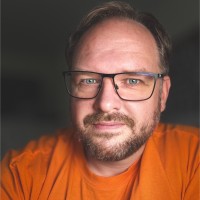
Christian Müller Email & Phone Number
Principle Resarcher
at
Deutsches Forschungszentrum für Künstliche Intelligenz (DFKI)
1 work email found
@dfki.de
LinkedIn matched
✓ Verified Jul 2026
4 data sources
Profile completeness 100%
Current company
Role
Principle Resarcher
Location
Saarland, Germany
Company size
Who is Christian Müller? Overview
A concise factual answer block for searchers comparing this professional profile.
Quick answer
Christian Müller is listed as Principle Resarcher at Deutsches Forschungszentrum für Künstliche Intelligenz (DFKI), a with 569 employees, based in Saarland, Germany. AeroLeads shows a work email signal at dfki.de and a matched LinkedIn profile for Christian Müller.
Christian Müller previously worked as Head of Comeptence Center Autonomous Driving, Principal Investigator and Deputy Head of ASR at Deutsches Forschungszentrum Für Künstliche Intelligenz (Dfki) and Scientific Consultant at Imotion Automotive Technology. Christian Müller holds Diploma, Computational Linguistics from Universität Des Saarlandes.
Company email context
Email format at Deutsches Forschungszentrum für Künstliche Intelligenz (DFKI)
This section adds company-level context without repeating Christian Müller's masked contact details.
*@dfki.de
71% confidence
AeroLeads found 1 current-domain work email signal for Christian Müller. Compare company email patterns before reaching out.
Profile bio
About Christian Müller
Principal Researcher and DFKI Research Fellow Dr. Christian Müller began working in automotive in 2007 when getting in contact with Silicon Valley OEM think tanks during his postdoc in Berkeley, Ca. Before, in the period of 1999 to 2006, his research in machine learning with Bayesian uncertainty handling, has been applied in the telecommunication industry (speech-based classification including age and gender recognition, emotion and stress classification). Back at DFKI, he built up the automotive Intelligent User Interfaces group, gaining international recognition for inter alia the first eye-gaze controls in the car and early contributions to gesture recognition systems. He has been leading a number of national and European projects including Connected Car projects in cooperation with BMW, Volkswagen, Daimler, Continental, Bosch, Ford, Opel, and others. In 2012 he was appointed DFKI Research Fellow, a distinction which received only 19 researchers within 30 years. From 2012 to 2014 Christian Müller was Action Line Leader for Intelligent Mobility with the European Knowledge and Innovation Community EIT Digital with partners from across Europe. He is considered the father of OpenDS, the world's most popular open source driving simulator, which is now applied for training and testing driving automation functions. In 2017, Christian Müller became Head of the Competence Center for Autonomous Driving (CCAD) that spans across all DFKI departments. As head of CCAD, he initiated OpenGenesis together with TÜV Süd as the first open platform for the development of methods and software tools for AI validation in highly automated driving. In 2018, he became Deputy head of DFKI department Agents and Simulated Reality where he also leads the research team Autonomous Driving. Since 2019, Dr. Müller leads the research and engineering “Think Tank” iMotion Germany with a fast growing number of PhD students in the areas of robust and explainable AI for environment perception and trajectory planning of self-driving cars. Here, he is responsible for spearhead AI technology as part of sensor-based environment perception, trajectory planning, and more general safe on-road behavior of artificial drivers
Listed skills include Human Computer Interaction, Artificial Intelligence, Computer Science, Machine Learning, and 17 others.
Current workplace
Christian Müller's current company
Company context helps verify the profile and gives searchers a useful next step.
Deutsches Forschungszentrum Für Künstliche Intelligenz (Dfki)
8 roles · 21 years
Christian Müller work experience
A career timeline built from the work history available for this profile.
Head Of Comeptence Center Autonomous Driving, Principal Investigator And Deputy Head Of Asr
Head of Competence Center Autonomous Driving for all DFKI, Principal Investigator, DFKI Research Fellow, and Deputy Head of Department Agents and Simulated Reality.

Scientific Consultant
As part of a long-lasting collaboration between the German Research Center for Artificial Intelligence (DFKI) with iMotion, Dr. Müller is proud to consult iMotion from a scientific and innovation strategic perspective.
Jan 2018 - Sep 2019
Founder
White_C
Jan 2016 - Jul 2017
Senior Researcher, Head Of Automotive Iui Group
2009 - Dec 2016

Intelligent Mobility And Transportation Systems Action Line Leader
Mar 2011 - Jun 2013
2006 - 2008
~2 yrs
Post-Doc
International Computer Science Institute
2006 - 2008
~2 yrs
Team & coworkers
Colleagues at Deutsches Forschungszentrum für Künstliche Intelligenz (DFKI)
Other employees you can reach at dfki.de. View company contacts for 569 employees →
CL
 Christoph Lipps
Colleague at Deutsches Forschungszentrum Für Künstliche Intelligenz (Dfki)Kaiserslautern, Rhineland-Palatinate, Germany
View →
AD
Christoph Lipps
Colleague at Deutsches Forschungszentrum Für Künstliche Intelligenz (Dfki)Kaiserslautern, Rhineland-Palatinate, Germany
View →
AD
 Alon Drobickij
Colleague at Deutsches Forschungszentrum Für Künstliche Intelligenz (Dfki)Berlin, Germany
View →
LM
Alon Drobickij
Colleague at Deutsches Forschungszentrum Für Künstliche Intelligenz (Dfki)Berlin, Germany
View →
LM
 Laurent Möhring
Colleague at Deutsches Forschungszentrum Für Künstliche Intelligenz (Dfki)Bremen, Germany
View →
MT
Laurent Möhring
Colleague at Deutsches Forschungszentrum Für Künstliche Intelligenz (Dfki)Bremen, Germany
View →
MT
 Mohaddeseh T.
Colleague at Deutsches Forschungszentrum Für Künstliche Intelligenz (Dfki)Kaiserslautern, Rhineland-Palatinate, Germany
View →
DM
Mohaddeseh T.
Colleague at Deutsches Forschungszentrum Für Künstliche Intelligenz (Dfki)Kaiserslautern, Rhineland-Palatinate, Germany
View →
DM
 Danylo Mysak
Colleague at Deutsches Forschungszentrum Für Künstliche Intelligenz (Dfki)Berlin, Germany
View →
AK
Danylo Mysak
Colleague at Deutsches Forschungszentrum Für Künstliche Intelligenz (Dfki)Berlin, Germany
View →
AK
 Alisa Kashirtseva
Colleague at Deutsches Forschungszentrum Für Künstliche Intelligenz (Dfki)Berlin, Germany
View →
MF
Alisa Kashirtseva
Colleague at Deutsches Forschungszentrum Für Künstliche Intelligenz (Dfki)Berlin, Germany
View →
MF
 Michael Feld
Colleague at Deutsches Forschungszentrum Für Künstliche Intelligenz (Dfki)Saarland, Germany
View →
TZ
Michael Feld
Colleague at Deutsches Forschungszentrum Für Künstliche Intelligenz (Dfki)Saarland, Germany
View →
TZ
 Tatjana Zeen
Colleague at Deutsches Forschungszentrum Für Künstliche Intelligenz (Dfki)Berlin, Germany
View →
MR
Tatjana Zeen
Colleague at Deutsches Forschungszentrum Für Künstliche Intelligenz (Dfki)Berlin, Germany
View →
MR
 Marc Ruffing
Colleague at Deutsches Forschungszentrum Für Künstliche Intelligenz (Dfki)Neunkirchen, Saarland, Germany
View →
DK
Marc Ruffing
Colleague at Deutsches Forschungszentrum Für Künstliche Intelligenz (Dfki)Neunkirchen, Saarland, Germany
View →
DK
 Dr. Kinga Schumacher
Colleague at Deutsches Forschungszentrum Für Künstliche Intelligenz (Dfki)Berlin Metropolitan Area, Germany
View →
Dr. Kinga Schumacher
Colleague at Deutsches Forschungszentrum Für Künstliche Intelligenz (Dfki)Berlin Metropolitan Area, Germany
View →
Christoph Lipps
Colleague at Deutsches Forschungszentrum Für Künstliche Intelligenz (Dfki)Kaiserslautern, Rhineland-Palatinate, Germany
View →
AD
Alon Drobickij
Colleague at Deutsches Forschungszentrum Für Künstliche Intelligenz (Dfki)Berlin, Germany
View →
LM
Laurent Möhring
Colleague at Deutsches Forschungszentrum Für Künstliche Intelligenz (Dfki)Bremen, Germany
View →
MT
Mohaddeseh T.
Colleague at Deutsches Forschungszentrum Für Künstliche Intelligenz (Dfki)Kaiserslautern, Rhineland-Palatinate, Germany
View →
DM
Danylo Mysak
Colleague at Deutsches Forschungszentrum Für Künstliche Intelligenz (Dfki)Berlin, Germany
View →
AK
Alisa Kashirtseva
Colleague at Deutsches Forschungszentrum Für Künstliche Intelligenz (Dfki)Berlin, Germany
View →
MF
Michael Feld
Colleague at Deutsches Forschungszentrum Für Künstliche Intelligenz (Dfki)Saarland, Germany
View →
TZ
Tatjana Zeen
Colleague at Deutsches Forschungszentrum Für Künstliche Intelligenz (Dfki)Berlin, Germany
View →
MR
Marc Ruffing
Colleague at Deutsches Forschungszentrum Für Künstliche Intelligenz (Dfki)Neunkirchen, Saarland, Germany
View →
DK
Dr. Kinga Schumacher
Colleague at Deutsches Forschungszentrum Für Künstliche Intelligenz (Dfki)Berlin Metropolitan Area, Germany
View →
2 education records
Christian Müller education

Diploma, Computational Linguistics
Dr., Computer Science
FAQ
Frequently asked questions about Christian Müller
Quick answers generated from the profile data available on this page.
What company does Christian Müller work for?
Christian Müller works for Deutsches Forschungszentrum für Künstliche Intelligenz (DFKI).
What is Christian Müller's role at Deutsches Forschungszentrum für Künstliche Intelligenz (DFKI)?
Christian Müller is listed as Principle Resarcher at Deutsches Forschungszentrum für Künstliche Intelligenz (DFKI).
What is Christian Müller's email address?
AeroLeads has found 1 work email signal at @dfki.de for Christian Müller at Deutsches Forschungszentrum für Künstliche Intelligenz (DFKI).
Where is Christian Müller based?
Christian Müller is based in Saarland, Germany while working with Deutsches Forschungszentrum für Künstliche Intelligenz (DFKI).
What companies has Christian Müller worked for?
Christian Müller has worked for Deutsches Forschungszentrum Für Künstliche Intelligenz (Dfki), Imotion Automotive Technology, White_C, Deutsche Forschungszentrum Für Künstliche Intelligenz (Dfki), and Eit Ict Labs.
Who are Christian Müller's colleagues at Deutsches Forschungszentrum für Künstliche Intelligenz (DFKI)?
Christian Müller's colleagues at Deutsches Forschungszentrum für Künstliche Intelligenz (DFKI) include Christoph Lipps, Alon Drobickij, Laurent Möhring, Mohaddeseh T., and Danylo Mysak.
How can I contact Christian Müller?
You can use AeroLeads to view verified contact signals for Christian Müller at Deutsches Forschungszentrum für Künstliche Intelligenz (DFKI), including work email, phone, and LinkedIn data when available.
What schools did Christian Müller attend?
Christian Müller holds Diploma, Computational Linguistics from Universität Des Saarlandes.
What skills is Christian Müller known for?
Christian Müller is listed with skills including Human Computer Interaction, Artificial Intelligence, Computer Science, Machine Learning, Natural Language Processing, Pattern Recognition, Information Retrieval, and Data Mining.
Find 750M verified contacts
Search by job title, company, industry, location, and seniority. Export verified B2B contact data when you need it.
Start free trialPeople with similar names
Check these profiles if this is not the Christian Müller you were looking for.
View similar profiles