
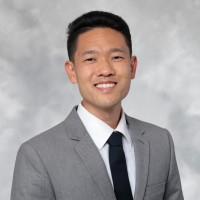
AeroLeads people directory · profile
Christopher Arakawa, M.D./Ph.D. Email & Phone Number
Cardiology Fellow
at
Stanford Children's Health | Lucile Packard Children's Hospital Stanford
1 work email found
@stanfordchildrens.org
LinkedIn matched
✓ Verified July 2026
4 data sources
Profile completeness 100%
Role
Cardiology Fellow
Location
Palo Alto, California, United States
Who is Christopher Arakawa, M.D./Ph.D.? Overview
A concise factual answer block for searchers comparing this professional profile.
Quick answer
Christopher Arakawa, M.D./Ph.D. is listed as Cardiology Fellow at Stanford Children's Health | Lucile Packard Children's Hospital Stanford, based in Palo Alto, California, United States. AeroLeads shows a work email signal at stanfordchildrens.org and a matched LinkedIn profile for Christopher Arakawa, M.D./Ph.D..
Christopher Arakawa, M.D./Ph.D. previously worked as Resident Physician at Stanford Children'S Health | Lucile Packard Children'S Hospital Stanford and Clinical Advisor at Billion Labs. Christopher Arakawa, M.D./Ph.D. holds Fellowship, Pediatric Cardiology Fellowship Program from Stanford University.
Company email context
Email format at Stanford Children's Health | Lucile Packard Children's Hospital Stanford
This section adds company-level context without repeating Christopher Arakawa, M.D./Ph.D.'s masked contact details.
*@stanfordchildrens.org
68% confidence
AeroLeads found 1 current-domain work email signal for Christopher Arakawa, M.D./Ph.D.. Compare company email patterns before reaching out.
Profile bio
About Christopher Arakawa, M.D./Ph.D.
M.D./Ph.D. and Fellow Physician in Pediatric Cardiology at Stanford University studying biomaterials, polymer chemistry, and stem cell biology for applications in vascular biology, cardiac tissue engineering, renal tissue engineering, and hematologic disease.
Listed skills include Tissue Engineering, Biomedical Engineering, Bioengineering, Biomaterials, and 15 others.
Current workplace
Christopher Arakawa, M.D./Ph.D.'s current company
Company context helps verify the profile and gives searchers a useful next step.
Stanford Children'S Health | Lucile Packard Children'S Hospital Stanford
AeroLeads page
10 roles
Christopher Arakawa, M.D./Ph.D. work experience
A career timeline built from the work history available for this profile.

Cardiology Fellow
Current
Jun 2023 - Present
Resident Physician
Jun 2021 - Dec 2023

Clinical Advisor
Current
Jun 2023 - Present

Industry Fellow- Drug & Device Development (D3) Program
Sep 2022 - Jun 2023

Medical Scientist Training Program- Ph.D. Student, Bioengineering
I completed my Ph.D. in Cole DeForest's Lab at the University of Washington. There I conduct research to develop novel biomaterials for use in vascular, renal, and cardiac tissue engineering. In particular, our group is interested in the use of click-chemistry based hydrogels and photochemistry to control cell function and biology. So called 4D control allots researchers the capacity to study biology in a site specific manner controlling their local microenvironment in both space and time.
Jun 2014 - Jun 2021
Medical Scientist Training Program- Medical Student
At the University of Washington, I have been trained as a practicing medical clinician for three years. We, at the UW focus on the importance of patient care and patient advocacy. I have been trained in physiology, pathology, infectious disease, and clinical medicine. During my time as a medical student I was involved in two projects culminating in two publications in peer-reviewed journals.
Jun 2012 - Nov 2017

Postdoctoral Researcher
Awarded a Japan Society for the Promotion of Science/NIH Postdoctoral Fellowship, I worked with Dr. Mitsuhiro Ebara and Koichiro Uto on the development of smart shape memory materials for biomedical applications. By developing and applying novel thermo-responsive and pH-responsive PCL-based polymers, I created cell culture platforms to study the effects of dynamic nanoarchitecture on stem cell function and drug-cell interactions.
Nov 2018 - May 2019

Graduate Student Researcher - Dr. Min Lee'S Lab
Loss of cartilage due to trauma, surgery, and degenerative disorders like osteoarthritis pose a significant health risk as they impair a patient’s quality of life and mobility. Although a number of different types of surgical treatments are employed, all exhibit significant limitations on their ability to regenerate cartilage. While cell-based therapies exhibit promise as an alternative to surgery, their clinical applicability is hindered by the inability to control the fate of implanted chondrocytes as they can exhibit either hypertrophic differentiation or dedifferentiation into fibrocartilage. For these reasons, there has been an increased interest in the tissue engineering community to incorporate the use of growth factors to facilitate cartilage repair and control the release of such proteins to optimize their therapeutic potential and minimize loss due to degradation.In particular, photopolymerizable hydrogels derived from natural polymers have attracted significant interest in tissue engineering, due to their mechanical and chemical similarities to extracellular matricies and their ability to be cured in situ. While many such hydrogels are biocompatible, advancements in tissue engineering require that these hydrogels also enhance adhesion, spreading, proliferation and differentiation of implanted cells. I proposed the development of an injectable composite photopolimerizable chitosan scaffold. Our photopolimerizable chitosan is prepared via graft methacrylation of glycol chitosan. Photoinitiation is employed using the photoinitor riboflavin and visible blue light. Preliminary results indicate that our cured methacrylated glycol chitosan (MeGCS) hydrogels maintain 90% cell viability and are mechanically stable, but exhibit limited cell proliferation and chondrogenic effects. To enhance spreading, adhesion, and differentiation, my composite hydrogels incorporate encapsulated Col-1 or conjugated RGD-peptides.
Mar 2011 - Jun 2012
Undergraduate Researcher
As an undergraduate, I tested the effects of biomimetic apatite on human adipose derived stem cells (hASCs) and mouse MC3T3-E1 preosteoblasts and sought to develop a novel calcium phosphate based transfection technique utilizing biomimetic apatite nanoparticles. I co-authored a publication in the Annals of Biomedical Engineering. In that article, we proved the existence and importance of a thin protein coating over the apatite surface for both cell viability and proliferation on apatite substrates.Simultaneously, our group began to investigate the use of apatite nanoparticles for transfection and delivery of small molecules. Apatite particles, created using the same process as apatite substrates, were loaded with si-RNA tagged with a fluorescent probe. Apatite nanoparticles loaded with fluorescent tagged siRNA exhibit greater uptake compared to lipofectamine-based transfection techniques.
Sep 2008 - Jun 2011
6 education records
Christopher Arakawa, M.D./Ph.D. education

Fellowship, Pediatric Cardiology Fellowship Program
Residency, Pediatrics Residency Program
Doctor Of Medicine (M.D.), Medicine, Graduate/Medical
Doctor Of Philosophy (Ph.D.), Bioengineering, Graduate
Master’S Degree, Bioengineering
Bachelor Of Science, Bioengineering
FAQ
Frequently asked questions about Christopher Arakawa, M.D./Ph.D.
Quick answers generated from the profile data available on this page.
What company does Christopher Arakawa, M.D./Ph.D. work for?
Christopher Arakawa, M.D./Ph.D. works for Stanford Children's Health | Lucile Packard Children's Hospital Stanford.
What is Christopher Arakawa, M.D./Ph.D.'s role at Stanford Children's Health | Lucile Packard Children's Hospital Stanford?
Christopher Arakawa, M.D./Ph.D. is listed as Cardiology Fellow at Stanford Children's Health | Lucile Packard Children's Hospital Stanford.
What is Christopher Arakawa, M.D./Ph.D.'s email address?
AeroLeads has found 1 work email signal at @stanfordchildrens.org for Christopher Arakawa, M.D./Ph.D. at Stanford Children's Health | Lucile Packard Children's Hospital Stanford.
Where is Christopher Arakawa, M.D./Ph.D. based?
Christopher Arakawa, M.D./Ph.D. is based in Palo Alto, California, United States while working with Stanford Children's Health | Lucile Packard Children's Hospital Stanford.
What companies has Christopher Arakawa, M.D./Ph.D. worked for?
Christopher Arakawa, M.D./Ph.D. has worked for Stanford Children'S Health | Lucile Packard Children'S Hospital Stanford, Billion Labs, Intuitive, University Of Washington, and National Institute For Materials Science.
How can I contact Christopher Arakawa, M.D./Ph.D.?
You can use AeroLeads to view verified contact signals for Christopher Arakawa, M.D./Ph.D. at Stanford Children's Health | Lucile Packard Children's Hospital Stanford, including work email, phone, and LinkedIn data when available.
What schools did Christopher Arakawa, M.D./Ph.D. attend?
Christopher Arakawa, M.D./Ph.D. holds Fellowship, Pediatric Cardiology Fellowship Program from Stanford University.
What skills is Christopher Arakawa, M.D./Ph.D. known for?
Christopher Arakawa, M.D./Ph.D. is listed with skills including Tissue Engineering, Biomedical Engineering, Bioengineering, Biomaterials, Stem Cells, Polymers, Cardiovascular Biology, and Photochemistry.
Find 750M verified contacts
Search by job title, company, industry, location, and seniority. Export verified B2B contact data when you need it.
Start free trial