
AeroLeads people directory · profile
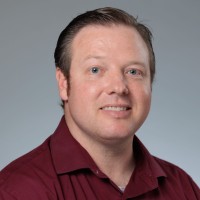
Corey John Bishop, Ph.D. Email & Phone Number
Senior Principal Scientist
at
Johnson & Johnson Innovative Medicine
2 work emails found
@janssen.com
LinkedIn matched
✓ Verified July 2026
4 data sources
Profile completeness 100%
Current company
Role
Senior Principal Scientist
Location
Lansdale, Pennsylvania, United States
Company size
Who is Corey John Bishop, Ph.D.? Overview
A concise factual answer block for searchers comparing this professional profile.
Quick answer
Corey John Bishop, Ph.D. is listed as Senior Principal Scientist at Johnson & Johnson Innovative Medicine, a with 100890 employees, based in Lansdale, Pennsylvania, United States. AeroLeads shows a work email signal at janssen.com and a matched LinkedIn profile for Corey John Bishop, Ph.D..
Corey John Bishop, Ph.D. previously worked as Senior Scientist at Johnson & Johnson Innovative Medicine and Associate Director at Certara. Corey John Bishop, Ph.D. holds Doctor Of Philosophy (Ph.D.), Biomedical Engineering from The Johns Hopkins University School Of Medicine.
Company email context
Email format at Johnson & Johnson Innovative Medicine
This section adds company-level context without repeating Corey John Bishop, Ph.D.'s masked contact details.
*@janssen.com
71% confidence
AeroLeads found 2 current-domain work email signals for Corey John Bishop, Ph.D.. Compare company email patterns before reaching out.
Profile bio
About Corey John Bishop, Ph.D.
I am a Senior Principal Scientist working at Johnson & Johnson Innovative Medicine in the Clinical Pharmacology and Pharmacometrics department.I was an Assistant Professor of Biomedical Engineering at Texas A&M University. Previously, I was a post-doc. in Robert Langer's lab at MIT. I earned my doctorate (Jordan Green lab) and bachelor's degree at the Johns Hopkins University School of Medicine and the University of Utah. I have a great deal of interest in therapeutic formulations; namely: small molecules, vaccines, DNA and siRNA. Skills/Training: animal/human subject/IACUC Training (CITI); flow cytometry, DLS/NTA, spectroscopy; multiphoton/confocal/ fluorescence microscopy, gel electrophoresis, TEM/SEM, NMR, qRT-PCR, ELISA, TCSPC, GPC, DSC, rheometry, cryo-preserving lyophilization; MatLab (principal component analysis/Fouriér, graphical user interface development, differential equation modeling), SolidWorks, COMSOL (finite element/drug diffusion), polymer synthesis, microfluidic chips/microfabrication (SU-8 photolithography), small molecule, siRNA, DNA release studies, nano-/microparticle synthesis (inorganic/organic), drug-polymer encapsulation (single/double emulsion), non-viral gene delivery (DNA/siRNA), cell culture, cell cycle synchronization/assessment, nuclei isolation, acrylate gel synthesis. At the Utah Artificial Heart Program I was an on-call engineer for cardiac surgeons, physicians, nurses, and patients for implanting and explanting ventricular assist devices and total artificial hearts, as well as for troubleshooting equipment malfunctions (on-site and off-site). I maintained databases and reported mechanical and physiological adverse events to INTERMACS. I maintained databases for our patients’ survival statistics to ensure we were meeting quality of care standards.
Listed skills include Biomedical Engineering, Drug Delivery, Biomaterials, Tissue Engineering, and 39 others.
Current workplace
Corey John Bishop, Ph.D.'s current company
Company context helps verify the profile and gives searchers a useful next step.
Johnson & Johnson Innovative Medicine
12 roles · 21 years
Corey John Bishop, Ph.D. work experience
A career timeline built from the work history available for this profile.

Senior Principal Scientist
Current
Oct 2022 - Present
Senior Scientist
Aug 2022 - Oct 2022

Associate Director
Jun 2022 - Aug 2022
Senior Scientist
Aug 2019 - Jun 2022

Assistant Professor
Jul 2016 - Aug 2019

Postdoctoral Associate
My post-doctoral work involved developing technology aimed to benefit the developing world. I was involved in the development of a single injection vaccine against T. solium, capable of providing its own booster at a later point in time, removing the need to meet the patient more than once. We tested this technology in a murine model.
Aug 2015 - Jul 2016

Postdoctoral Associate
My post-doctoral training at Hopkins was an extension of doctoral research.
Mar 2015 - Jul 2015
National Science Foundation Graduate Research Fellow
This work details how polymer structure of poly(β-amino ester)s (PBAE) affects polymer-DNA binding and how binding affects transfection levels, viability, and nanoparticle physical properties (zeta potential and diameter). We also investigated the comparative binding strengths of branched and linear polyethyleneimine, poly(L-lysine) and PBAEs with plasmid DNA and found PBAEs have the weakest binding. This work also details new bioassays including a more high throughput method for assessing cellular and nuclear uptake rates using flow cytometry. This method may be used for elucidating structure-function relationships in various cell types. An auto-fitting, first order mass-action kinetic model was developed in MatLab to quantify the intracellular delivery rate constants for comparing delivery bottlenecks of various polymer structures in various cell lines. This model was used to assess rate differences between polymers which do not transfect well, tansfect mediocre, and transfect well in primary human glioblastoma in vitro. The model recapitulated the experimental data with good agreement without needing to extrapolate data from literature. Principal component analysis is a method to look at large data sets with unknown variable correlations and to quantify how each variable is correlated with another, as well as which and to what degree each variable may drive another. Principal component analysis was utilized to look at 27 physico-chemical properties and cell gene delivery outcomes (i.e., uptake, transfection levels, and viability). We found that certain key parameters, such as hydrophobicity, drove uptake and transfection. The theranostic-enabling technology was capable of co-delivering DNA and siRNA as well as delivering two layers of DNA with two different expression time profiles. Co-delivering DNA and siRNA could allow for the knockdown of a dysfunctional aberrant protein while replacing it with a functional protein.
2010 - 2015
~5 yrs

National Science Foundation Nordic Research Fellow
Investigated relative binding differences of hydrolytically degrdadable, cationic polymers and DNA. I synthesized monodisperse polymers with single carbon differences in the backbone and sidechains, and varied the endcap type (none, primary, secondary, tertiary amines) to see how these single carbon differences affected its DNA binding affinity using a single photon counting laser system. I also investigated how binding affinity changes as a function of polymer molecular weight.
Dec 2011 - Mar 2012

Graduate Research Associate
Manufactured a potentially refillable ocular drug delivery device (Avastin) which is inserted at the time of IOL implantation for the treatment of AMD.
Aug 2009 - Jun 2010
Research Associate
Utah Artificial Heart Program
Utah Artificial Heart Program: On-call engineer for cardiac surgeons, physicians, nurses, and patients for implanting and explanting ventricular assist devices and total artificial hearts, as well as for troubleshooting equipment malfunctions (on-site and off-site). I would control the ventricular assist devices and artificial hearts during implant and explant procedures to maintain proper pressures in the devices as well as the patients. I assembled the inflow and outflow conduits, and primed the ventricular assist devices and total artificial hearts under a sterile field for the cardiac surgeon. I reported mechanical and physiological adverse events to the Interagency Registry for Mechanically Assisted Circulatory Support. I maintained databases for our patients’ survival statistics to ensure we were meeting quality of care standards. I also trained new bioengineers coming into the program. Whenever I was not helping in a surgery/procedure, I would be doing research.Research: causes for hospital readmission in DT VAD patients, causes for late mortality in DT VAD patients, Levitronix Centrimag VAD for temporary support, outcomes in DT VAD patients as predicted by the Seattle Heart Failure Model, reconstructive surgery for VAD infections, age limit of VAD therapy, obesity as it relates to driveline site infections, a non-invasive method to asses aortic valve opening in continuous flow supported patients, signal characteristics in current to predict HM XVE pump failure.
2006 - 2009
~3 yrs
Team & coworkers
Colleagues at Johnson & Johnson Innovative Medicine
Other employees you can reach at jnj.com. View company contacts for 100890 employees →
CM
 Courtney Mcdonnell
Colleague at Johnson & Johnson Innovative MedicineWillow Grove, Pennsylvania, United States
View →
दम
Courtney Mcdonnell
Colleague at Johnson & Johnson Innovative MedicineWillow Grove, Pennsylvania, United States
View →
दम
 दिनेश म्हात्रे
Colleague at Johnson & Johnson Innovative MedicineThane, Maharashtra, India
View →
MF
दिनेश म्हात्रे
Colleague at Johnson & Johnson Innovative MedicineThane, Maharashtra, India
View →
MF
 Matt Fornwalt
Colleague at Johnson & Johnson Innovative MedicineDrexel Hill, Pennsylvania, United States
View →
MF
Matt Fornwalt
Colleague at Johnson & Johnson Innovative MedicineDrexel Hill, Pennsylvania, United States
View →
MF
 Morten Frydenreich ツ
Colleague at Johnson & Johnson Innovative MedicineSolrød Strand, Region Zealand, Denmark
View →
ED
Morten Frydenreich ツ
Colleague at Johnson & Johnson Innovative MedicineSolrød Strand, Region Zealand, Denmark
View →
ED
 Erjola Dhaskali
Colleague at Johnson & Johnson Innovative MedicinePrague, Czechia, Czech Republic
View →
MW
Erjola Dhaskali
Colleague at Johnson & Johnson Innovative MedicinePrague, Czechia, Czech Republic
View →
MW
 Mandy Willy
Colleague at Johnson & Johnson Innovative MedicineIndonesia
View →
NE
Mandy Willy
Colleague at Johnson & Johnson Innovative MedicineIndonesia
View →
NE
 Nourhan El-Khabiry
Colleague at Johnson & Johnson Innovative MedicineDubai, United Arab Emirates
View →
MH
Nourhan El-Khabiry
Colleague at Johnson & Johnson Innovative MedicineDubai, United Arab Emirates
View →
MH
 Mohd Huzaini Ibrahim
Colleague at Johnson & Johnson Innovative MedicineKota Bharu, Malaysia Metropolitan Area, Malaysia
View →
KP
Mohd Huzaini Ibrahim
Colleague at Johnson & Johnson Innovative MedicineKota Bharu, Malaysia Metropolitan Area, Malaysia
View →
KP
 Kanu Parmar
Colleague at Johnson & Johnson Innovative MedicineLondon, England, United Kingdom
View →
RA
Kanu Parmar
Colleague at Johnson & Johnson Innovative MedicineLondon, England, United Kingdom
View →
RA
 Ramos, Alessandra
Colleague at Johnson & Johnson Innovative MedicineSão Paulo, Brazil
View →
Ramos, Alessandra
Colleague at Johnson & Johnson Innovative MedicineSão Paulo, Brazil
View →
Courtney Mcdonnell
Colleague at Johnson & Johnson Innovative MedicineWillow Grove, Pennsylvania, United States
View →
दम
दिनेश म्हात्रे
Colleague at Johnson & Johnson Innovative MedicineThane, Maharashtra, India
View →
MF
Matt Fornwalt
Colleague at Johnson & Johnson Innovative MedicineDrexel Hill, Pennsylvania, United States
View →
MF
Morten Frydenreich ツ
Colleague at Johnson & Johnson Innovative MedicineSolrød Strand, Region Zealand, Denmark
View →
ED
Erjola Dhaskali
Colleague at Johnson & Johnson Innovative MedicinePrague, Czechia, Czech Republic
View →
MW
Mandy Willy
Colleague at Johnson & Johnson Innovative MedicineIndonesia
View →
NE
Nourhan El-Khabiry
Colleague at Johnson & Johnson Innovative MedicineDubai, United Arab Emirates
View →
MH
Mohd Huzaini Ibrahim
Colleague at Johnson & Johnson Innovative MedicineKota Bharu, Malaysia Metropolitan Area, Malaysia
View →
KP
Kanu Parmar
Colleague at Johnson & Johnson Innovative MedicineLondon, England, United Kingdom
View →
RA
Ramos, Alessandra
Colleague at Johnson & Johnson Innovative MedicineSão Paulo, Brazil
View →
4 education records
Corey John Bishop, Ph.D. education
Doctor Of Philosophy (Ph.D.), Biomedical Engineering
The Johns Hopkins University School Of Medicine
Post-Doctoral Associate, Chemical Engineering
Massachusetts Institute Of Technology
Ph.D., Biomedical Engineering
The Johns Hopkins University School Of Medicine
Bs, Biomedical Engineering
University Of Utah
FAQ
Frequently asked questions about Corey John Bishop, Ph.D.
Quick answers generated from the profile data available on this page.
What company does Corey John Bishop, Ph.D. work for?
Corey John Bishop, Ph.D. works for Johnson & Johnson Innovative Medicine.
What is Corey John Bishop, Ph.D.'s role at Johnson & Johnson Innovative Medicine?
Corey John Bishop, Ph.D. is listed as Senior Principal Scientist at Johnson & Johnson Innovative Medicine.
What is Corey John Bishop, Ph.D.'s email address?
AeroLeads has found 2 work email signals at @janssen.com for Corey John Bishop, Ph.D. at Johnson & Johnson Innovative Medicine.
Where is Corey John Bishop, Ph.D. based?
Corey John Bishop, Ph.D. is based in Lansdale, Pennsylvania, United States while working with Johnson & Johnson Innovative Medicine.
What companies has Corey John Bishop, Ph.D. worked for?
Corey John Bishop, Ph.D. has worked for Johnson & Johnson Innovative Medicine, Certara, Texas A&M University, Massachusetts Institute Of Technology (Mit), and Johns Hopkins Medicine.
Who are Corey John Bishop, Ph.D.'s colleagues at Johnson & Johnson Innovative Medicine?
Corey John Bishop, Ph.D.'s colleagues at Johnson & Johnson Innovative Medicine include Courtney Mcdonnell, दिनेश म्हात्रे, Matt Fornwalt, Morten Frydenreich ツ, and Erjola Dhaskali.
How can I contact Corey John Bishop, Ph.D.?
You can use AeroLeads to view verified contact signals for Corey John Bishop, Ph.D. at Johnson & Johnson Innovative Medicine, including work email, phone, and LinkedIn data when available.
What schools did Corey John Bishop, Ph.D. attend?
Corey John Bishop, Ph.D. holds Doctor Of Philosophy (Ph.D.), Biomedical Engineering from The Johns Hopkins University School Of Medicine.
What skills is Corey John Bishop, Ph.D. known for?
Corey John Bishop, Ph.D. is listed with skills including Biomedical Engineering, Drug Delivery, Biomaterials, Tissue Engineering, Microscopy, Fluorescence Microscopy, Matlab, and Cell Culture.
Find 750M verified contacts
Search by job title, company, industry, location, and seniority. Export verified B2B contact data when you need it.
Start free trial