
Postdoctoral Fellow In Computational Immunodermatology
CurrentUsing computational biology to develop and tailor treatments for immune and dermatology diseases.
May 2024 - Present
Please complete the CAPTCHA to continue
A concise factual answer block for searchers comparing this professional profile.
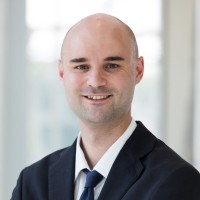
Connor Hill, Ph.D. is listed as Computational Biologist and Bioinformatician | Using computational biology to develop and tailor treatments | Postdoctoral Fellow with a Ph.D. in Molecular and Cell Biology at Johnson & Johnson, a with 123077 employees, based in Philadelphia, Pennsylvania, United States. AeroLeads shows a matched LinkedIn profile for Connor Hill, Ph.D..
Connor Hill, Ph.D. previously worked as Postdoctoral Fellow in Computational Immunodermatology at Johnson & Johnson and Postdoctoral Researcher at The Wistar Institute. Connor Hill, Ph.D. holds Doctor Of Philosophy - Phd, Cell/Cellular And Molecular Biology from University Of Pennsylvania School Of Medicine.
This section adds company-level context without repeating Connor Hill, Ph.D.'s masked contact details.
Review company-level records connected to Connor Hill, Ph.D. before choosing the right outreach path.
Ph.D. in molecular and cell biology with experience in data analysis, molecular biology, genomics, , transcriptional regulation, genetics, oncology, and neuroscience. Strong communication, time management, and quantitative skills, including data mining, statistics, and optimization. Experienced in designing and implementing bioinformatic analysis pipelines in Python, R, and Bash. Adept developing novel approaches and tools to study questions such as gene expression and gene set enrichment analysis using large data sets from dbGAP, NCBI GEO, TCGA, GTEx, and the Human Protein Atlas. (https://github.com/chill3456). Skilled in collaboration and communication with an excellent presentation and publication history.Currently studying the genetics of cancer and transcriptional regulation using bioinformatic methods. Skilled in integrating and analyzing RNA-seq, scRNA-seq, ChIP-seq, ATAC-seq, Hi-C, and Mass Spectrometry. My research interests include using bioinformatic methods to make discoveries that improve human health. I am currently looking for a position as a bioinformatician or computational biologist.Github: https://github.com/chill3456
Company context helps verify the profile and gives searchers a useful next step.
A career timeline built from the work history available for this profile.
Greater Philadelphia
Using computational biology to develop and tailor treatments for immune and dermatology diseases.

Philadelphia, Pennsylvania, United States
Lead research groups studying questions in neuroscience and cancer resulting in 2 first author papers. Developing and using novel computational methods to do unique and expedited analyses of real world and multi-omic data.• Mentoring and training 5 members of the laboratory resulting in their authorship on published manuscripts and acceptance into graduate school.• Analyze and present large data sets of Multi-Omic data sets containing clinical, Mass Spectrometry, RNA-seq, ChIP-seq, and ATAC-seq data for biologist, clinician, and computational scientist collaborators.• Designed and implemented machine and deep learning techniques to predictively model novel fusion proteins and protein complexes discovering conformations and interactions to target in cancer and other human diseases.• Developed a tool (lsGSEA) to examine the expression of gene sets across large data sets containing thousands of RNA-seq samples such as the entire Cancer Genome Atlas (TCGA), dbGAP, or Protein Atlas.• Wrote a script (Quick_qPCR_Analysis.R) to easily analyze qPCR data in seconds reducing analysis time 1000%.• Created a pipeline (ChIP_Explorer) to comprehensively characterize ChIP-seq, ATAC-seq, RNA-seq, or other next generation sequencing results, cutting analysis time by up to 90%.

Philadelphia, Pennsylvania, United States
Designed, executed, and wrote grants for projects that won over $150,000 in funding from the NIH. Lead teams performing molecular biology research and bioinformatic analysis of large clinical and sequencing datasets.• Author and spearheaded research for three separate first author manuscripts making discoveries in cancer, neuroscience, and developing an improved method to measure transcription.• Participated in large collaborations of bioinformaticians, molecular biologists, and clinicians developing treatments for cancer and aging. Wrote up results describing analyses published in two manuscripts.• Developed and implemented bioinformatic pipelines for large complex genetic data sets of clinical data, scRNA-seq, RNA-seq, ChIP-seq, ATAC-seq, Hi-C, and Mass Spectrometry. Preformed predictive and survival analysis.• Analyzed RNA-seq, ChIP-seq, ATAC-seq, and Mass Spectrometry to find the mechanism that causes Solitary Fibrous Tumors (SFTs) to develop, illuminating a new therapeutic target.• Analyzed next generation sequencing data, patient samples, in-vivo models, and large clinical datasets to be the first to classify Solitary Fibrous Tumors as neuroendocrine tumors providing novel clinical insight.• Discovered an essential transcriptional regulator of neuronal differentiation of iPSCs through bioinformatic analysis of scRNA-seq, RNA-seq, ChIP-seq, ATAC-seq, Hi-C, and Mass Spectrometry, presenting a new treatment target for neuronal developmental disorders.• Designed and optimized a method to measure nascent RNA transcription (fastGRO-seq) that improved reliability 100% and increased applicability by reducing the necessary input material by 4000%.

Bethesda, Maryland, United States
Directed two independent research projects studying the causes of hereditary hearing loss providingtherapeutic targets. Worked in the Genomics and Computational Biology Core helping perform andanalyze next generation sequencing experiments for over 20 research groups.• Discovered the role of the transcription factor grainyhead-like 2 (GRHL2), which is mutated inindividuals with age related hereditary hearing loss, in hearing and wound healing using mousemodels, human cell models, and RNA-seq.• Revealed the function of multifunctional cytokine hepatocyte growth factor (HGF), a genemutated in families with hereditary hearing loss, in hearing using mouse models and RNA-seq.• Advised labs on next generation sequencing experimental design.• Performed and analyzed sequencing experiments for human genetics, gene therapy, andmicrobiome research.

Storrs, Connecticut, United States
Research Assistant in the Yuan Lab in the Department of Ecology and Evolutionary Biology. Spearheaded efforts to identify novel regulators of flower pigmentation in the Mimulus genus. Used geneediting and manipulation to identify the mechanisms responsible for proper flower color and pattern.• Conducted a mutant screen of Mimulus verbenaceus and investigated causes of phenotypes ofvarious mutants using genetic mapping mainly focusing on those affecting flower pigments.• Determined the function of a transcription factor responsible for the production of Carotenoidpigments essential for proper flower color and pollination.
Other employees you can reach at jnj.com. View company contacts for 123077 employees →
 Luis Rivera
Colleague at Johnson & JohnsonPuerto Rico
View →
CC
Luis Rivera
Colleague at Johnson & JohnsonPuerto Rico
View →
CC
 Christine C.
Colleague at Johnson & JohnsonNew York City Metropolitan Area, United States
View →
LR
Christine C.
Colleague at Johnson & JohnsonNew York City Metropolitan Area, United States
View →
LR
 Lorenzo Rocchi
Colleague at Johnson & JohnsonRome, Latium, Italy
View →
EU
Lorenzo Rocchi
Colleague at Johnson & JohnsonRome, Latium, Italy
View →
EU
 Eduardo Ubeda Cuadrado
Colleague at Johnson & JohnsonZurich, Switzerland
View →
KS
Eduardo Ubeda Cuadrado
Colleague at Johnson & JohnsonZurich, Switzerland
View →
KS
 Kartheek S
Colleague at Johnson & JohnsonCary, North Carolina, United States
View →
AS
Kartheek S
Colleague at Johnson & JohnsonCary, North Carolina, United States
View →
AS
 Alina Sushkova
Colleague at Johnson & JohnsonPrague, Czechia, Czech Republic
View →
JP
Alina Sushkova
Colleague at Johnson & JohnsonPrague, Czechia, Czech Republic
View →
JP
 João Pedro Cumini
Colleague at Johnson & JohnsonBrazil
View →
GK
João Pedro Cumini
Colleague at Johnson & JohnsonBrazil
View →
GK
 Glein Koala Padilla, Cpa
Colleague at Johnson & JohnsonPhilippines
View →
KT
Glein Koala Padilla, Cpa
Colleague at Johnson & JohnsonPhilippines
View →
KT
 Kay Tschulik
Colleague at Johnson & JohnsonLeipzig, Saxony, Germany
View →
LP
Kay Tschulik
Colleague at Johnson & JohnsonLeipzig, Saxony, Germany
View →
LP
 Lucy Petrolo
Colleague at Johnson & JohnsonSelzach, Solothurn, Switzerland
View →
Lucy Petrolo
Colleague at Johnson & JohnsonSelzach, Solothurn, Switzerland
View →

Ph.D. Candidate in the Genetics and Epigenetics Program in Cell and Molecular Biology Graduate Group. I am using bioinformatics to study.
Quick answers generated from the profile data available on this page.
Connor Hill, Ph.D. works for Johnson & Johnson.
Connor Hill, Ph.D. is listed as Computational Biologist and Bioinformatician | Using computational biology to develop and tailor treatments | Postdoctoral Fellow with a Ph.D. in Molecular and Cell Biology at Johnson & Johnson.
Connor Hill, Ph.D. is based in Philadelphia, Pennsylvania, United States while working with Johnson & Johnson.
Connor Hill, Ph.D. has worked for Johnson & Johnson, The Wistar Institute, University Of Pennsylvania, National Institute On Deafness And Other Communication Disorders (Nidcd), and University Of Connecticut.
Connor Hill, Ph.D.'s colleagues at Johnson & Johnson include Luis Rivera, Christine C., Lorenzo Rocchi, Eduardo Ubeda Cuadrado, and Kartheek S.
You can use AeroLeads to view verified contact signals for Connor Hill, Ph.D. at Johnson & Johnson, including work email, phone, and LinkedIn data when available.
Connor Hill, Ph.D. holds Doctor Of Philosophy - Phd, Cell/Cellular And Molecular Biology from University Of Pennsylvania School Of Medicine.
Search by job title, company, industry, location, and seniority. Export verified B2B contact data when you need it.
Start free trial Search contacts