Permanent Reseach Scientist And Group Leader
Uniklinik Rwth Aachen
Please complete the CAPTCHA to continue
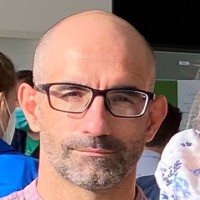
A concise factual answer block for searchers comparing this professional profile.
Daniel Moreno Andrés is listed as Permanent Reseach Scientist and Group Leader at Uniklinik RWTH Aachen, a with 783 employees, based in Aachen, North Rhine-Westphalia, Germany. AeroLeads shows a matched LinkedIn profile for Daniel Moreno Andrés.
Daniel Moreno Andrés previously worked as Permanent Reseach Scientist at Uniklinik Rwth Aachen and Research Scientist and Lecturer at Uniklinik Rwth Aachen. Daniel Moreno Andrés holds Postdoc, Mitosis And Mitoric Chromatin Decondensation from Friedrich Miescher Laboratory - Max Planck Society (Tübingen).
This section adds company-level context without repeating Daniel Moreno Andrés's masked contact details.
Review company-level records connected to Daniel Moreno Andrés before choosing the right outreach path.
Biochemist and molecular cell biologist. Passionate about mitosis, chromatin, biomedical research and microscopy. Group leader, lecturer, and permanent research scientist at Uniklinik RWTH Aachen.SCIENTIFIC TRACKFrom January 2006 to December 2009 I made my predoctoral research at the Nutrient-Mediated Signalling Unit of the Instituto de Biomedicina de Valencia-CSIC. My doctoral thesis, entitled "AMPK, ubiquitination and proteasome", addresses the functional relationship between AMPK (AMP-activated kinase) and the ubiquitin proteasome system (UPS). Since then, I hold a PhD in Biochemistry.Right after my PhD, from March 2010 to March 2013, I got postdoctoral position at the Department of Molecular Genetics and Cell Biology of the University of Ulm (Germany). There, I worked on protein networks and developed a method (SPLIFF) to map protein-protein interactions in time and space in living cells.After finishing my project in Ulm, I started as postdoctoral researcher in The Friedrich Miescher Laboratory at the Max Planck Institute in Tübingen (Germany). From March 2013 until Dic 2017 I implemented high-throughput assays for revealing molecular mechanism involved in post-mitotic chromatin decondensation and the corresponding frameworks for hit validation.Currently, I am group leader, permanent research scientist and lecturer at the Institute of Biochemistry and Molecular Cell Biology at Uniklinik RWTH Aachen (Germany) with a leading position. My research is focused in the molecular mechanisms that govern chromatin decondensation at late stages of cellular mitosis, and on how genetic changes in hematopoietic malignancies perturb regulators, checkpoints and molecular features of cell cycle and mitotic progression.PUBLIC AWARENESS OF SCIENCEI also like to make science achievable to the public by collaborating with some scientific divulgation platforms:I am writer at Mapping Ignorance (http://mappingignorance.org/ ) Blog Scientific Culture of the University of the Basque Country (English)Journal of Feelsynapsis (http://jof.feelsynapsis.com/). Free on-line journal of scientific education (Spanish). ISSN: 2254-365Principia (http://principia.io/). Art, literature and science on-line / press printed magazine (Spanish). ISSN: 2386-5997
Listed skills include Biochemistry, Cell Culture, Western Blotting, Cell Biology, and 20 others.
Company context helps verify the profile and gives searchers a useful next step.
A career timeline built from the work history available for this profile.
North Rhine-Westphalia, Germany
Aachen, North Rhine-Westphalia (Germany)
I am group leader, permanent research scientist and lecturer at the Institute of Biochemistry and Molecular Cell Biology at Uniklinik RWTH Aachen (Germany) with a leading position. My group performs basic research investigating molecular mechanisms that govern chromatin decondensation and nuclear reassembly at late stages of cellular mitosis. We are also interested in how genetic changes in hematopoietic malignancies and solid cancers perturb regulators, checkpoints and molecular features of cell cycle and mitotic progression to induce disease initiation, progression, and increased aggressiveness.
Aachen (Germany)
I am interested in unveiling the mechanisms governing later stages of cellular mitosis, mainly late anaphase and telophase, where chromatin decondenses to acquire its interphase state, which is paramount for keeping normal gene expression, regulation and cell physiology. For this, I aim also to apply the latest high-throughput and high-resolution microscopy technologies to a variety of cell lines and conditions. Using siRNA or drug libraries for screening and CRISPR/Cas-mediated genome engineering for protein-specific OK in validation processes. Among my objectives is also to study cell lines or tissues affected with human diseases since later stages of cellular mitosis are generally poorly understood despite their importance in developmental processes where mitosis is a touchstone.

Friedrich Miescher Laboratory Of The Max Planck Society In Tuebingen, Germany.
Our goal was to shed light on the ill-defined processes of chromatin decondensation after cellular mitosis. In other to address the problem I implemented in our laboratory a microscopy framework that allow us to screen for proteins or drugs involved in our target process with fast and quantitative readouts for chromatin decondensation. We are currently studying in detail the new chromatin decondensation factors using biochemical, cell biological and life cell imaging approaches.
Friedrich Miescher Laboratory Of The Max Planck Society In Tuebingen, Germany.
Our goal was to shed light on the ill-defined processes of chromatin decondensation after cellular mitosis. In other to address the problem I implemented in our laboratory a microscopy framework that allow us to screen for proteins or drugs involved in our target process with fast and quantitative readouts for chromatin decondensation. We are currently studying in detail the new chromatin decondensation factors using biochemical, cell biological and life cell imaging approaches.
Department Of Molecular Genetics And Cell Biology At University Of Ulm, Germany.
Under the project “Quantitative 3D und 4D Zellanalyse in lebenden Organismen" we aimed to developed a method to map protein-protein interactions in time and space in living cells. For that, we developed a methodology based on the Split-Ubiquitin sensor but using the ratio of two auto-fluorescent reporter proteins as signal for interaction. I used the mating of two separated haploid yeast cells, simulating two reaction channels, that initiate the reaction just when the cytoplasm of separated cells get in contact. This allowed me to analyse and track interactions online by two-channel time-lapse microscopy of the diploid cells during their first cell cycle.
Valencia, Spain
Grant: CSIC I3P2005 fellowshipProject: AMP-dependent protein kinase and ubiquitin- proteasome sistemSupervisor: Prof. Dr. Pascual Sanz Bigorra.I studied the functional relationship between AMP-activated kinase (AMPK) and the ubiquitin proteasome system. I found additional evidence of this bi-directional relationship at the very beginning my PhD period by mean of a couple of screenings: a vitro screening for AMPK activator drugs and in vivo two-hybrid screening for protein interactors. In this way, I found that A769662, a novel activator of AMPK, is able to reversibly inhibit the function of the 26S proteasome in an AMPK-independent manner. The novelty here was that, contrary to most proteasome inhibitors until then, A769662 did not affect proteolytic activities of 20S core subunits, thereby defining a novel mechanism of inhibition of proteasome activity. Additionally, I could proof a direct relationship from AMPK with the proteasome via its subunit PSMD11 and with the ubiquitin system. In the latter case, I found that the laforin–malin complex (phosphatase/E3-ubuiqhitin ligase complex involved in Lafora disease), promotes the incorporation of K63-linked ubiquitin chains in AMPK β subunits increasing the steady-state levels of at least AMPKβ subunit.
Other employees you can reach at uka.de. View company contacts for 783 employees →
 Rolf Thönnes
Colleague at Uniklinik Rwth AachenÜbach-Palenberg, North Rhine-Westphalia, Germany
View →
AA
Rolf Thönnes
Colleague at Uniklinik Rwth AachenÜbach-Palenberg, North Rhine-Westphalia, Germany
View →
AA
 Anastasia Asimakopoulos, Ph.D.
Colleague at Uniklinik Rwth AachenAachen, North Rhine-Westphalia, Germany
View →
GM
Anastasia Asimakopoulos, Ph.D.
Colleague at Uniklinik Rwth AachenAachen, North Rhine-Westphalia, Germany
View →
GM
 Gustav Müller-Franzes
Colleague at Uniklinik Rwth AachenAachen, North Rhine-Westphalia, Germany
View →
PM
Gustav Müller-Franzes
Colleague at Uniklinik Rwth AachenAachen, North Rhine-Westphalia, Germany
View →
PM
 Peter Merx
Colleague at Uniklinik Rwth AachenSindelfingen, Baden-Württemberg, Germany
View →
TL
Peter Merx
Colleague at Uniklinik Rwth AachenSindelfingen, Baden-Württemberg, Germany
View →
TL
 Teresa Lemainque
Colleague at Uniklinik Rwth AachenAachen, North Rhine-Westphalia, Germany
View →
RS
Teresa Lemainque
Colleague at Uniklinik Rwth AachenAachen, North Rhine-Westphalia, Germany
View →
RS
 Ritabrata Sanyal
Colleague at Uniklinik Rwth AachenAachen, North Rhine-Westphalia, Germany
View →
SW
Ritabrata Sanyal
Colleague at Uniklinik Rwth AachenAachen, North Rhine-Westphalia, Germany
View →
SW
 Svenja Windeck
Colleague at Uniklinik Rwth AachenAachen, North Rhine-Westphalia, Germany
View →
MZ
Svenja Windeck
Colleague at Uniklinik Rwth AachenAachen, North Rhine-Westphalia, Germany
View →
MZ
 Mou Zhixiang
Colleague at Uniklinik Rwth AachenHedong District, Tianjin, China
View →
FM
Mou Zhixiang
Colleague at Uniklinik Rwth AachenHedong District, Tianjin, China
View →
FM
 Franziska Mevissen
Colleague at Uniklinik Rwth AachenAachen, North Rhine-Westphalia, Germany
View →
HE
Franziska Mevissen
Colleague at Uniklinik Rwth AachenAachen, North Rhine-Westphalia, Germany
View →
HE
 Hannah Ehrlichmann
Colleague at Uniklinik Rwth AachenKreuzau, North Rhine-Westphalia, Germany
View →
Hannah Ehrlichmann
Colleague at Uniklinik Rwth AachenKreuzau, North Rhine-Westphalia, Germany
View →
Quick answers generated from the profile data available on this page.
Daniel Moreno Andrés works for Uniklinik RWTH Aachen.
Daniel Moreno Andrés is listed as Permanent Reseach Scientist and Group Leader at Uniklinik RWTH Aachen.
Daniel Moreno Andrés is based in Aachen, North Rhine-Westphalia, Germany while working with Uniklinik RWTH Aachen.
Daniel Moreno Andrés has worked for Uniklinik Rwth Aachen, Max Planck Society, University Of Ulm, and Instituto De Biomedicina De Valencia, Csic (Consejo Superior De Investigaciones Científicas).
Daniel Moreno Andrés's colleagues at Uniklinik RWTH Aachen include Rolf Thönnes, Anastasia Asimakopoulos, Ph.D., Gustav Müller-Franzes, Peter Merx, and Teresa Lemainque.
You can use AeroLeads to view verified contact signals for Daniel Moreno Andrés at Uniklinik RWTH Aachen, including work email, phone, and LinkedIn data when available.
Daniel Moreno Andrés holds Postdoc, Mitosis And Mitoric Chromatin Decondensation from Friedrich Miescher Laboratory - Max Planck Society (Tübingen).
Daniel Moreno Andrés is listed with skills including Biochemistry, Cell Culture, Western Blotting, Cell Biology, Molecular Biology, Molecular Cloning, Microscopy, and Science.
Search by job title, company, industry, location, and seniority. Export verified B2B contact data when you need it.
Start free trial Search contactsCheck these profiles if this is not the Daniel Moreno Andrés you were looking for.

