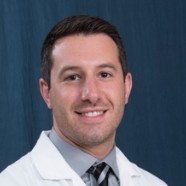
Danil Kaliakin, Ph. D. Email and Phone Number
Computational chemist with 16 peer-reviewed publications, expertise in development of computational chemistry codes, molecular dynamics simulations, quantum chemical calculations, and quantum computing. Certified in machine learning algorithms such as artificial neural networks and random forest, Schrödinger software, and pharmacology.
Cleveland Clinic
View- Website:
- clevelandclinic.org
- Employees:
- 32580
-
Research AssociateCleveland Clinic Jan 2024 - PresentCleveland, Ohio, United StatesI successfully demonstrated that sample-based quantum diagonalization (SQD) method can be used for study of hydrophobic and hydrophilic interactions. Simulations of these interactions have an important role in biological and pharmaceutical sciences. The SQD simulations in my work utilize up to 54 qubits of IBM’s 127-qubit quantum processor.I deployed the density matrix embedding theory simulations with SQD method, which is the pioneering implementation of the fragment-based approach with SQD method.I mentor and supervise other members of our research team on SQD simulations. -
Post-Doctoral Research AssociateBowling Green State University Aug 2021 - Dec 2023Bowling Green, Ohio, United StatesI advised and mentored graduate students on simulations with CASSCF, XMS-CASPT2, RMS-CASPT2, and REKS, scripting using Python and Shell, as well as the analysis and visualization of data. The projects that I advised graduate students on involve simulations of uracil photochemistry in solutions and the photoisomerization of retinal in archaerhodopsins. I successfully developed the interface between OpenMolcas, GAMESS-US, and TINKER software packages that enabled Tully’s fewest switches QM/MM nonadiabatic molecular dynamics simulations (NAMD) with the spin-restricted ensemble-referenced Kohn–Sham (REKS) method. The REKS calculations yield the results of XMS-CASPT2 quality with a substantially shorter computational time than CASSCF calculations. My implementation of NAMD QM/MM REKS methodology utilizing Tully’s fewest switches algorithm allows simulations of photochemical processes in biological systems that were previously out of reach for simulations with open source software due to the large sizes of chromophores and the long timescales of the required simulations.Using the newly developed OpenMolcas–GAMESS-US/Tinker interface, I demonstrated that the NAMD QM/MM REKS simulations of MTDP molecular motor in solution produce the quantum yield consistent with the experimental data obtained with transient absorption spectroscopy. Utilizing the data of NAMD QM/MM REKS simulations I elucidated the mechanistic details in the functionality of a novel MTDP molecular motor which has promising applications in medicine, materials science, and information technology. -

Postdoctoral Research AssociateNortheastern University College Of Science Jul 2020 - Jun 2021Boston, Massachusetts, United StatesI advised and mentored graduate and undergraduate students on DFT calculations in azoarene photoswitches. Photoswitches have applications in photopharmacology, catalysis, and molecular solar thermal materials. Ideal photoswitches require well-separated absorption spectra for both isomers and long-lived metastable states. However, predicting thermal half-lives with density functional theory is difficult because it requires locating transition structures and choosing an accurate model chemistry. Our project resulted in an automatic computational framework (EZ-TS) capable of handling thousands of quantum mechanical computations to predict activation free energies for azoarene Z → E isomerization. Moreover, we have performed a benchmarking of 28 density functionals and identified optimal levels of theory for simulations of azoarene Z → E isomerization.I elucidated the feasibility and mechanism of photochemical and thermal denitrogenation of borodiazene through NAMD and electronic structure calculations with DFT, CASSCF, and CASPT2 methods. This project is an important step towards metal-free difunctionalization of five-membered rings via diradical intermediates, which is a synthetic pathway that potentially could enable novel organic synthesis. -
Visiting ScientistUniversity Of Nevada, Reno / Chemical & Materials Engineering Department Jan 2020 - Jun 2020Reno, NevadaI showed that LnPP1 pseudopotentials and basis sets with ab initio molecular dynamics (AIMD) can accurately predict the structure of lanthanide-ligand complexes in solution. This resulted in a very powerful computational approach that allows to properly predict Eu–ligand complex structures in solution, which considers the forming and/or breaking of lanthanide–ligand and lanthanide–solvent coordination bonds. Creation of this approach is an important contribution to the efforts in rare earth separation and purification, development of lanthanide–ligand based medical contrast agents, single molecule magnets, luminescent molecules, and any field in which resolving the structure and reactivity of lanthanides in the atomic scale is relevant.Using AIMD and electronic structure simulations I demonstrated that nicotianamine is capable of binding lanthanides. This knowledge is an important insight into the understanding of the metabolism of lanthanides in plants. -
Postdoctoral Research AssociatePurdue University / Chemistry Department Aug 2017 - Dec 2019West Lafayette, IndianaI finalized the development and implementation of a new computational chemistry code in the quantum chemistry package GAMESS-US. This code is based on the all electron FMO TDDFT method capable of describing delocalized excitonic interactions in multi-chromophore systems such as pigment-protein complexes. Our robust code is the crucial contribution to investigation of detailed mechanisms of energy transfer in pigment protein complexes. Understanding of such mechanisms gives knowledge necessary for the development of biomimetic systems such as bio-inspired artificial antennas, light-harvesting materials, and artificial photosynthetic devices.To demonstrate the applicability of this code I performed a study of excitonic interactions in the Fenna-Matthews-Olson complex where my simulations used all-electron treatment of computational model containing 6853 atoms. -
Research AssistantUniversity Of Nevada Reno / Chemistry Department Aug 2012 - Aug 2017Reno, NevadaUsing nonadiabatic transition state theory (NA-TST) I demonstrated the importance of spin-forbidden processes in chemical transformations that occur in active sites of [NiFe] hydrogenase and rubredoxin. These findings are important knowledge helping to advance the development of novel catalysts utilizing first-row transition metals in place of the substantially more expensive conventional catalysts.My collaborators and I demonstrated through a combination of experimental temperature programmed desorption, electronic structure calculations, and application of NA-TST, that the 𝛽-hydrogen elimination desorption mechanism for ethyl groups on the Si(100) surface is a coverage-dependent process that produces the same observed desorption product through several convoluted reaction channels.Using 3D printing technology I created the 3D models for teaching fundamental concepts in physical chemistry. The models created during this work were used by my research adviser and other educators in physical and general chemistry classrooms. -
Research Aide AppointeeArgonne National Laboratory / Leadership Computing Facility Jun 2016 - Aug 2016Lemont, Illinois, UsaI developed the code for FMO minimum energy crossing point (MECP) search in the quantum chemistry package GAMESS-US. This code allows for the extension of the applicability of the MECP search to larger models of metal-sulfur proteins, which could lead to insights that would be overseen with smaller models that include only the active sites and their immediate surroundings. I demonstrated the efficiency of high-performance computing in FMO MECP calculations, which enabled the implementation of this method to systems containing thousands of atoms. Thus, my work helped to increase the robustness of the models that could be treated with NA-TST.
Danil Kaliakin, Ph. D. Education Details
-
Focus On Computational Chemistry -
Chemistry
Frequently Asked Questions about Danil Kaliakin, Ph. D.
What company does Danil Kaliakin, Ph. D. work for?
Danil Kaliakin, Ph. D. works for Cleveland Clinic
What is Danil Kaliakin, Ph. D.'s role at the current company?
Danil Kaliakin, Ph. D.'s current role is Research Associate at Cleveland Clinic.
What schools did Danil Kaliakin, Ph. D. attend?
Danil Kaliakin, Ph. D. attended University Of Nevada, Reno, Siberian Federal University.
Who are Danil Kaliakin, Ph. D.'s colleagues?
Danil Kaliakin, Ph. D.'s colleagues are Tanya King Rn, Msml, Leigh Roach, Gayl Fuizzotti, Michele Schmidt, Kelly Pyles, Rebecca Weisberg, David Hunter.
Free Chrome Extension
Find emails, phones & company data instantly
Aero Online
Your AI prospecting assistant
Select data to include:
0 records × $0.02 per record
Download 750 million emails and 100 million phone numbers
Access emails and phone numbers of over 750 million business users. Instantly download verified profiles using 20+ filters, including location, job title, company, function, and industry.
Start your free trial