
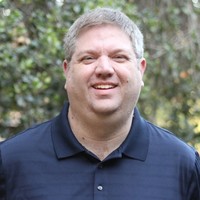
AeroLeads people directory · profile
David Strick, Ph.D. Email & Phone Number
Director of Safety and Emergency Management
at
Stanford University School of Medicine
2 work emails found
@stanford.edu
LinkedIn matched
✓ Verified Jul 2026
4 data sources
Profile completeness 100%
Current company
Role
Director of Safety and Emergency Management
Location
Palo Alto, California, United States
Who is David Strick, Ph.D.? Overview
A concise factual answer block for searchers comparing this professional profile.
Quick answer
David Strick, Ph.D. is listed as Director of Safety and Emergency Management at Stanford University School of Medicine, based in Palo Alto, California, United States. AeroLeads shows a work email signal at stanford.edu and a matched LinkedIn profile for David Strick, Ph.D..
David Strick, Ph.D. previously worked as Consultant at Independent Health And Safety Consultant and Senior Research Safety Specialist at Stanford University. David Strick, Ph.D. holds Ph.D., Cell Biology from The University Of Texas Medical Branch.
Company email context
Email format at Stanford University School of Medicine
This section adds company-level context without repeating David Strick, Ph.D.'s masked contact details.
*@stanford.edu
71% confidence
AeroLeads found 2 current-domain work email signals for David Strick, Ph.D.. Compare company email patterns before reaching out.
Profile bio
About David Strick, Ph.D.
Thoughtful results-orientated leader focused on creating positive safety cultures in higher education institutions and biomedical research facilities. Specialist in Biosafety & Biosecurity with expertise in conducting IBC protocol reviews and panel meetings, conducting biosafety site visits, and medical waste management. Broad knowledge base of Chemical Hygiene, Industrial Hygiene, Radiation Safety, Laser Safety, CalOSHA and California CUPA regulations.
Listed skills include Pcr, Real Time Pcr, Laboratory Safety, Laboratory Management, and 19 others.
Current workplace
David Strick, Ph.D.'s current company
Company context helps verify the profile and gives searchers a useful next step.
Stanford University School Of Medicine
AeroLeads page
7 roles
David Strick, Ph.D. work experience
A career timeline built from the work history available for this profile.
Director Of Safety And Emergency Management
Consultant
Independent Health And Safety Consultant

Senior Research Safety Specialist
Jan 2017 - May 2019
Biosafety Specialist
Conducts IBC protocol reviews which include scientific review of the protocol, communication of review comments to the faculty member, and presentation to the Administrative Panel on Biosafety (IBC) of the protocol content and recommendations. Subsequently, communicates the IBC decision and conducts follow-up with the faculty member as needed.Conducts on-site visits and outreach to laboratory and non-laboratory areas regarding Biosafety procedures and compliance. Coordinates with the Occupational Health Clinic regarding Biosafety-related and animal allergy related medical surveillance.Conducts exposure assessments and coordinates follow-up and incident reporting.Develops new training programs for BSL-2 agents.
Aug 2015 - Jan 2017
Health And Safety Specialist
Conducted on-site visits and outreach to laboratory and non-laboratory areas regarding Biosafety protocols and work practices. Served as program coordinator for the Select Agent Toxin Program. Ensures regulatory compliance with maintaining the exempt quantities of the nine listed regulated select agent toxins. Coordinated and trains team members in conducting site visits to evaluate laboratory compliance with Stanford University Program requirements. Coordinated with the Occupational Health Program if medical surveillance is required and if Standard Operating Procedures (SOP) need to be reviewed. Please see http://www.stanford.edu/dept/EHS/prod/researchlab/chem/select_toxins_program/SelectToxinsProgram.pdf. Served as the principal Health and Safety Program Coordinator for the Department of Chemistry by providing consultation on experimental design, risk assessments, chemical inventory support, training development, and regulatory compliance. Coordinated Fall incoming graduate student classroom and hands-on module training and development.Conducted incident investigation and follow up by providing recommendations to the laboratories and PIs (Average 12 per year). Coordinated with the Stanford Occupational Health Clinic as necessary.Authored/Co-Authored numerous EH&S publications including:Bloodborne Pathogens Local Exposure Control Plan Cryogenic Tube Fact sheet (http://web.stanford.edu/dept/EHS/prod/researchlab/lab/safety_sheets/11-157.pdf)Autologous Blood Use in Research guidelinesLithium Aluminum Hydride Lesson’s Learned (http://web.stanford.edu/dept/EHS/prod/documents/13-235-1.pdf)Laboratory Self Inspection Revision (in Process)Conducted visits to ensure laboratory compliance with the Controlled Substances Program. Served as a backup for the controlled substances program coordinator (reviews applications, initiates orders, receives and distributes packages)
Aug 2012 - Aug 2015
Postdoctoral Fellow/Life Sciences Research Associate
Established in vitro cell culture model systems to explore gene expression changes mediated by mTOR signaling in the retinal pigment epithelium.Utilized in vivo and in vitro paradigms to study the regulatory mechanisms that govern the phagocytosis of rod outer segments by the retinal pigment epithelium.Characterized the interaction between Myosin II and Mertk and the role of Myosin II in the retinal pigment epithelial phagocytosis pathway.Characterized circadian regulated gene expression changes in the retinal pigment epithelium. Collaborated on studies exploring the utilization of synthetic extracellular matrices as substrates for RPE cell growth and differentiation.Expert in the isolation and cultivation of the retinal pigment epithelium from mice and rats.Introduced several new animal surgical procedures in the laboratory including fluoroscein angiography of mouse retinas, rodent single eye enucleation and mouse dark adaptation for circadian gene expression analysis.Managed purchasing and laboratory safety regulatory compliance.Trained 3 technicians and 2 undergraduates in animal husbandry, cell culture and phagocytosis assays.
Apr 2005 - Jul 2012
3 education records
David Strick, Ph.D. education
Ph.D., Cell Biology
The University Of Texas Medical Branch
Biological Sciences
Wayne State University
B.S., Biology (Chemistry Minor)
Grand Valley State University
FAQ
Frequently asked questions about David Strick, Ph.D.
Quick answers generated from the profile data available on this page.
What company does David Strick, Ph.D. work for?
David Strick, Ph.D. works for Stanford University School of Medicine.
What is David Strick, Ph.D.'s role at Stanford University School of Medicine?
David Strick, Ph.D. is listed as Director of Safety and Emergency Management at Stanford University School of Medicine.
What is David Strick, Ph.D.'s email address?
AeroLeads has found 2 work email signals at @stanford.edu for David Strick, Ph.D. at Stanford University School of Medicine.
Where is David Strick, Ph.D. based?
David Strick, Ph.D. is based in Palo Alto, California, United States while working with Stanford University School of Medicine.
What companies has David Strick, Ph.D. worked for?
David Strick, Ph.D. has worked for Stanford University School Of Medicine, Independent Health And Safety Consultant, and Stanford University.
How can I contact David Strick, Ph.D.?
You can use AeroLeads to view verified contact signals for David Strick, Ph.D. at Stanford University School of Medicine, including work email, phone, and LinkedIn data when available.
What schools did David Strick, Ph.D. attend?
David Strick, Ph.D. holds Ph.D., Cell Biology from The University Of Texas Medical Branch.
What skills is David Strick, Ph.D. known for?
David Strick, Ph.D. is listed with skills including Pcr, Real Time Pcr, Laboratory Safety, Laboratory Management, Protein Purification, Protein Immunoprecipitation, Western Blotting, and Cell Culture.
Find 750M verified contacts
Search by job title, company, industry, location, and seniority. Export verified B2B contact data when you need it.
Start free trial