AeroLeads people directory · profile
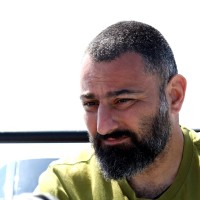
Dimitris Poursanidis Email & Phone Number
Technical Scientist
at
Foundation for Research and Technology - Hellas (FORTH)
LinkedIn matched
✓ Verified August 2026
3 data sources
Profile completeness 100%
Current company
Role
Technical Scientist
Location
Iráklion, Crete, Greece
Company size
Who is Dimitris Poursanidis? Overview
A concise factual answer block for searchers comparing this professional profile.
Quick answer
Dimitris Poursanidis is listed as Technical Scientist at Foundation for Research and Technology - Hellas (FORTH), a with 201 employees, based in Iráklion, Crete, Greece. AeroLeads shows a matched LinkedIn profile for Dimitris Poursanidis.
Dimitris Poursanidis previously worked as Managing Director at Terrasolutions Marine Environment Research and Research Fellow at Foundation For Research And Technology - Hellas (Forth). Dimitris Poursanidis holds Doctor Of Philosophy (Phd), Marine Ecology & Biodiversity from University Of The Aegean.
Company email context
Email format at Foundation for Research and Technology - Hellas (FORTH)
This section adds company-level context without repeating Dimitris Poursanidis's masked contact details.
Foundation for Research and Technology - Hellas (FORTH)
Review company-level records connected to Dimitris Poursanidis before choosing the right outreach path.
Profile bio
About Dimitris Poursanidis
Dimitris Poursanidis, Ph.D., is a marine scientist and earth observation analyst committed to unraveling the mysteries of our seascapes. With a wealth of expertise in marine ecology and biodiversity, he has dedicated his career to understanding the delicate balance of marine ecosystems and the impacts of human activities. Driven by a passion for conservation, Dimitris explores the intricate relationships between marine organisms and their environment, striving to protect biodiversity and promote sustainable practices.Dimitris Poursanidis works as a Research Scientist / Data Stewardship for the Institute of Applied and Computational Mathematics, FORTH.He is the founder of terraSolutions marine environment research (www.terrasolutions.eu) under which he consults and participate in projects focused on marine and coastal ecosystems using hybrid methods, mixing traditional techniques with modern tools and methods. He is affiliated member of the Marine Biodiversity and Ecosystems Management lab of the Department of Oceanography and Marine Bioscience of the University of the Aegean.He is a visiting professor at NYU Abu Dhabi, for the J-Terms.He holds a Ph.D. on Marine Ecology and a M.Sc. on the Integrated Coastal Zone Management from the University of the Aegean, Department of Marine Science (2008) and a B.Sc. on Ecosystem Management (2004) from the Higher Technological Institute of Crete. He has work in both academic (Natural History Museum of Crete, UNEP/MAP, Hellenic Center of Marine Research, University of Athens, University of the Aegean), private sector (Marathon Data Systems, NCC, NatureBureau, ASPROFOS, LDK, Enveco, Yli, etc.) and NGO's (WWF, IUCN, iSea) on projects focused on the coastal marine environment through conservation projects funded by European and National funds (LIFE +, INTERREG, EraNET, H2020, MAVA foundation, THALASSA Foundation, MEDPAN). His main research interests includes Environmental Monitoring using applied methods and tools (Earth Observation, UAV, Non Destructive Sampling, Photogrammetry, Scientific Diving), Cartography of the Biodiversity, Spatial Database Applications, Geographic Information Systems, Satellite Remote Sensing applications in the coastal and marine environment, Biodiversity exploitation through Species Distribution Modelling in terrestrial and aquatic environments.
Listed skills include Digitization, Marine Ecology, Wildlife, Coastal, and 46 others.
Current workplace
Dimitris Poursanidis's current company
Company context helps verify the profile and gives searchers a useful next step.
Foundation For Research And Technology - Hellas (Forth)
20 roles
Dimitris Poursanidis work experience
A career timeline built from the work history available for this profile.
Managing Director
CurrentterraSolutions marine environment research is a newly established research company, based on the island of Crete focused on the research of the coastal and marine enviroment. terraSolutions has undertook projects like environmental monitoring, development of eco-tourism activities in unexplored areas, development of diving parks as well as partner in research projects.
Jan 2008 - Present
Technical Scientist
Current
Jun 2023 - Present
Research Fellow
The Remote Sensing Lab operates within the Spatial analysis, Geographic Information Systems and Remote Sensing group of the Institute of Applied Mathematics of FORTH (Foundation for Research and Technology Hellas). The Lab concentrates in the field of Earth Observation and its area of research is the study of environmental phenomena and problems. Understanding Earth system processes, as well as their interaction effects of the manmade activities is recognized by the global scientific community… Show more The Remote Sensing Lab operates within the Spatial analysis, Geographic Information Systems and Remote Sensing group of the Institute of Applied Mathematics of FORTH (Foundation for Research and Technology Hellas). The Lab concentrates in the field of Earth Observation and its area of research is the study of environmental phenomena and problems. Understanding Earth system processes, as well as their interaction effects of the manmade activities is recognized by the global scientific community as an urgent and important research direction. Observing the Earth using Remote Sensing is a non-invasive, non-destructive method of obtaining information. Remote Sensing can be used for monitoring changes in the Earth’s climate and environment, because it offers a unique perspective of the Earth, its resources and human impact upon it. Earth Observation is a fast-growing area of research, with technological advances leading to smaller satellites with improved instrumentation, spatial/spectral coverage and resolution, as well as to enhanced airborne hyper-spectral sensors, unmanned aerial vehicles and ground systems. The activities of the Lab focus on both urban and natural environments. Show less
Jan 2017 - May 2023

Jan 2024 - Present
Research Proposal Evaluator (Vice-Chair, Evaluator And Rapporteur)
Jan 2022 - May 2022
Wildlife Photographer
Meet Your Neighbours
Founded in 2009, Meet Your Neighbours™ is a worldwide photographic initiative created by Niall Benvie and Clay Bolt. The project is dedicated to reconnecting people with the wildlife on their own doorsteps – and enriching their lives in the process. These creatures and plants are vital to people: they represent the first, and for some, the only contact with wild nature we have. Yet too often they are overlooked, undervalued.How does Meet Your Neighbours make this reconnection? Through… Show more Founded in 2009, Meet Your Neighbours™ is a worldwide photographic initiative created by Niall Benvie and Clay Bolt. The project is dedicated to reconnecting people with the wildlife on their own doorsteps – and enriching their lives in the process. These creatures and plants are vital to people: they represent the first, and for some, the only contact with wild nature we have. Yet too often they are overlooked, undervalued.How does Meet Your Neighbours make this reconnection? Through producing inspiring imagery – the sort of pictures that make the viewer think, ‘I’ve got to see this for myself!” And then we encourage people to “meet their neighbours” through their own cameras.Meet Your Neighbours images have an instantly recognizable look. Each subject is photographed on location in a field studio. A brilliantly-lit white background removes the context, encouraging appreciation of the subject as an individual rather than a species. Their own form constitutes the composition. Seen this way, animals and plants we thought we knew reveal another side of themselves, encourage a second glance, perhaps even renewed interest. Show less
Jan 2013 - Jan 2021
Visiting Lecturer
Visiting Lecturer in Environmental Management, School Of Agriculture, Food and Nutrition, Department of Agriculture
Feb 2020 - Sep 2020
Visiting Lecturer
Visiting Lecturer in Environmental Management, School Of Agriculture, Food and Nutrition, Department of Agriculture
Feb 2019 - Jul 2019
Research Proposal Evaluator (Vice-Chair, Evaluator And Rapporteur)
Feb 2019 - Jul 2019
Visiting Lecturer
Visiting Lecturer in Environmental Management, School Of Agriculture, Food and Nutrition, Department of Agriculture
Mar 2018 - Jul 2018
Geographic Information System Analyst / Database Manager
Unep/Map
The MED POL Programme (the marine pollution assessment and control component of MAP) is responsible for the follow up work related to the implementation of the LBS Protocol, the Protocol for the Protection of the Mediterranean Sea against Pollution from Land-Based Sources and Activities (1980, as amended in 1996), and of the dumping and Hazardous Wastes Protocols. MED POL assists Mediterranean countries in the formulation and implementation of pollution monitoring programmes, including… Show more The MED POL Programme (the marine pollution assessment and control component of MAP) is responsible for the follow up work related to the implementation of the LBS Protocol, the Protocol for the Protection of the Mediterranean Sea against Pollution from Land-Based Sources and Activities (1980, as amended in 1996), and of the dumping and Hazardous Wastes Protocols. MED POL assists Mediterranean countries in the formulation and implementation of pollution monitoring programmes, including pollution control measures and the drafting of action plans aiming to eliminate pollution from land-based sources.My role is to maintane the MEDPOL Database system, keep it updated and functionable and contribute to reports in EU and Mediterranean level. Show less
May 2007 - Feb 2017
Earth Observation Analyst / Gis Analyst / Cartographer
Foundation For Research And Technology
The Foundation for Research and Technology-Hellas (FORTH), established in 1983, is one of the largest research centers in Greece with well organized facilities, highly qualified personnel and a reputation as a top-level research foundation worldwide. FORTH reports to the General Secretariat for Research and Technology of the Hellenic Ministry of Education and Religious Affairs, Culture and Sports.
Nov 2012 - Dec 2016
Marine Enviroment Research / Biodiversity Assesment
Member of the marine ecology & biodiversity lab.
Oct 2006 - Dec 2016
Ecogenodiv - Http://Ecogenodiv.Sardine.Gr/
Natural History Museum Of Crete
A major challenge facing evolutionary biologists is to explain the diversity of life and the interplay of evolutionary and ecological forces that shape it. Islands provide the best natural laboratories to study the species level processes that initiate biological diversification. We propose to use a next-generation sequencing method (RAD-tags) in a multi-species dataset to tease the role of genetic, geological, and environmental factors in shaping the bio-diversity. We will study the… Show more A major challenge facing evolutionary biologists is to explain the diversity of life and the interplay of evolutionary and ecological forces that shape it. Islands provide the best natural laboratories to study the species level processes that initiate biological diversification. We propose to use a next-generation sequencing method (RAD-tags) in a multi-species dataset to tease the role of genetic, geological, and environmental factors in shaping the bio-diversity. We will study the evolutionary radiation of 4 herptiles that possess contrasting ecological requirements and life history traits in the Aegean, where the landscape provides both young and old, simplified and complex geological and ecological settings. We aim to develop ecological niche models using georeferenced locality data and environmental data layers; assess whether genetic variation across lineages is associated with divergence in the ecological niche; demonstrate a general approach for combining ecological niche modeling and phylogenetics in species delimitation; and examine the phylogeographic pattern of each taxon by representing them as population trees with different topologies, identifying a series of plausible colonization scenarios, testing these scenarios within an ABC framework. We also aim to show that RAD-tags is a powerful tool to identify detailed patterns of phylogenetic relationships in any organism regardless of existing genomic data, recognize incipient speciation and genome-wide variation in natural populations, and creating a pipeline that could be adopted for other non model species, enhancing our knowledge for the processes that led to the diversity of life. As the loss of biological diversity continues at an astounding rate, increasing depth of understanding and application of new technologies will be instrumental in reevaluation of diversity, refining conservation strategies to protect what remains and preserve the highest possible level of diversity in natural ecosystems. Show less
Jan 2015 - Jul 2015
Gis Analyst / Species Distributions Analysis
Taxonomy is the first step to the understanding of biodiversity, indispensable to other biological fields like phylogeny, ecology, biogeography and conservation biology. However, it has been increasingly judged as inadequate to meet the present challenge for fast aquisition of biodiversity information, needed for conservation management and planning.SPIDOnetGR intends to dynamically intervene to the taxonomy impediment by presenting an efficient way to accelerate biodiversity knowledge… Show more Taxonomy is the first step to the understanding of biodiversity, indispensable to other biological fields like phylogeny, ecology, biogeography and conservation biology. However, it has been increasingly judged as inadequate to meet the present challenge for fast aquisition of biodiversity information, needed for conservation management and planning.SPIDOnetGR intends to dynamically intervene to the taxonomy impediment by presenting an efficient way to accelerate biodiversity knowledge in one of the most important biodiversity hotspots of Europe, Greece. The target group is spiders, especially ground spiders, one of the most diverse taxa in the study area and the whole Mediterranean, yet still overlooked in their use for the identification of biodiversity hotspots, due to their challenging taxonomy and the absence of relevant identification keys. Show less
Apr 2014 - Jul 2015
Gis Analyst / Cartorapher / Field Researcher
Member of the Project "Census of the Island wetlands of Greece".Responsible for the cartography of the island wetlands and the maintenance of the geodatabase.Photolibrary curator for the image library of the project.Field researcher in the expedition of the Island wetlands of Ionian Islands as well as in short period field work in Crete, Kasos and Karpathos.
Apr 2008 - Jul 2013

Gis Analyst - Geodatabase Design / Cartographer
https://services.ath.hcmr.gr/
Dec 2006 - 2013
Gis Techical Support
Marathon Data Systems
1) Technical support on ArcGIS suite2) Database administration on local databases for customers3) Education on ArcGIS software
Jan 2005 - Nov 2007
Trainee
Natural History Museum Of Crete
During these years i have been trained on several issues concerning terrestrial and aquatic research. From setting up experiments with traps to sort specimens from pitfall traps, identify species of arthropods, micromammals and marine molluscs. Also i learn the basics of the GIS, using ArcView for map digitize. Nowadays i have close cooperation with the laboratory of vertebrates and inverebrates, working on map design for species distribution, use the data of the database for modelling of… Show more During these years i have been trained on several issues concerning terrestrial and aquatic research. From setting up experiments with traps to sort specimens from pitfall traps, identify species of arthropods, micromammals and marine molluscs. Also i learn the basics of the GIS, using ArcView for map digitize. Nowadays i have close cooperation with the laboratory of vertebrates and inverebrates, working on map design for species distribution, use the data of the database for modelling of species and also i offer specimens to the collection of the museum. Show less
Oct 2000 - Oct 2004
4 education records
Dimitris Poursanidis education
Doctor Of Philosophy (Phd), Marine Ecology & Biodiversity
Seminars Of Species Distribution Modelling And Hyperspectral Remote Sensing, Spatial Ecology
Master Of Science (Msc), Intregrated Coastal Zone Management
Bachelor Of Science (Bsc), Agriculture Ecosystem Management
FAQ
Frequently asked questions about Dimitris Poursanidis
Quick answers generated from the profile data available on this page.
What company does Dimitris Poursanidis work for?
Dimitris Poursanidis works for Foundation for Research and Technology - Hellas (FORTH).
What is Dimitris Poursanidis's role at Foundation for Research and Technology - Hellas (FORTH)?
Dimitris Poursanidis is listed as Technical Scientist at Foundation for Research and Technology - Hellas (FORTH).
Where is Dimitris Poursanidis based?
Dimitris Poursanidis is based in Iráklion, Crete, Greece while working with Foundation for Research and Technology - Hellas (FORTH).
What companies has Dimitris Poursanidis worked for?
Dimitris Poursanidis has worked for Foundation For Research And Technology - Hellas (Forth), Terrasolutions Marine Environment Research, New York University Abu Dhabi, European Commission, and Meet Your Neighbours.
How can I contact Dimitris Poursanidis?
You can use AeroLeads to view verified contact signals for Dimitris Poursanidis at Foundation for Research and Technology - Hellas (FORTH), including work email, phone, and LinkedIn data when available.
What schools did Dimitris Poursanidis attend?
Dimitris Poursanidis holds Doctor Of Philosophy (Phd), Marine Ecology & Biodiversity from University Of The Aegean.
What skills is Dimitris Poursanidis known for?
Dimitris Poursanidis is listed with skills including Digitization, Marine Ecology, Wildlife, Coastal, Scuba Diving, Wetlands, Quantum Gis, and Geomatics.
Find 750M verified contacts
Search by job title, company, industry, location, and seniority. Export verified B2B contact data when you need it.
Start free trialPeople with similar names
Check these profiles if this is not the Dimitris Poursanidis you were looking for.
View similar profiles

