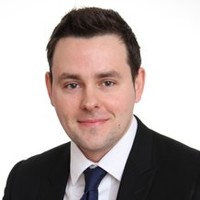
Dr. David J. Robertson Email and Phone Number
I have worked in a diverse range of research areas in psychology and cognitive neuroscience. I work as a Lecturer in Psychology at the University of Strathclyde School of Psychological Sciences & Health. My research focuses on improving our understanding of human and machine-based face recognition, and how we might improve unfamiliar face recognition in real-world professions. I also have additional research interests in attention, perception and distractibility. M.A. (Honours) Psychology:I gained my degree in Psychology from the University of Glasgow, graduating in 2009. I completed my undergraduate project in Stephany Biello's Chronobiology lab. PhD Cognitive Neuroscience:I gained my PhD at University College London (UCL), supervised by Professor Nilli Lavie. My PhD research focused on the application of perceptual load theory to a variety of applied domains including the perception of time. Postdoctoral Research FellowI joined the York FaceVar Lab (www.facevar.com) as the senior applied scientist in October 2013, my work focused on improving unfamiliar face recognition in real world environments. I take a keen interest in science communication and public engagement with research.

-
Senior LecturerUniversity Of StrathclydeGlasgow, Gb
-
Senior LecturerUniversity Of Strathclyde Sep 2023 - PresentGlasgow, Scotland, United Kingdom
-
LecturerUniversity Of Strathclyde Jul 2017 - Aug 2023Glasgow, United Kingdom
-
Research & Teaching AssociateUniversity Of Strathclyde Jan 2017 - Jul 2017University Of Strathclyde (Glasgow)
-
 Postdoctoral Research FellowUniversity Of York Jan 2015 - Jan 2017York, United KingdomOur research group moved to the University of York in January 2013. For more information on our work please see our webpage www.facevar.com National security officials, officers in the criminal justice system and retail staff frequently rely on face recognition to establish and authenticate the identity of an individual. At UK Border Control, officials work to ensure that only those passengers whose passport photo matches their face are allowed to enter the country. In the criminal justice system, police officers often utilise CCTV images as a means of identifying the perpetrator of a crime. In addition, cashiers in retail stores must examine face-photo ID cards in order to prohibit the illegal sale of age-restricted goods. Each of these occupations relies on the ability to detect correctly whether or not the face of an unfamiliar person matches a face photo on an ID card or an image still. Our reliance on face recognition for identity verification may stem from the fact that in some instances we show a high level of expertise in this area. For example, we are able to recognise familiar faces across a large range of highly variable photos, apparently effortlessly. However, in a striking contrast, recent research has shown that we are surprisingly poor at recognising new instances of an unfamiliar person. This distinction has major implications for applied professions in which accurate unfamiliar face recognition is vital. My work focuses on improving our understanding of human and machine-based face recognition, and how we might improve unfamiliar face recognition in real-world professions.
 -
 Postdoctoral Research FellowUniversity Of Aberdeen Sep 2013 - Dec 2014Aberdeen, United KingdomNational security officials, officers in the criminal justice system and retail staff frequently rely on face recognition to establish and authenticate the identity of an individual. At UK Border Control, officials work to ensure that only those passengers whose passport photo matches their face are allowed to enter the country. In the criminal justice system, police officers often utilise CCTV images as a means of identifying the perpetrator of a crime. In addition, cashiers in retail stores must examine face-photo ID cards in order to prohibit the illegal sale of age-restricted goods. Each of these occupations relies on the ability to detect correctly whether or not the face of an unfamiliar person matches a face photo on an ID card or an image still. Our reliance on face recognition for identity verification may stem from the fact that in some instances we show a high level of expertise in this area. For example, we are able to recognise familiar faces across a large range of highly variable photos, apparently effortlessly. However, in a striking contrast, recent research has shown that we are surprisingly poor at recognising new instances of an unfamiliar person. This distinction has major implications for applied professions in which accurate unfamiliar face recognition is vital. My work at Aberdeen focused on improving our understanding of human and machine-based face recognition, and how we might improve unfamiliar face recognition in real-world professions.
 -
 Phd StudentUcl Institute Of Cognitive Neuroscience Sep 2009 - Sep 2013Alexadra House, 17 Queen Square LondonI completed my PhD in Cognitive Neuroscience at the UCL Institute of Cognitive Neuroscience. I was supervised by Professor Nilli Lave and my research focused on applications of load theory in both clinical and neuro-typical domains. In particular, I assessed the efficacy of using perceptual load to reduce distraction in ADHD and I also investigated the effect of processing load on the perception of time. I graduated from the ICN in May 2014.
 -
 Undergraduate StudentUniversity Of Glasgow Sep 2005 - May 2009Glasgow, United KingdomI completed an M.A.(Honours) degree in Psychology at the University of Glasgow, graduating in June 2009.
Dr. David J. Robertson Skills
Dr. David J. Robertson Education Details
-
Teaching And Learning In Higher Education
-
M.A. (Honours) Psychology
Frequently Asked Questions about Dr. David J. Robertson
What company does Dr. David J. Robertson work for?
Dr. David J. Robertson works for University Of Strathclyde
What is Dr. David J. Robertson's role at the current company?
Dr. David J. Robertson's current role is Senior Lecturer.
What schools did Dr. David J. Robertson attend?
Dr. David J. Robertson attended University Of Strathclyde, Ucl, The University Of Glasgow.
What are some of Dr. David J. Robertson's interests?
Dr. David J. Robertson has interest in Education, Environment, Poverty Alleviation, Science And Technology, Health.
What skills is Dr. David J. Robertson known for?
Dr. David J. Robertson has skills like Scientific Writing, Cognitive Neuroscience, Neuroscience, Qualitative Research, Science, Statistics, Research Design, Experimentation, Spss, Experimental Design, Quantitative Research, Matlab.
Free Chrome Extension
Find emails, phones & company data instantly
Aero Online
Your AI prospecting assistant
Select data to include:
0 records × $0.02 per record
Download 750 million emails and 100 million phone numbers
Access emails and phone numbers of over 750 million business users. Instantly download verified profiles using 20+ filters, including location, job title, company, function, and industry.
Start your free trial