

AeroLeads people directory · profile
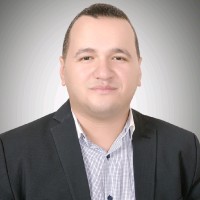
Mostafa Ewees Email & Phone Number
Professor Emeritus
at
Stanford University
LinkedIn matched
✓ Verified August 2026
3 data sources
Profile completeness 86%
Who is Mostafa Ewees? Overview
A concise factual answer block for searchers comparing this professional profile.
Quick answer
Mostafa Ewees is listed as Professor Emeritus at Stanford University, based in Eugene, Oregon, United States. AeroLeads shows a matched LinkedIn profile for Mostafa Ewees.
Mostafa Ewees previously worked as Certificated Lecturer at Stanford University and Visiting Associate Professor at The American University In Cairo. Mostafa Ewees holds Phd, Educational Psychology from Stanford University.
Company email context
Email format at Stanford University
This section adds company-level context without repeating Mostafa Ewees's masked contact details.
Stanford University
Review company-level records connected to Mostafa Ewees before choosing the right outreach path.
Profile bio
About Mostafa Ewees
Introducing and Teaching a New Concept :
Current workplace
Mostafa Ewees's current company
Company context helps verify the profile and gives searchers a useful next step.
7 roles
Mostafa Ewees work experience
A career timeline built from the work history available for this profile.
Professor Emeritus
CurrentStanford Professor & Researcher Methodology at Stanford University in California & visiting Stanford Professor at American University in Cairo and organizational behavior ,Clinical Sociologist & psycho-analysis at Stanford University at California and founder & educational superintendent and business psychologist at Pathfinder Training Company
Aug 2007 - Present
Certificated Lecturer
Educational psychologists work in a wide variety of settings. Some educational psychologists work at colleges and universities, often in psychology departments or in schools or departments of education. These psychologists may teach college courses, conduct research, prepare prospective teachers and other educators, and/or developstatistical and research methods. Also at the college level, educational psychologists may work in study skills programs, instructional improvement programs, and/or curriculumdevelopment projects.Other educational psychologists work in government, school, military, or corporate settings, where they participate in training staff, developing and implementing educational programs, evaluating the effectiveness of educational programs, and/or analyzing educational data.Still other educational psychologists work in research and development organizations inwhich they develop instructional materials that are grounded in psychological theory and/or develop educational tests for schools, businesses, and many professions.
Jan 2005 - Aug 2007

Visiting Associate Professor
Political Psychology , Political Sociology and Behaviorism
Feb 2017 - May 2024

Associate Professor
PSY 339 • Behavior Problems Of ChildrenApplied behavior analysts have focused on how adults can influence the problem behavior of children using a variety of behavior modification strategies. A related question, virtually unexplored, is how the behavior problems of children influence adults. This child-effects concept was explored empirically in a study involving 12 adults who were asked to teach four pairs of children in which one member of the pair exhibited problem behavior and the other typically did not. Results demonstrated that problem children displayed tantrums, aggression, and self-injury contingent on adult instructional attempts but not at other times, whereas nonproblem children showed little or no problem behavior at any time. Importantly, from a child-effects perspective, adults engaged in teaching activities with nonproblem children more often than with problem children. Also, when an adult worked with a problem child, the breadth of instruction was more limited and typically involved those tasks associated with lower rates of behavior problems. The implications of these results are discussed with respect to theories of escape behavior, current assessment practices, and intervention issues related to maintenance. The existence of child effects suggests that problem behavior may be better understood when it is conceptualized as involving a process of reciprocal influence between adult and child.Adjustment difficulties during childhood and adolescence; causation and treatment. Three lecture hours a week for one semester.
Oct 2013 - May 2024

Assistant Professor
1-Introducing and Teaching a New Concept As I introduce and develop a new concept I prefer to have students play an active role rather than look on passively as I unfurl and explain a fully ‘finished’ example. One instance of this, in the International Trade class, is in the development of the notion of an autarky equilibrium. Instead of me taking on the entire task of locating the equilibrium and providing the rationale for it, I let the students accomplish it. While locating the equilibrium usually poses no problems, offering a rationale for it proves to be quite daunting. Here’s where I intervene and prod their thought processes by asking them to draw an analogy with the determination of the optimal consumption bundle from consumer theory. Eventually, they do taste success. An advantage of this approach is that it enables students to see the connection between seemingly disparate areas in economics and in doing so sharpens their overall understanding of the subject. Importantly, a notion or a concept that is developed through such student involvement is less likely to appear as something arcane or ‘other-worldly’ and more likely to be something a student can readily embrace and relate to. Further, this kind of involvement by baring the process by which a concept comes into being in a ‘personal’ sort of way not only makes for easy .2-The Structure of a Lecture At the end of each lecture students are called upon to summarize the main points. Besides making for more student involvement, this helps in reinforcing students’ understanding of the material just presented and thus aids in its retention. At the beginning of each lecture we do a quick recap of the material presented in the previous lecture. As the lecture progresses this will help students build a link between the information being presented and the ‘old’ information. Creating such a connection, educational psychologists point out, leads to better encoding of the overall subject material.
Feb 2004 - Aug 2012

Researcher Methodology And Lecturer
The field of psychology has a long history of interaction with education, and educational psychology has had a profound impact on how issues of learning have been framed and studied in educational contexts. Still, it has never been simple to translate theoretical insights into educational practice. Educational psychology has been criticized for not creating “usable knowledge” (Lagemann, 2002). Currently, educational researchers generally have been pushed to justify how their claims are “scientific” and “evidence-based” (National Research Council, 2002). There is a tension between the desire for locally usable knowledge on the one hand and scientifically sound, generalizable knowledge on the other. Lagemann, for example, argued that the traditional paradigm of psychology has striven for experimental control at the expense of fidelity to learning as it actually occurs.The challenge, I was to develop a methodology of experimenting with intervention designs in situ to develop theories of learning (and teaching) that accounted for the multiple interactions of people acting in a complex social setting. At the same time, Collins (1992)was putting forth a notion of educational research as a “design science,” like aerospace engineering, that required a methodology to systematically test design variants for effectiveness.
Feb 2003 - May 2004
3 education records
Mostafa Ewees education
Phd, Educational Psychology

Bachelor Of Arts, Social Psychology
Doctor Of Philosophy - Phd, Educational Psychology, Excellent
FAQ
Frequently asked questions about Mostafa Ewees
Quick answers generated from the profile data available on this page.
What company does Mostafa Ewees work for?
Mostafa Ewees works for Stanford University.
What is Mostafa Ewees's role at Stanford University?
Mostafa Ewees is listed as Professor Emeritus at Stanford University.
Where is Mostafa Ewees based?
Mostafa Ewees is based in Eugene, Oregon, United States while working with Stanford University.
What companies has Mostafa Ewees worked for?
Mostafa Ewees has worked for Stanford University, The American University In Cairo, The University Of Texas At Austin, German University In Cairo, and University Of Sheffield.
How can I contact Mostafa Ewees?
You can use AeroLeads to view verified contact signals for Mostafa Ewees at Stanford University, including work email, phone, and LinkedIn data when available.
What schools did Mostafa Ewees attend?
Mostafa Ewees holds Phd, Educational Psychology from Stanford University.
Find 750M verified contacts
Search by job title, company, industry, location, and seniority. Export verified B2B contact data when you need it.
Start free trialPeople with similar names
Check these profiles if this is not the Mostafa Ewees you were looking for.
Mostafa Ewees
1 email domain