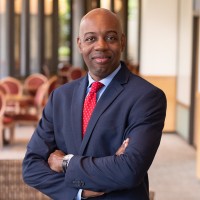
When the country lost power, my passion for energy emerged. This was two decades ago and my final day at Michigan State University. I packed all my possessions, took one final look at the dorm room, and drove off campus for the last time. There's one final traffic light before the highway, and it was mysteriously out. It took a while to get through the snarled traffic, but eventually we made it to the highway for the hour or so ride back home to Detroit. But when we reached the city, we discovered that all the traffic lights were out there as well... in the entire city. Now this wasn’t a terrible surprise—and this will sound crazy to future generations—but a brief summer power outage in the city of Detroit wasn’t uncommon in those days. The next day we finally realized the true extent of the blackout. This was August 14, 2003 and it was the great Northeast blackout that affected 10 million people in Canada and 45 million in the U.S. over eight states. I did not know—right at that moment—that I would spend my career in the energy, science, and infrastructure space, but it planted a seed that this is a field where I could contribute.Today we have an opportunity to make the changes to create a sustainable climate. We have the opportunity to make large-scale electrical blackouts something only encountered in history books. And we have the opportunity to create a better, safer, more accessible and electrically charged transportation infrastructure. We have it within us to do all these things, if only we make the choices, and do the work.Since that day, I completed my academic engineering work studying alternative energy at Wayne State University, graduating as part of the first class to come out of the new program that focused on solar, wind, fuel cells, electric vehicles, energy storage, and so much more.I’ve spent my career as an energy strategic communicator supporting clients and organizations in the energy space with projects at the intersection of science and communications. Working daily to communicate technical concepts to policymakers and the public using effective messaging, careful stakeholder engagement, and authentic public relations. And I’ve supported project management, digital marketing, and strategic communications planning efforts at several Department of Energy offices including the Industrial Efficiency and Decarbonization Office, the Advanced Manufacturing Office, the Office of Electricity, CESER, and three-years at ARPA-E.Are you working to build a stronger, more resilient energy economy? Let’s connect. Let’s do the work.
Listed skills include Social Media, Stakeholder Engagement, Public Speaking, Solar Energy, and 17 others.