
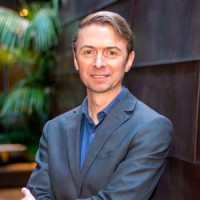
AeroLeads people directory · profile
Lee Walsh Email & Phone Number
Founder, Principal and Managing Director
at
Platypus MedTech Consulting
1 work email found
@platypustechnical.com.au
LinkedIn matched
✓ Verified Jul 2026
4 data sources
Profile completeness 100%
Current company
Role
Founder, Principal and Managing Director
Location
Canberra, Australian Capital Territory, Australia
Company size
Who is Lee Walsh? Overview
A concise factual answer block for searchers comparing this professional profile.
Quick answer
Lee Walsh is listed as Founder, Principal and Managing Director at Platypus MedTech Consulting, a with 2 employees, based in Canberra, Australian Capital Territory, Australia. AeroLeads shows a work email signal at platypustechnical.com.au and a matched LinkedIn profile for Lee Walsh.
Lee Walsh previously worked as Founder and Managing Director at Platypus Medtech Consulting and Co-founder, Director & Chief Product Officer at Method Quality. Lee Walsh holds Bachelor Of Engineering (B.E. Hons), Bachelor Of Science (B.Sc Hons), Electrical And Computer Systems, Physiology And Biomedical Engineering from Monash University.
Company email context
Email format at Platypus MedTech Consulting
This section adds company-level context without repeating Lee Walsh's masked contact details.
{first}@platypustechnical.com.au
89% confidence
AeroLeads found 1 current-domain work email signal for Lee Walsh. Compare company email patterns before reaching out.
Profile bio
About Lee Walsh
Bringing your medical device to market as quickly and smoothly as possible requires someone who truly understands what needs to be done and when to do it. That someone needs to have been on the inside, know the regulations and standards front to back, and have the experience, education, and the know how to apply those regulations and standards to your technology.During my time as a Senior Assessor/Investigator with the Therapeutic Goods Administration (TGA), I learned how the TGA system works, gained firsthand experience in interpreting the Australian requirements for medical devices, and now apply that experience and knowledge to help bring new and innovative medical devices onto the Australian market.At the TGA I led regulatory reform for digital health and software, established a specialised team and laboratory capabilities for the regulatory testing of electromedical technology and software, and led the development of a regulatory capability for monitoring cybersecurity threats and testing the compliance of devices with cybersecurity requirements.Before being a regulator I was a medical researcher and clinical engineer, developing and validating technology for use in health and medicine. My work has been recognised internationally in medical physiology and human movement, in the testing of medical devices, and communicating technical concepts.I enjoy working in and leading cross-functional teams and have done so for over 15 years. This means I have a lot of experience working alongside medical, engineering, legal, business, executive, and other professions to deliver complex projects. It also means that I can help translate between the many professions that work in health, medicine, and human performance.I also have a great interest in measuring human performance. I am currently focussing on motor racing athletes and teams to apply physiology, psychology, and biomedical engineering to optimise the performance and development of drivers, riders, pilots and pit crews.If you don’t optimise your motor-athlete’s physiological and psychological performance, millions of dollars in development and championships could be lost. I would love to LinkIn with you so send me a connection request
Listed skills include Consulting, Engineering, Data Analysis, Science, and 18 others.
Current workplace
Lee Walsh's current company
Company context helps verify the profile and gives searchers a useful next step.
Platypus Medtech Consulting
21 roles
Lee Walsh work experience
A career timeline built from the work history available for this profile.
Founder And Managing Director
CurrentSince founding the business I have led it from being a part-time side hustle, to being a full-time and profitable small business that employs a small team of expert professionals. In that time I have supported over 20 small medical device businesses to get their regulatory and quality affairs in order. This has included implementation of risk and quality management systems, software development life cycles, and validation and verification programs.In addition to leading the consulting work, I have built a team of expert consultants to support our clients and built successful boutique consultancy focused on expert delivery and tailored service.
Sep 2017 - Present

Co-Founder, Director & Chief Product Officer
CurrentLeading method and product development to make quality and regualtory approachable for medical device startups and SMEs.
Sep 2023 - Present
Co-Founder And Chief Technology Officer
CurrentI lead the technical development, including researach, development and deployment, of our products. We are focussed on products that measure, analyse and improve the athletic performance of motor sport athletes.
Oct 2023 - Present

Advisor - Scientific Advisory Board
CurrentBrain Changer is an tool set for individuals with chronic pain. It assists them with pacing and putting pain science into practice. The Brain Changer tools assist with planning and monitoring through the day to manage flare ups. My role is as a scientific and engineering advisory, advising on research and validation strategy.
Jul 2018 - Present
Founder And Performance Principal
Our Performance business was founded around the application of physiology and human instrumentation in motorsport. My work here aimed to apply real-time measurement and performance physiology to improve athletic performance in motorsport athletes. The outcome for the athlete was better athletic performance on track, and therefore better race results.We worked with drivers in GT endurance, TCR, Australian Supercars, Porsche Michelin Juniors and SuperUtes as well as assessing athletes in the lab or gym to support their on track performance.Ultimately this work led to the founding of a new company, Biomedical Performance Technoloiges, to develop and commercialise our product prototypes.
Sep 2019 - Oct 2023

Senior Consultant
Apis provides advisory services, delivery management and business and digital design services to government. I worked on several projects were clients require specialist advise, design or analysis relating to risk management, regulation or data review and analysis.For one large project, the client was reviewing the regulatory processes and require advice and design related to risk-based regulation. I reviewed their business practices and then worked directly with their teams to develop new process and supporting guidance. The first challenge was gaining deep understanding of the clients business in a short time frame. Then I was able to leverage my expertise in risk management, regulation and communication to co-design new processes with the client.Another large project required review, analysis and synthesis of the submissions from a large public consultation. The client engaged Apis to analyse the data, provide a synthesis report, and prepare submissions for publication within a very tight timeframe. My role was to design the analysis that would inform the report as well as being the primary contact with the client. My technical expertise in analysis and software engineering let me automate much of the submission handling and publication preparation. I then work with senior analysts and the client to design an analysis that would deliver the outcomes. The primary challenge for this project was managing the communication between the client's policy experts, the Apis analysts, and the senior leadership. My experience communicating between fields helped me here and I was able to facilitate a joint understanding and manage the differences in language. I also had to manage expectations from both sides.My success at Apis came from a strong background in communication and being able to adapt my technical skills and leadership to novel situation and problems.
Oct 2019 - Apr 2020

Technical Lead (Digital Health), Emerging Technology And Medical Device Reforms - El1
The medical device sector is facing multiple emerging challenges. Some of these relate to new or emerging technologies, others to existing technologies that are finding new applications in medicine and healthcare. While the Australian framework for regulating medical devices is flexible and captures novel technology and innovation well, some of the current challenges just were not foreseen.The TGA has embarked on a program of reform for the medical devices framework with the intention of improving international harmonisation and addressing gaps that are starting to form in the framework. I led work to reform the regulation that relates to medical device software and cybersecurity.For cybersecurity, I was the TGA project lead on a joint venture with the Commonwealth Scientific and Industrial Research Organisation (CSIRO) to research best practice, engage with stakeholders, and draft regulatory guidance to support stakeholders in complying with the legislation. I then fed this work into international harmonisation efforts as Australia’s representative on the International Medical Device Regulators Forum (IMDRF) Cybersecurity Working Group.For the reform of the software regulation, I led the engagement with stakeholders and production of education material, as well as writing and reviewing policy and legislation. This included establishing a monthly webinar series on digital medical devices, publishing consultation papers, and running workshops.The cybersecurity work led to three published documents, regulatory guidance for industry, information for users and healthcare providers, and information for consumers. The latter two were international firsts and all were well received by stakeholders. The software reform work led to further policy and legislative change that will improve the safety, quality and performance of medical device software used by Australians.
Sep 2018 - Oct 2019
Senior Engineer, Laboratories - El1
In 2016 I accepted this role as the founding leader of the Electromedical Team. My first project was to lead a team of engineers to validate new systems, methods and equipment under an ISO 17025 quality system. One aspect was establishing a new arm of the quality system for bespoke software that is used for testing that informs regulatory decision making.For two years I led that team in the assessment and testing, of medical devices that are included on the Australian Register of Therapeutic Goods (ARTG). We specialised in medical devices that include electrical/electronic or software components. This requires me to maintain broad team capability efficiently, while ensuring that we could adapt quickly to develop novel capabilities in response to market events.In 2018, I established the TGA Laboratory’s capability to test the cybersecurity of medical devices. This included assessing best practice in other sectors, defining technical and training requirements, sourcing resources, and building collaborations both internally and externally. I then led that team through its initial work and provided technical leadership to a wider program to improve regulation of medical device cybersecurity.Standards are key to medical device regulation, especially with regard to engineering performance and quality. I represent the Therapeutic Goods Administration on Australian and international standards committees, and worked within the Department and with Standards Australia to improve the medical device standards for Australian stakeholders.I was regularly invited to speak on the regulation of medical devices in Australia (see attached media).
Aug 2016 - Aug 2018
Director Biomaterials And Engineering, El2 (Acting)
I have acted as the Director of the Biomaterials and Engineering Section with the Department of Health for a total of 15 weeks between October 2016 and April 2018. During that time I have:- Led the negotiation of the scope of works for a $500k external consulting contract- Negotiated the capital equipment proposal for the Section in 2017/18 ($350k) and 2018/19 ($600k).- Provided joint engineering and regulatory advice to other state and federal governmentagencies- Began discussions regarding collaboration on cybersecurity and signal monitoring withother federal government departments and agencies, academia, and industry stakeholders.
Oct 2016 - Apr 2018
Engineering Technical Leader (Acting) - El1
In July 2016 I accepted a promotion to Senior Engineer in the Laboratories Branch of the Therapeutic Goods Administration. My current section (Device Conformity Assessment) asked me to delay taking up the new position to act as a Technical Leader/Senior Assessor for 6 weeks to train a new cohort of engineering assessors.My task was to develop a training program for new engineering assessors that had just joined the Section. This program needed to provide training on the engineering assessment of medical devices for safety and performance while adapting to the diverse background of the individual engineers that had been recruited.I developed a program to cover conformity assessment specifics, including approaches to engineering problems that are common in conformity assessment. I then sought feedback from the recruits on which areas they felt they needed training in. I responded to that feedback by developing sessions, and finding appropriate experts, to cover those topics. In addition to developing and running this training program, I reviewed draft engineering reports to provide technical feedback, provided mentoring to some of the recruits, completed engineering assessments, and provided expert technical advice to the wider section and the Medical Device Branch.My training program accelerated the development of this cohort of new engineering assessors and setup a framework for sharing of expertise between engineering assessors.
Jul 2016 - Aug 2016
Biomedical Engineering Assessor
This was the same role as below, but I was made an ongoing staff member of the Therapeutic Goods Administration. I was in this position for 2 days before being offered a promotion to Senior Engineer in the Laboratories Branch.
Jun 2016 - Jul 2016

Conjoint Lecturer
In 2015 I delivered guest expert lectures on proprioception (our body's sense of itself and its actions) for the NEUR3221 Neurophysiology course. I delivered 2 x 1 hour lectures and ran a 3 hour practical. The practical demonstrated some of the key scientific evidence that informs the current scientific view of proprioception. Students experienced this scientific evidence first hand by performing experiments using current research equipment.In 2015 I begun co-supervising a PhD student in this area of research.
Aug 2014 - Mar 2017
Conjoint Associate Lecturer
In this role I delivered guest expert lectures and a practical session for the NEUR3221 course. My lectures covered the neurophysiology of human proprioception.
Jun 2011 - Aug 2014
Biomedical Engineering Assessor For The Therapeutic Goods Administration
I spent 5 months as an external contractor with the Therapeutic Goods Administration (TGA). I worked in the Device Conformity Assessment Section of the Medical Devices Branch.In this position my roles were, 1) to provide expert recommendations to decision makers regarding the safety and performance of medical devices, 2) pre-assess new medical device conformity assessment applications to recommend assessment pathways to decision makers, and 3) provide engineering and physiological expertise to the section and branch.During my time in this role I wrote 7 expert reports that assessed the engineering safety and performance of new medical devices before they entered the Australian market. I wrote 5 expert reports recommending assessment pathways for new conformity assessment applications. I also reviewed other expert reports and provide expert advise on active implantable medical devices and the MRI safety of implantable medical devices.The quality of my reports, the speed with which I learned the regulatory processes, and my broad expertise with medical devices led to an offer of ongoing employment with the section and, shortly after, an offer to act as a technical leader.
Feb 2016 - Jun 2016
Cj Martin Research Fellow
Nhmrc
In 2011 my research excellence was recognised by the National Health and Medical Research Council with the award of a CJ Martin Research Fellowship.These fellowships are awarded to send leading Australian post-doctoral researchers overseas to exchange knowledge with a laboratory outside their field of research, thus extending their expertise into a new field. The goal is to both share Australia's expertise and to bring new knowledge, expertise and skills back to Australia.Thus, in 2012 I moved to University College London to work Patrick Haggard, a world-leading experimental psychologist and cognitive neuroscientist. While working in Patrick's lab I provided physiological and technical expertise and training to UK psychologists. In exchange I learned advanced electroencephalography techniques and analysis methods.This interaction of researchers from complementary fields led to the first study investigating the effect of sensory loss on the perceived shape of the fingers (see link). We also discovered a new sensory phenomenon which is the subject of a manuscript currently in preparation, and an ongoing international collaboration.
Apr 2012 - Feb 2016

Senior Research Officer
My primary responsibility in this role is to establish and grow a unique and independent research program.In 2015 I had to establish a laboratory space and seek funding for future projects, while at the same time continuing to identify research avenues and perform experiential studies.I lodged applications for competitive grants to support larger projects, meanwhile securing local funding to build a laboratory. I designed the laboratory equipment and software to be modular so that experimental data could be collected along the way and to allow for expansion when external funding is secured.My program and laboratory space was successfully established this year and one independent project was completed and (currently under peer-review for publication). The second study is on track to be finished in 2015. I submitted two external funding applications including a $1.3M NHMRC Project Grant to fund future projects. I completed the 1st and 2nd phase of laboratory construction (see photo) and the primary software for experimental control and analysis (see links below).My research experience and reputation convinced local stakeholders to fund my strategy while I waited for external funding outcomes. This research program would not have been established so quickly without my technical capabilities and experience.
Jan 2015 - Jan 2016
Research Officer
I was a post-doctoral researcher with a PhD in sensorimotor physiology, now able to apply for my own grants and do my own research.I needed to branch out from my PhD lab and find my own unique areas of research. I also needed to be travelling, giving presentations to share my expertise and networking to establish collaborations and my independence.I chose to train in a new field, experimental psychology. To do this I secured AU$390k of competitive funding from the National Health and Medical Research Council to move to a world-leading psychology institute in the United Kingdom. I spent two years training in my new field, gaining knowledge and expertise in their experimental and analytical methods. During this time I also presented at international conferences (e.g. the prize winning poster below) and visited international labs to give talks and establish collaborative networks.In 2014 I brought my new expertise back to Australia. I also brought back access to international expertise via the networks I established during my time in the UK. Furthermore, my combined expertise in physiology, experimental psychology and engineering gives me an edge and access to unique areas of research. This became the basis for establishing my own research program in Sydney.
Feb 2011 - Dec 2014
Research Assistant
My undergraduate research gave me a taste for creating new knowledge and a strong interest in movement and exercise science. To pursue a research career I needed PhD, but I enjoyed engineering and did not want to leave it completely for the life sciences.One of the top movement physiology labs in the world was at NeuRA (then called POWMRI) and they needed a new support engineer. I negotiated with the laboratory principal to work for them full-time as their engineering Research Assistant, while studying my PhD part-time in the same lab.During my 5 years in this position I consulted on a wide range of human research projects. Providing general engineering support, software development, as well as hardware design, prototyping and manufacturing. I became and expert in physiology instrumentation and measurement.I completed my PhD 3 years early (5 of 8 part-time years) and finished with a much broader expertise and research experience than if I had only done a PhD. This put me in a superior position for launching a post-doctoral research career. A lot of the equipment and software I produced is still being used for research in 2015. One example is the TAFPlotting project I consulted on (see links below). The software I wrote for that project has been used by laboratories around the world.
Jan 2006 - Feb 2011

Research Associate
The UCL Institute of Cognitive Neuroscience (ICN) appointed me as an expert in the neurophysiology of sensation and movement, and as a technical researcher.I was appointed with the Body and Action group. The were working to further our understanding how the brain controls movement of the body, as well as how it perceives the body and its actions. They were a group of psychologists and a key role for me was to provide expertise and training in physiology and technical research skills.During my time at the ICN I provided physiological insight into the research being performed by the Body and Action group and other affiliated research groups. I also provided general technical advise, particularly in design and prototyping. Within the Body and Action group I also provided more specific training. For example, I trained a post-doctoral psychologist in the measurement and analysis of the electrical activity of human muscles. I taught another how to temporarily paralyse a subject's hand using a pressure block. During my appointment I also provided research and technical training to an undergraduate medical student.Through my appointment Body and Action group gained access to neurophysiological techniques and interventions. The researchers I trained are now better placed to investigate the psychology of sensation and movement because they can better measure the body's actions, and can better manipulate its physiology.
Apr 2012 - Mar 2014

Demonstrator, Advanced Research Methods
I taught research methods to two groups of Masters in Psychology students and supervised their research projects. My groups won both available prizes between them, one for Most Interesting Project and the other for Best Presentation.
Sep 2012 - Mar 2013
3 education records
Lee Walsh education
Bachelor Of Engineering (B.E. Hons), Bachelor Of Science (B.Sc Hons), Electrical And Computer Systems, Physiology And Biomedical Engineering
Monash University
Doctor Of Philosophy (Phd), Physiology
Unsw
Pre-X 2024, Entrepreneurial And Small Business Operations
Unsw Founders
FAQ
Frequently asked questions about Lee Walsh
Quick answers generated from the profile data available on this page.
What company does Lee Walsh work for?
Lee Walsh works for Platypus MedTech Consulting.
What is Lee Walsh's role at Platypus MedTech Consulting?
Lee Walsh is listed as Founder, Principal and Managing Director at Platypus MedTech Consulting.
What is Lee Walsh's email address?
AeroLeads has found 1 work email signal at @platypustechnical.com.au for Lee Walsh at Platypus MedTech Consulting.
Where is Lee Walsh based?
Lee Walsh is based in Canberra, Australian Capital Territory, Australia while working with Platypus MedTech Consulting.
What companies has Lee Walsh worked for?
Lee Walsh has worked for Platypus Medtech Consulting, Method Quality, Biomedical Performance Technologies, Brain Changer, and Platypus Technical - Performance.
How can I contact Lee Walsh?
You can use AeroLeads to view verified contact signals for Lee Walsh at Platypus MedTech Consulting, including work email, phone, and LinkedIn data when available.
What schools did Lee Walsh attend?
Lee Walsh holds Bachelor Of Engineering (B.E. Hons), Bachelor Of Science (B.Sc Hons), Electrical And Computer Systems, Physiology And Biomedical Engineering from Monash University.
What skills is Lee Walsh known for?
Lee Walsh is listed with skills including Consulting, Engineering, Data Analysis, Science, Research, Medical Devices, Quality Management, and Medical Research.
Find 750M verified contacts
Search by job title, company, industry, location, and seniority. Export verified B2B contact data when you need it.
Start free trial