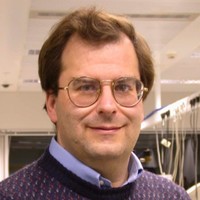
The science and commercial activities of Chiralabs are overseen and guided by George E. Tranter PhD MA BSc FRSC CChem CSci, who has held senior R&D positions in both industry and academia (including at London University, Oxford University, the Wellcome Foundation and GlaxoWellcome). Until 2006 he led the Biospectroscopy Centre of Imperial College London and subsequently was Senior Research Fellow of the Department of Chemistry, University of Oxford. He is a recognised international authority in the field of molecular chirality, circular dichroism and the spectroscopic/physicochemical features of drugs and biopharmaceuticals. He is named as inventor on drug patents, has published widely in the scientific literature, co-edited The Encyclopaedia of Spectroscopy & Spectrometry (Elsevier) and Comprehensive Chirality (Elsevier), has been a member of scientific journal editorial boards (inc. CHIRALITY) and appeared on radio and television programmes in the UK and abroad. He is also a member of various scientific advisory panels and is a key partner in collaborations that bring together the biopharmaceutical industry, academia and governmental institutions to investigate and validate biopharmaceutical structure and function. His particular interests are in the rational discovery of new therapeutics, with a passion for the role chirality plays in nature, from the molecular level through to macroscopic structures (e.g. helical shells) and beyond. Core to the rational drug discovery process is the understanding of phenomena at the molecular level by the complementary combination of both experimental and theoretical approaches in unison, a principle George Tranter promotes.Specialties: Pharmaceutical & Biopharmaceutical Research,Drug Discovery, Drug Development,Chirality, Chiral Molecules, Enantiomers & Stereochemistry,Protein Secondary Structure, Protein Binding, DNA Structure,Optical Spectroscopy, Chiroptical Spectroscopy, Circular Dichroism, CD, ORD, UV, Vis, NIR, FTIR, Fluorescence, Raman Spectroscopy Molecular Properties, Crystallisation & Crystal Growth, Physical Chemistry, Leadership of Laboratories & Organisations
Listed skills include Protein Chemistry, Chemistry, Spectroscopy, Circular Dichroism, and 46 others.