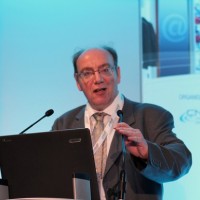
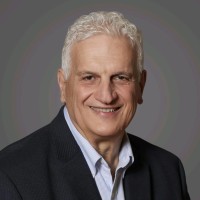
Gérald Santucci

Gérald Santucci Email and Phone Number

President of European Education New Society (ENSA) Association @ Z-Inspection® Trustworthy AI Labs
Gérald Santucci's Location
La Baule, Pays de la Loire, France, France
Gérald Santucci's Contact Details

Gérald Santucci work email

Gérald Santucci personal email

About Gérald Santucci

Since 2017, Gérald Santucci has been the Ambassador of the INTEROP VLab, a member of the Sustainable Development Advisory Board, and an adviser to the Frankfurt Big Data Lab.In 2023, he has also been appointed President of the European Education New Society Association (ENSA), based in France and with a strong international reach.Before 2017, Gérald has been Advisor and Head of Unit at the European Commission’s Directorate‑General for Communications Networks, Content and Technology (DG CONNECT). He joined DG CONNECT in 1986, where he was called "the father of the AIM Programme" ("Advanced Informatics in Medicine", today the eHealth, Well-Being & Ageing Unit). From 1999 to 2016 he was Head of Unit for eGovernment (1999-2002), Trust & Security (2003), eBusiness (2004), Networked Enterprise and RFID (2005-2012), and Knowledge Sharing (2012-2016). In 2016-2017 he was Advisor for Cross-Cutting Policy/Research Issues, with focus on knowledge management, integration of research/innovation and policy, and ‘data for policy’. He played a major role in the emergence and definition of an EU policy in the field of the Internet of Things (IoT), fostering multi-stakeholder, multi-disciplinary discussions on identification, architectures, privacy & security, ethics, standards, and governance.At DG CONNECT he was Head of the Unit "Knowledge Sharing" (2012-2016) and Head of the Unit "Networked Enterprise & Radio Frequency Identification (RFID)" (2006-2012). He managed the elaboration of a Communication on RFID (adopted by EC on 15/03/2007), a Recommendation on RFID Privacy and Security Aspects (adopted 12/05/2009) and a Communication on the Internet of Things (adopted 18/06/2009). From September 2010 to June 2012, he chaired the IoT Expert Group, composed of about 40 members from Government, Industry, and Civil Society, which addressed all the main relevant research and policy issues. Gérald received his PhD in Microeconomics from University Paris XII Val-de-Marne and graduated from the Paris Institute of Political Studies.

Gérald Santucci's Current Company Details
Z-Inspection® Trustworthy AI Labs

Z-Inspection® Trustworthy Ai Labs

View
President of European Education New Society (ENSA) Association
Gérald Santucci Work Experience Details
  • European Education New Society Association (Ensa)
    President
    European Education New Society Association (Ensa) Sep 2023 - Present
    Vanves, Île-De-France, France
    Our mission at ENSA is to accelerate the world’s transition to a Digital Economy and Sustainable and Resilient Society (DESRS) – and to support the implementation of transformative solutions in this area – where our stakeholders in both the public and the private sectors can excel, in particular by integrating nature-based solutions (NBS), biodiversity, ecosystem services, and natural capital into their decision-making.
  • Z-Inspection® Trustworthy Ai Labs
    Visiting Research Fellow
    Z-Inspection® Trustworthy Ai Labs May 2023 - Present
    Strasbourg, Grand Est, France
    The mission of the Trustworthy AI Lab for Surgery is to advance AI research, education, policy and offer best practices to support ethical, responsible, mindful, sustainable, trustworthy AI and AI-based-applicationshttps://trustworthyai-lab.icube.unistra.fr
  • Items International
    Member Of The Global Forum Association
    Items International Sep 2017 - Present
    Ville De Paris, Île-De-France, France
  • Interop-Vlab
    Ambassador
    Interop-Vlab Jan 2018 - Present
    Greater Bordeaux Metropolitan Area
  • Association Amalyste
    Company Secretary
    Association Amalyste Jun 2020 - Present
    Paris, Île-De-France, France
    L'association Amalyste s'occupe des personnes atteintes du syndrome de Lyell ou de Stevens-Johnson, qui sont des maladies rares dues au médicament. Derrière les drames humains, extrêmement douloureux, se posent les questions du suivi des patients, de leur prise en charge, de la recherche médicale dans ce domaine. Amalyste est à l'écoute des patients et s'efforce de guider leurs démarches par des conseils juridiques. Mon rôle est d'établir le compte rendu des réunions et de contribuer à la formulation de stratégies pour mieux servir la cause des malades.
  • Frankfurt Big Data Lab
    Member Of The Board Of Advisors Of The Initiative Z-Inspection®
    Frankfurt Big Data Lab Jan 2020 - Present
    Frankfurt, Hesse, Germany
  • Council Internet Of Things
    Member Of The Iot Council
    Council Internet Of Things Oct 2009 - Present
    Brussels, Brussels Region, Belgium
  • Promethosia
    Associate Researcher
    Promethosia Jan 2020 - Oct 2023
    Ville De Paris, Île-De-France, France
    PromEthosIA (https://promethosia.com) brings together experts from diverse disciplines to explore the challenges of ethics in Artificial Intelligence. It is an informal, non lucrative group that aims at contributing, by discussing AI developments and use cases, and in adherence to the principles and requiring the future EU AI Act, to the definition and implementation of ethical/trustworthy AI systems.
  • European Commission
    Adviser For Cross-Cutting Policy / Research Issues In Dg Connect
    European Commission Sep 2016 - Jun 2017
    Brussels Area, Belgium - Bu25 04/134
    In July 2016, after deep reflection I decided not to take up another job as Head of Unit. That decision was not easy to take - in eGovernment, Trust and Security, eBusiness, Networked Enterprise and RFID, Internet of Things, and Knowledge Sharing, I learnt that going beyond mere staff and budget management required a long term vision supported by strong commitment and dedication.In the public sector, it takes more or less three years to build a cohesive team and then a few more years to develop a vision, define clear objectives, devise and implement a strategy, carry out assessments and necessary adjustments, and finally see impact. In my role of eGovernment Head of Unit (1999-2012), it took two years to bring together the different local and regional networks (ELANET, TeleCities, eris@) in order to shape the "Three Roses" concept and make it a winning engine for initiating an EU strategy about Smart Cities. On RFID, it took three years to get a Communication adopted by the Commission (2007), another two years to successfully complete the related Recommendation on RFID privacy and security aspects (2009), two years again to obtain a consensus (Industry, Art. 29 Data Protection Working Party, Enisa) on the RFID Privacy Impact Assessment (PIA) and the common European RFID sign (2011), and another three years, in association with DG GROW colleagues, to transform the PIA and sign into real European Norms (2014). Success is a jigsaw puzzle for which we need "to give time to time". I would have liked, to be honest, to manage again the Internet of Things Unit, but since 2012 many things have changed and I know the future of IoT cannot be written by looking in the rear-view mirror - past success doesn't make a good recipe for shaping a future in a fast changing, data-driven environment. Therefore I decided to opt for a role of Adviser who during one year will scrupulously plead for a systemic, integrated, multiple disciplinary approach to Policy and Research/Innovation.
  • European Commission
    Head Of Unit "Knowledge Sharing" In Dg Connect
    European Commission Jul 2012 - Jun 2016
    Avenue De Beaulieu, 25 - 1160 Auderghem
    As DG INFSO of the European Commission was re-named DG CNECT (or "CONNECT"​), I moved from the Unit 'Networked Enterprise and RFID'​ to the new Unit 'Knowledge Sharing'​ where my role is to contribute to the creation of an interactive DG via enhanced collaborative working.The main goals are to advise the Director-General and top management on the new policy requirements and opportunities coming out of ICT evolution, ensure collaboration and synergy between the three pillars of the DG (research & innovation, policy, regulation), explore the conditions and opportunities of evidence-based policymaking, support knowledge sharing via a new intranet (called 'CONNECTED'), and assist Directorates in the elaboration of impact assessments and metrics.A very promising activity is "data4policy", an effort to bring together data techniques experts in the Commission and outside, including Big Data and data analytics, in order to improve the fundaments of policy making.My unit has been heavily involved in the development, in close association with and support to the Secretariat General, of the new guidelines for Better Regulation (2014-2015), especially by introducing the concept of 'Internet Readiness' (coined by my colleague John Doyle), carrying on the idea of 'digital checks' emitted by Vice President Ansip, and promoting Co-regulation and Self-regulation as policy options in the Better Regulation package.
  • European Commission
    Head Of Unit "Networked Enterprise And Rfid" In Dg Infso (Information Society And Media)
    European Commission Mar 2007 - Jun 2012
    Brussels Area, Belgium
    From 2006 onwards my activities extended from eBusiness and the networked enterprise to RFID (2005+) and Internet of Things (2007+). This marked my involvement at the same time in research management (FP6, FP7), innovation management (ICT PSP) and policy definition and implementation (RFID communication, RFID Recommendation, IoT Communication, etc.). FP7 projects were grouped in two successful clusters: FInES (Future Internet Enterprise Systems) and IERC (IoT European Research Cluster, which replaced the former RFID Cluster).Following the IoT Communication of June 2009, I set up a formal IoT Expert Group composed of some 40 representatives from industry, academia, government, civil society, trade unions, etc. The objective was to draft a Commission Recommendation on the governance of the IoT (identification; privacy and security; ethics; architectures; standardisation; an EU federated Object Naming Service). But when I left the unit in July 2012 to pick up a new function, this activity was abandoned (to my regret).
  • European Commission
    Head Of Unit "E-Business" In Dg Infso (Information Society And Media)
    European Commission Mar 2004 - Feb 2007
    Bu25 At Auderghem, Belgium
    When I arrived in the unit there was a large portfolio of 175 FP5 funded projects, including 40% paid 100% of eligible costs as coordination and support actions. Projects were totally independent and actually very few of them achieved meaningful results. As we were just starting FP6, but too late for influencing the Call 1 proposal evaluation and selection, I imposed the creation of "clusters" which, through the principle of "concertation" that prevailed in the RACE/ACTS and Telematics Applications (TAP) Programmes, enabled collaboration and creation of synergy between projects working on the same technologies or developing similar applications or addressing common socio-economic challenges. After one year I decided to stop one cluster due to a lack of commitment from the majority of project participants while two other clusters went on and after a few years delivered great results: Enterprise Interoperability; Digital Business Ecosystems (DBE). DBE was a really disruptive vision (SME networks based on an open source infrastructure) that produced great results until a successful conference in Brussels on 7/11/2007). However, for unknown reasons, this pioneering initiative was not continued in FP7.At the same time, the unit started to explore the requirements and options for an EU policy on RFID. The creation within the unit of the RFID sector (Head of Sector: Florent Frederix) supported a dynamic activity, reinforced by a RFID cluster of EU-funded projects, which resulted in a Communication from the Commission to the European Parliament and the Council in March 2007. In the last paragraph of this Communication the phrase "Internet of Things" was mentioned for the first time in an EU formal document. International cooperation, in particular with the U.S., was very successful (Transatlantic RFID Conferences in Washington, D.C.., and in Brussels, 2007-2008).
  • European Commission
    Head Of Unit "Trust And "Security" In Dg Infso (Information Society And Media)
    European Commission Jan 2003 - Feb 2004
    Trust and SecurityA (too) short foray into trust and security technologies. However, I have kept nice memories of the many academic researchers met and the good results achieved in the fields of smart cards, biometrics, and encryption.My biggest satisfaction was the creation, with the Irish Government, of the European Biometrics Forum (EBF), http://www.eubiometricsforum.com/Another achievement was the launch of the eJustice Integrated Project which, with only €4 million, brought together ICT (in particular biometrics) and process technologies to drastically improve the potential for justice efficiency and effectiveness.
  • European Commission
    Head Of Unit "Applications For Public Administrations" In Dg Infso (Information Society And Media)
    European Commission May 1999 - Dec 2002
    Applications relating to administrations (e-Government). My unit managed some 40 EU-funded projects grouped in two "clusters"​ supporting 'concertation'​ on technology, applications, standards, etc.:- Smart Government- e-Democracy (e-voting, i-voting)I've been proud to promote e-government at local and regional level, especially through the development of a sustained, dynamic cooperation between the then main city and regional networks (TeleCities, ELANET, ERIS@).The e-democracy projects which we supported in the early 2000's (E-POLL, CYBERVOTE, AGORA2000, WEBOCRACY, etc.) have never been supplanted so far.I organised in November 2001 the first Ministerial Conference on eGovernment, which took place in Brussels and was concluded by a Ministerial Declaration (see attachment). Such conferences were set up on a regular basis after 2003.
  • European Commission
    Principal Administrator In Dg Xiii
    European Commission Nov 1988 - Apr 1999
    1988-1990: Temporary Agent, responsible for the planning and subsequent implementation of the AIM (Advanced Informatics in Medicine) Definition Phase. I was considered the "father" of AIM, which continues today (some 25 years later) as the eHealth domain of the ICT programme. In 1989, I assembled a group of multidisciplinary specialists (the AIM Requirements Board, ARB) to examine urgently, on a wide basis, the factors that would influence health care as well as health information systems in the coming decade: what would be the “added value” of European developments in Information and Communication Technologies for health care? The ARB identified challenges, difficulties and opportunities.1991-1992: Author of a Communication on the Semiconductor industry and another Communication on the Telecom Equipment industry. Involved in trade discussions in the framework of the Uruguay Round, with special focus on semiconductors (tariffs, rules of origin, market barriers, etc.).1993-1999: Established Agent, Advisor to the Director of the Telematics Applications Programme (Michel Richonnier), then Deputy Head of Unit in the coordination unit.
  • European Commission
    Expert To European Commission Dg Xiii
    European Commission Feb 1986 - Nov 1988
    Brussels
    Seconded from Paris to DG XIII to contribute to the development of the RACE programme (R&D for Advanced Communications in Europe). From April 1986 onwards, in charge of the BICEPS planning exercise, which will become the 18-month definition phase of the AIM programme (Advanced Informatics in Medicine) in February 1989. BICEPS was "Bio-informatics: Collaborative European Programmes and Strategies" - a visionary concept (thanks to Director Roland Hüber) of the integration between Healthcare, Biology and Biotechnology, which unfortunately could not be implemented because of the difficulty to organise close cooperation between two different Directorates-General (XIII and XII). After a successful conference in Brussels on 16/10/1986 (more than 100 participants), DGXIII dropped the acronym "BICEPS" and replaced it with the acronym "AIM", focusing on the application of communications technologies to the field of healthcare.
  • Processa
    Co-Founder And Manager - Processa
    Processa May 1985 - Feb 1986
    Saint-Maur-Des-Fossés, Val-De-Marne (Paris Area)
    Establishment with a partner, Ghassan Jouhair, of a small consultancy company, Processa (an SARL) specialised in the ICT field.
  • Commissariat Général Au Plan
    Chargé De Mission At Cgp
    Commissariat Général Au Plan May 1984 - May 1985
    Paris
    Chargé de mission at Commissariat Général au Plan, specialised in the ICT sector.
  • Dafsa (Then Eurostaf)
    Financial Analyst At Dafsa/Eurostaf
    Dafsa (Then Eurostaf) Dec 1979 - Apr 1984
    Paris (France)
    DAFSA: Documentation et Analyses Financières, S.A. I worked at DAFSA as a financial analyst with specialisation in the ICT domain. I produced comprehensive consultancy reports on both ICT sectors (telecommunications, consumer appliances, software houses, medical equipment, etc.) and ICT groups (Thomson, Alcatel, Siemens, Philips, etc.). Some years later DAFSA was renamed Eurostaf. Work at DAFSA contributed to my training as an industrial economist and a future expert in ICT.
  • University Paris Val-De-Marne (Paris Xii)
    Chargé De Cours Et De Travaux Dirigés
    University Paris Val-De-Marne (Paris Xii) Sep 1977 - Apr 1983
    Créteil Area, France
    After my D.E.A. (Diplôme d'Etudes Approfondies, i.e. Bac + 5), I worked as a temporary employee in different Universities in Paris (mainly at Paris XII, but also Paris IV and Paris V). I taught International Trade, Microeconomics, Maths and Statistics, Political Science.

Gérald Santucci Skills

Leadership Information Technology Consulting Economics Policy Analysis Open Innovation Government Telecommunications International Relations Ict Team Management European Union Diplomacy Innovation Management Internet Of Things Strategy Management Consulting Public Policy Program Management E Government Ehealth Change Management Policy Socio Economic Analysis Capacity Building Governance Business Strategy Management Project Management Knowledge Management Politics Knowledge Sharing Security Corporate Social Responsibility Web 2.0 Analysis Rfid Sustainable Development

Gérald Santucci Education Details

Frequently Asked Questions about Gérald Santucci

What company does Gérald Santucci work for?

Gérald Santucci works for Z-Inspection® Trustworthy Ai Labs

What is Gérald Santucci's role at the current company?

Gérald Santucci's current role is President of European Education New Society (ENSA) Association.

What is Gérald Santucci's email address?

Gérald Santucci's email address is ge****@****ail.com

What schools did Gérald Santucci attend?

Gérald Santucci attended Paris Institute Of Political Studies ("sciences Po Paris"), Université Paris-Est Créteil (Upec), University Paris Ix Dauphine, Université Paris-Est Créteil (Upec).

What are some of Gérald Santucci's interests?

Gérald Santucci has interest in Children, Economic Empowerment, Education, Ictinternet Of Things, Science And Technology, Human Rights, Arts And Culture, Ict Internet Of Things, Health.

What skills is Gérald Santucci known for?

Gérald Santucci has skills like Leadership, Information Technology, Consulting, Economics, Policy Analysis, Open Innovation, Government, Telecommunications, International Relations, Ict, Team Management, European Union.

Not the Gérald Santucci you were looking for?

Free Chrome Extension

Find emails, phones & company data instantly

Find verified emails from LinkedIn profiles
Get direct phone numbers & mobile contacts
Access company data & employee information
Works directly on LinkedIn - no copy/paste needed
Get Chrome Extension - Free

Aero Online

Your AI prospecting assistant

Download 750 million emails and 100 million phone numbers

Access emails and phone numbers of over 750 million business users. Instantly download verified profiles using 20+ filters, including location, job title, company, function, and industry.