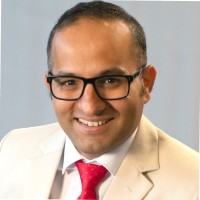
AeroLeads people directory · profile
Hari Subedi Email & Phone Number
Optical Engineer
at
NASA Goddard Space Flight Center
1 work email found
@nasa.gov
3 phones found area 520
LinkedIn matched
✓ Verified July 2026
4 data sources
Profile completeness 100%
Current company
Role
Optical Engineer
Location
Princeton, New Jersey, United States
Company size
Who is Hari Subedi? Overview
A concise factual answer block for searchers comparing this professional profile.
Quick answer
Hari Subedi is listed as Optical Engineer at NASA Goddard Space Flight Center, a with 4595 employees, based in Princeton, New Jersey, United States. AeroLeads shows a work email signal at nasa.gov, phone signal with area code 520, and a matched LinkedIn profile for Hari Subedi.
Hari Subedi previously worked as PHD Graduate Student at Princeton University and Assistant Instructor (AI) at Princeton University. Hari Subedi holds Mechanical & Aerospace Engineering from Princeton University.
Company email context
Email format at NASA Goddard Space Flight Center
This section adds company-level context without repeating Hari Subedi's masked contact details.
{first}.{last}@nasa.gov
89% confidence
AeroLeads found 1 current-domain work email signal for Hari Subedi. Compare company email patterns before reaching out.
Profile bio
About Hari Subedi
Interests:Engineering design, optical design, phase retrival, wavefront reconstruction, telescopes, exoplanet science, high-contrast imaging, coronagraphs, wavefront sensing and control, and control and dynamics.
Listed skills include Matlab, Microsoft Word, Microsoft Excel, Microsoft Office, and 7 others.
Current workplace
Hari Subedi's current company
Company context helps verify the profile and gives searchers a useful next step.
Nasa Goddard Space Flight Center
7 roles
Hari Subedi work experience
A career timeline built from the work history available for this profile.

Optical Engineer
Optical Engineer
Design a low-order wavefront sensor for the Large UV/Optical/Infrared Surveyor (LUVOIR).

Phd Graduate Student
We can determine the existence of life outside of earth by analyzing the spectra of exoplanets (planets outside our solar system). Such direct imaging will provide the capability to thoroughly characterize an exoplanet’s atmosphere. Direct imaging of exoplanets, however, has many technical challenges and difficulties: scattering and diffraction of light and the large difference in contrast, which is the ratio of brightness between the bright star and the dimmer planet. A coronagraph is an… Show more We can determine the existence of life outside of earth by analyzing the spectra of exoplanets (planets outside our solar system). Such direct imaging will provide the capability to thoroughly characterize an exoplanet’s atmosphere. Direct imaging of exoplanets, however, has many technical challenges and difficulties: scattering and diffraction of light and the large difference in contrast, which is the ratio of brightness between the bright star and the dimmer planet. A coronagraph is an optical device that manipulates the diffraction of starlight and creates a region of high contrast (dark hole) where the dimmer planets can be seen. While in principle the level of contrast required for direct imaging of exoplanets can be achieved by stellar coronagraphic imaging, the resulting dark hole is highly sensitive to phase aberrations.In order to effectively suppress starlight for exoplanet imaging applications, low-order wavefront aberrations entering a coronagraph such as tip-tilt, defocus and coma must be determined and compensated for. A sparse-aperture mask (SAM) can be integrated in the telescopic imaging system to make precise estimate of low-order wavefront aberrations. In this technique, the starlight rejected by the coronagraph's focal plane stop is collimated to a relay pupil, where the mask forms an interference fringe pattern on a detector and the phase aberrations are inferred from this fringe pattern. At Princeton’s High Contrast Imaging Lab (HCIL), I am working on designing the SAM low-order wavefront sensor for future space-based coronagraphic missions. Show less
Sep 2013 - Jun 2018
Assistant Instructor (Ai)
Responsibilities:Grading, running review sessions, possible classroom demonstrations for Remote Sensing Lab, Orbital Mechanics, and Applied Differential Equations.
Aug 2015 - 2017

Undergraduate Research Assistant
Apply boundary element method (BEM) to solve electromagnetic, heat transfer and Stokes flow equations in order to model the temperature, force and velocity fields of the medium produced by AC electric currents at micro scales.
May 2012 - Mar 2013
Undergraduate Teaching Assistant
TA for Differential Equations and Matrix Analysis.
May 2011 - May 2012
3 education records
Hari Subedi education
Mechanical & Aerospace Engineering
Bachelor'S Degree, Aerospace Engineering, Mathematics

Associate'S Degree, Engineering
FAQ
Frequently asked questions about Hari Subedi
Quick answers generated from the profile data available on this page.
What company does Hari Subedi work for?
Hari Subedi works for NASA Goddard Space Flight Center.
What is Hari Subedi's role at NASA Goddard Space Flight Center?
Hari Subedi is listed as Optical Engineer at NASA Goddard Space Flight Center.
What is Hari Subedi's email address?
AeroLeads has found 1 work email signal at @nasa.gov for Hari Subedi at NASA Goddard Space Flight Center.
What is Hari Subedi's phone number?
AeroLeads has found 3 phone signal(s) with area code 520 for Hari Subedi at NASA Goddard Space Flight Center.
Where is Hari Subedi based?
Hari Subedi is based in Princeton, New Jersey, United States while working with NASA Goddard Space Flight Center.
What companies has Hari Subedi worked for?
Hari Subedi has worked for Nasa Goddard Space Flight Center, Princeton University, and The University Of Arizona.
How can I contact Hari Subedi?
You can use AeroLeads to view verified contact signals for Hari Subedi at NASA Goddard Space Flight Center, including work email, phone, and LinkedIn data when available.
What schools did Hari Subedi attend?
Hari Subedi holds Mechanical & Aerospace Engineering from Princeton University.
What skills is Hari Subedi known for?
Hari Subedi is listed with skills including Matlab, Microsoft Word, Microsoft Excel, Microsoft Office, Customer Service, Powerpoint, Photoshop, and Fortran.
Find 750M verified contacts
Search by job title, company, industry, location, and seniority. Export verified B2B contact data when you need it.
Start free trialPeople with similar names
Check these profiles if this is not the Hari Subedi you were looking for.
View similar profiles