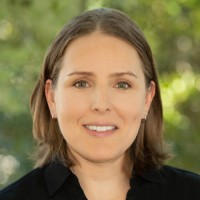
Are you frustrated by the never ending cycle of machine learning experiments?• Do your models perform well on your training data but fail on images from a different source?• Does your team struggle to keep up with the rapidly advancing field?• Are you unsure whether you’re focusing on the best model types for your application?• Do you have data challenges like multispectral images, noisy labels, or small training sets?Get to market faster with less wasted time on unsuccessful approaches• Build robust and generalizable models• Stay up-to-date with the latest and greatest tools and techniques• Follow best practices for your unique data challenges• Develop unbiased models that produce the most valuable insightsI guide startups to reduce the trial-and-error of machine learning model development by:• Identifying sources of variation or domain shifts• Understanding prior work with a literature review• Validating early and often to reveal failure modesTo learn more:Consulting services: http://pixelscientia.comEmail: heather@pixelscientia.comImpact AI Podcast: https://pixelscientia.com/podcastComputer Vision Insights Newsletter: https://pixelscientia.com/newsletterAbout me:• 20 years’ experience in academia and industry• PhD in Computer Science• 15+ peer-reviewed publications including CVPR, NeurIPS, MICCAI, and NPJ Breast Cancer• 3 patents granted, 1 pending• Led WattTime’s ML efforts to estimate GHG emissions from sources on Earth using satellite imagery in support of their mission with Climate TRACE• Collaborated with a team at the University of North Carolina to study prognostic and predictive properties of breast tumors from H&E histology that can lead to improved treatment decisions; created a method to predict cancer biomarkers too complex for pathologists to see• Led Digitalsmiths’ (since acquired by TiVo) R&D team to create software for indexing and retrieval of movies and TV shows• Worked with the Mars Space Flight Facility at Arizona State University to detect rocks in high-resolution satellite imagery of Mars and create rock distribution maps for selecting a landing site for the Phoenix Lander• In the Robotics Institute at Carnegie Mellon University created new methods to detect, segment, and geologically classify rocks on Mars for autonomous science
Listed skills include Machine Learning, Algorithms, Computer Vision, Python, and 42 others.