
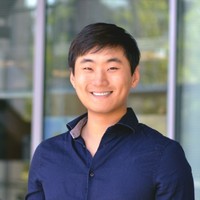
AeroLeads people directory · profile
Henry Hanjun Hwang Email & Phone Number
Staff Engineer: Research and Development
at
Nanopath
1 work email found
@vizgen.com
LinkedIn matched
✓ Verified Jul 2026
4 data sources
Profile completeness 100%
Current company
Role
Staff Engineer: Research and Development
Location
Cambridge, Massachusetts, United States
Company size
Who is Henry Hanjun Hwang? Overview
A concise factual answer block for searchers comparing this professional profile.
Quick answer
Henry Hanjun Hwang is listed as Staff Engineer: Research and Development at Nanopath, a with 25 employees, based in Cambridge, Massachusetts, United States. AeroLeads shows a work email signal at vizgen.com and a matched LinkedIn profile for Henry Hanjun Hwang.
Henry Hanjun Hwang previously worked as Scientist: Consumables Engineering at Vizgen and Doctoral Student: Nanoengineering Department at University Of California, San Diego - Jacobs School Of Engineering. Henry Hanjun Hwang holds Doctor Of Philosophy (Ph.D.), Nanoengineering from University Of California, San Diego - Jacobs School Of Engineering.
Company email context
Email format at Nanopath
This section adds company-level context without repeating Henry Hanjun Hwang's masked contact details.
hhwang@vizgen.com
76% confidence
AeroLeads found 1 current-domain work email signal for Henry Hanjun Hwang. Compare company email patterns before reaching out.
Profile bio
About Henry Hanjun Hwang
Seasoned multi-disciplinary PhD scientist and engineer in the biotechnology space. Strong experience in biomedical and mechatronic engineering, developing new product initiatives, and the reduction of novel innovation to engineering practice.
Listed skills include Biomedical Engineering, Cell Culture, Microfluidics, Matlab, and 11 others.
Current workplace
Henry Hanjun Hwang's current company
Company context helps verify the profile and gives searchers a useful next step.
Nanopath
9 roles
Henry Hanjun Hwang work experience
A career timeline built from the work history available for this profile.
Scientist: Consumables Engineering
Vizgen
Spatial biology is part of the next generation of genomics sequencing - Vizgen aims to utilize Multiplexed Error-Robust Fluorescence in situ Hybridization (MERFISH), a quantitative and genome-scale imaging technique for identifying and mapping nucleic acids at multiple length scales, for a diverse array of tissue types.
Sep 2022 - Oct 2023
Doctoral Student: Nanoengineering Department
University Of California, San Diego - Jacobs School Of Engineering
The development of three-dimensional bioprinting techniques on micro-/nano-scales stands to greatly aid in solving the technological and translational issues associated with tissue engineering and regenerative medicine. The Chen Lab is interested in developing the novel materials and technologies necessary to both investigate fundamental biological interactions with microenvironments as well as further enhance tissue engineering capabilities:[+] Integrated 3D-bioprinting and microfluidics for microphysiological systems and tissue engineering applications:• Conducted biological and microfluidic experiments for analyzing 3D-printed human microphysiological systems.• Developed and fabricated complex 3D biological scaffolds and co-culturing with multiple human cell types.• Prototyped custom manifolds and microfluidic devices via 3D printing and CNC machining.• Leveraged 3D-bioprinter capabilities across synthetic, bio-derived printable hydrogels, and mammalian cell lines.• Developed custom hardware and processes for enhanced multi-material 3D bioprinting. • Tested hardware, software, and workflow technique modifications to improve 3D bioprinting capabilities.• Conducting the troubleshooting, repairing, and upgrading of equipment, e.g. 3D-printers, mechanical testers, microscopes, etc.[+] Managed, trained, and mentored lab members (fellow PhDs, postdocs, undergraduates, and high school trainees) on laboratory practices, experimental design, troubleshooting, and fabrication processes.[+] Co-authored 3+ research funding proposals; 4+ peer-reviewed publications.
Sep 2015 - Jul 2022
Microfluidics And Fluidics Technologies Intern
Illumina's mission is to improve human health by unlocking the power of the genome. [+] Conducted research into microfluidic techniques for improving Illumina’s DNA-sequencing technology:• Developed and characterized flushing methods for efficient cleaning of consumable microfluidic flow cells.• Identified bottlenecks and resolved errors in systems integration workflow for next-gen DNA sequencing platform.• Designed protocols to minimize experimental variability, improve data collection, and streamline workflow.• Collaborated and cross-trained with the Consumables and Advanced Technology Development departments to assist in development-to-manufacturing pipeline.• Presented successful internship results during company poster presentation, as well as final conclusions to high-level members in preparation for continuing projects.
Jun 2019 - Sep 2019

Research Technologist Ii
Rare circulating tumor cells (CTCs) are often present in the bloodstream of those with metastatic cancer, and analyzing these CTCs is useful for clinical diagnostic purposes. We are interested in capturing these CTCs via microfluidics technologies in an antigen-free manner that will supplant current industry standards in CTC capture. [+] Conducted research into microfluidic methods for capturing rare circulating tumor cells from whole blood:• Designed and rapid-prototyped microfluidic structures to improve sample processing throughput and specificity. • Conducted critical experiments using fabricated microfluidic devices to optimize reagent, operational, and usability requirements for external clinical users. • Trained users from corporate sponsor Johnson&Johnson on technology design, installation, and usage. [+] Ensured good laboratory practices and safety as Safety Manager; maintained mechanical equipment, quality of biological reagents, and health of fellow colleagues.[+] Performed phlebotomy, acquiring healthy-donor blood for experiments; over 90% successful draw rate.[+] Managed supply chain and purchasing duties for 20+ employees.
Jun 2012 - Aug 2015
Teaching Assistant
• Selected to jointly oversee approximately sixty students for introductory biomedical engineering course.• Conducted office hours, computational tutorials, and labs covering such topics as DNA electrophoresis, microfluidic fabrication/operation, mammalian cell culturing techniques and cell cytotoxicity testing.
Jan 2012 - May 2012
Master Of Engineering
Detailed, working knowledge of biological structural development during morphogenesis can provide understanding of disease paradigms that can affect those structures. We were interested in studying cardiac developmental morphogenesis in avian embryos via micro-computerized tomography, to better facilitate cardiac regenerative treatment strategies. [+] Conducted research into optimal nanoparticle colloid contrast media for optically-gated in vivo cardiac monitoring of avian embryos via micro-computerized tomography:• Performed synthesis, optimization, and characterization of gold nanoparticle colloids. • Tested nanoparticle cytotoxicity, computerized tomography-based contrast enhancement factors, and injection methodology with avian embryonic cultures.
Aug 2011 - May 2012

Undergraduate Student Researcher
Optical imaging of biological tissues is complicated by factors such as tissue depth, laser interaction with tissues, and camera sensitivity. Injectable contrast agents can ease imaging constraints, but must be biocompatible, easily synthesized, and be specific to tissues of interest. Our group was interested in providing novel substances that can satisfy these criteria. [+] Conducted research into biomedical sensing and in vivo cancer ablation techniques for bioconjugated metallic nanoparticle colloids, utilizing Raman amplification and Surface-enhanced Raman spectroscopy (SERS):• Synthesized gold and/or silver single-core, dual-core, and core-shell nanoparticle colloids with various geometries and bioconjugated stabilizers. • Optimized nanoparticle size, geometry, pH-stability, and magnitude of SERS enhancement factor.
Jan 2010 - May 2011
Resident Advisor
Duke Residence Life And Housing Services
Worked with fellow council members to provide overarching leadership to resident advisors campus-wide, and facilitated in converting resident advisors’ needs into policy. Provided paraprofessional advising for fifty-student communities, and coordinated with a staff of seventeen people to enforce university policies for a 900-student quad.
Aug 2009 - May 2011
4 education records
Henry Hanjun Hwang education

Doctor Of Philosophy (Ph.D.), Nanoengineering
Master Of Engineering, Biomedical Engineering
Cornell University
Bse, Biomedical Engineering
Education record
Seoul International School
FAQ
Frequently asked questions about Henry Hanjun Hwang
Quick answers generated from the profile data available on this page.
What company does Henry Hanjun Hwang work for?
Henry Hanjun Hwang works for Nanopath.
What is Henry Hanjun Hwang's role at Nanopath?
Henry Hanjun Hwang is listed as Staff Engineer: Research and Development at Nanopath.
What is Henry Hanjun Hwang's email address?
AeroLeads has found 1 work email signal at @vizgen.com for Henry Hanjun Hwang at Nanopath.
Where is Henry Hanjun Hwang based?
Henry Hanjun Hwang is based in Cambridge, Massachusetts, United States while working with Nanopath.
What companies has Henry Hanjun Hwang worked for?
Henry Hanjun Hwang has worked for Nanopath, Vizgen, University Of California, San Diego - Jacobs School Of Engineering, Illumina, and Massachusetts General Hospital.
How can I contact Henry Hanjun Hwang?
You can use AeroLeads to view verified contact signals for Henry Hanjun Hwang at Nanopath, including work email, phone, and LinkedIn data when available.
What schools did Henry Hanjun Hwang attend?
Henry Hanjun Hwang holds Doctor Of Philosophy (Ph.D.), Nanoengineering from University Of California, San Diego - Jacobs School Of Engineering.
What skills is Henry Hanjun Hwang known for?
Henry Hanjun Hwang is listed with skills including Biomedical Engineering, Cell Culture, Microfluidics, Matlab, Cell, Biomaterials, Data Analysis, and Nanotechnology.
Find 750M verified contacts
Search by job title, company, industry, location, and seniority. Export verified B2B contact data when you need it.
Start free trial