
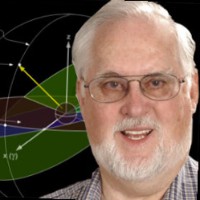
AeroLeads people directory · profile
Jack Crenshaw Email & Phone Number
Sr. Advisor, Flight Dynamics
at
PTScientists GmbH
1 work email found
@earthlink.net
LinkedIn matched
✓ Verified July 2026
4 data sources
Profile completeness 100%
Current company
Role
Sr. Advisor, Flight Dynamics
Location
Saint Johns, Florida, United States
Company size
Who is Jack Crenshaw? Overview
A concise factual answer block for searchers comparing this professional profile.
Quick answer
Jack Crenshaw is listed as Sr. Advisor, Flight Dynamics at PTScientists GmbH, a with 4 employees, based in Saint Johns, Florida, United States. AeroLeads shows a work email signal at earthlink.net and a matched LinkedIn profile for Jack Crenshaw.
Jack Crenshaw previously worked as Author and Contributing Editor at Miller Freeman Inc. and Sr. Systems Engineer at Spectrum Astro, Inc.. Jack Crenshaw holds Ph.D., Physics from Auburn University.
Company email context
Email format at PTScientists GmbH
This section adds company-level context without repeating Jack Crenshaw's masked contact details.
*@earthlink.net
68% confidence
AeroLeads found 1 current-domain work email signal for Jack Crenshaw. Compare company email patterns before reaching out.
Profile bio
About Jack Crenshaw
Specialties: Embedded systems, software engineering, math algorithms, aerospace systems engineering, lunar trajectories, compiler construction
Listed skills include Embedded Systems, Aerospace, Systems Engineering, System Design, and 34 others.
Current workplace
Jack Crenshaw's current company
Company context helps verify the profile and gives searchers a useful next step.
Ptscientists Gmbh
22 roles
Jack Crenshaw work experience
A career timeline built from the work history available for this profile.
Role listed
Sr. Advisor, Flight Dynamics
PT Scientists began as Part-Time Scientists, a Berlin-based amateur team competing for the Google Lunar X-Prize (GLXP). During the years I worked with them, we developed a very mature Lunar Rover, and tested it in a wide range of rugged test sites from the Arizona Meteor Crater to the Kilimanjaro mountain. More recently, they have also developed a single-stage spacecraft/lander capable of soft-landing 200kg payloads on the lunar surface.I was leader of the Astrodynamics Team, and during those years we performed all the trajectory analyses for various combinations of boosters, spacecraft, and mission constraints. I developed a proprietary strategy for achieving highly efficient Trans-Lunar Injection (TLI) maneuvers using relatively low-thrust engines. The strategy involves performing multiple short perigee burns, with carefully tailored timing of the engine burn-coast transitions to achieve optimal performance.I also simulated Lunar-Orbit Injection (LOI), orbit circularizing, and landing maneuvers. Using a combination of MATLAB/Simulink and Mathcad analyses, we were able to provide extremely short turnaround when needed in response to changes in system booster/mass/thruster/orbit geometry.Studying the lunar landing maneuver in detail, I developed near-optimal trajectory profiles combining the de-orbit retro burn, coast, deceleration, and final descent phases.After GLXP was cancelled, Part-Time Scientists went commercial as PT Scientists, and are currently working with sponsors Audi and Vodafone on continuing lunar missions.
Author And Contributing Editor
Miller Freeman Inc.
Author, "Math Toolkit for Real-Time Programming" Author and Columnist for Computer Language and Embedded Systems Development magazines.My highly-rated Embedded Systems column, "Programmer's Toolbox," ran from 1989 through 2013. It focused mostly on math algorithms for use in embedded systems.My 1989 paper, “The Nuts & Bolts of Compiler Construction,” in Computer Language was chosen as the cover story. It led to a tutorial series, "Let's Build a Compiler," which is still popular to this day. During the years 1989 through 2000, I gave many papers and taught tutorials in the Computer Language and Embedded Systems Conferences. My papers tended to be voted "best of show."
Jan 1989 - May 2013

Sr. Systems Engineer
Working on a major USAF program to simulate ABM system performance, I developed math models and software implementations for the simulation. I also developed an extensive library of algorithms to support digital system analysis. I also created and taught a seminar on the use of MATLAB/Simulink to simulate flight dynamics.Working in the Modeling & Simulation group, I developed software for the simulation of the satellite system now known as GeoEye.Participated in two proposal efforts, one to design Rendezvous, Docking, and Statiion-Keeping algorithms for geo-synchronous satellites; the other to land a rover in the Moon's Shackleton crater to look for water ice. For the latter proposal, I devised an optimal landing strategy and a trajectory designed to crash the transfer vehicle into the crater with maximum energy content.For a NASA contract, I performed one of the earliest static analysis studies of the GLAST satellite software.
Oct 2001 - Jul 2008
Senior Principal Design Engineer
Alliant Techsystems
Analysis and dynamic simulation of smart weapon system. Acting to improve the company's analytical capabilities, I introduced the use of both Mathcad and MATLAB/Simulink. I developed a Mathcad analysis to characterize and simulate the extraction of radar data from ground clutter. Working with the US Army Missile Command, I helped integrate out prototype with MiCOM's helicopter-based test system.
Apr 1999 - Sep 2001
Senior Principal Engineer
Invivo Research. Inc.
This manufacturer of hospital patient monitors had an existing product based on multiple Z80 processors, executing Z80 assembly language. They wanted to replace it with a new product using a single 386/486, running code written in C. To meet FDA certification requirements, we had to ensure that the the new product's behavior was functionally the same as the Z80-based product.I developed the code for three of the monitor modules:1. Pulse oximeter measuring Saturation of Peripheral Oxygen (SpO2), heart rate, and pulse regularity2. End-tidal CO2 (ETCO2)3. End-tidal detection/measurement of multiple anesthetic gasesTo meet the FDA requirements, I had to first gain a deep understanding of the original Z80 code, then translate it to C for the 486. The projects required a deep understanding of many disciplines, from Z80 assembler and C coding to real-time embedded systems, feedback control theory, sensor and actuator control, to patient physiology. When a key sensor needed unexpected calibration data, I devised and programmed an FPGA-based state machine to process and load the calibration data. My systems all made it into the production item.
Jul 1995 - May 1999
President
Crenshaw Associates
Led a group of four consultants developing real-time. embedded system software and analysis on four separate contracts related to a company's satellite tracking antenna products. Three of the tasks involved modifying legacy software where the customer no longer had the source code, or even the development systems originally used. To meet the requirements, I selected a new development system and disassembler/assembler software.Under contract to USAF, we performed all software development and system integration for an aircraft-mounted communications antenna for MILSTAR. The task involved close cooperation between out software engineers, the company's hardware team, and Motorola's staff.For this project, I selected and procured all the hardware and software, including the Motorola 68332 development system, the in-circuit emulator (ICE), the assembler and C compiler, and all the other software tools. I developed the Real-Time Operating System (RTOS) myself, as well as most software functions such as very high-speed sine-cosine functions, square root, arctan, etc.The client company's other projects seemed stuck in the past, with upper-case, green-on-black display and outputs in hexadecimal. For the MILSTAR. we gave them a full PC-based GUI, complete with compass display, spin-dials. text boxes, etc.When the customer's hardware failed (as it often did, due to power spikes in their distribution system), it was often my team that identified the failure and corrected it. All four projects were performed on schedule and within budget, and met or exceeded all performance requirements. None of our software ever failed in the field.
Apr 1992 - Jul 1995

Senior Staff Design Engineer
Senior Staff Engineer, Aerospace DivisionSupervisor, Software.Technology GroupSupervisor, Advanced Analysis GroupLead Engineer, Ada Support GroupLead Engineer, Software Tools GroupChairman, Software Technical Advisory CommitteeLed the development of flight software for the Army TACMS Ground-to-Ground missile. Per contract, wrote the software requirements spec using Ada as a Program Design Language (PDL). Boeing and Honeywell teamed to re-purpose a WWII-era torpedo as a "smart mine," capable of deploying to a site, then settling into shallow water and arming itself. My team adapted an existing Honeywell navigation & guidance system to the torpedo. The software was developed and checked out in only two weeks, and the system integration into the torpedo took less than one. Ocean tests were successful.In the Advanced Analysis group, I performed several analyses related to everything from practical Kalman filter applications to determining the solution accuracy of GPS as a function of satellite geometry. During this time, Honeywell had concerns about its aging workforce, and their understanding of modern methods and software tools. They introduced a number of Continuing Education programs, which I both attended and taught. The Software Technical Advisory Group created weekly "Lunch & Learn" meetings, and I was a frequent instructor. A few years earlier, a Honeywell scientist had developed a major software tool that predicted navigation system performance based on propagation of the covariance matrix. Using this program, it was possible to give definitive error estimates for actual planned missions. The original program was written in Fortran for the Honeywell Multics system. I ported it to an IBM PC. The software was actually far smaller and many times faster, on the PC than on Multics.Spearheaded the use of Ada and CASE tools for software development. Led software development and analysis for real-time flight software
Apr 1985 - Apr 1992

Manager, Software Tools Group; Manager, Software Qa Group
For this project to develop numerical control software for GE's line of industrial robots, I was tasked to improve software productivity and reduce development/debug time. I introduced formalsoftware methodologies and formal review practices. Chaired design reviews. Led several teams to develop specific hardware/software tools. As manager of the Software QA Department, I introduced rigorous testing methodologies that improved software quality and drastically reduced the frequency of problem reports.Identifying a need for more formal training in the development of embedded software, I organized and scheduled training courses by two internationally recognized experts. Both courses were well received.
Apr 1983 - Sep 1985
Senior Staff Engineer
ASupervisor, Software Technology GroupChairman, Software Technical Advisory CommitteeIn this matrix-organized software group, I managed the assignment of some 50 engineers to active programs. I also managed 10 engineers on short-term departmental projects.Sat on a corporate-level board to define software-related projects and tools to improve corporate-common toolsets and practices. Groups across the corporation competed for corporate funds to develop needed new technologies. I bid and won two of them:1. An interactive, distributed software configuration management system2. A two-week course in Software Development MethodologyBoth projects were completed and delivered (most of those corporate-level projects were not.)I also managed development of a navigation system test and calibration system, development of a FORTH port to a Honeywell flight computer, and microprocessor emulation software.Chaired software design reviews, spearheaded adoption of Ada. Developed embedded software for CLIC, an experimental, microprocessor-based system for controlling ring laser gyros (RLGs). The technique improved gyro performance by an order of magnitude.Developed 18-state Kalman filter software for ship navigation system. Because of tool constraints, the software was written in assembly language -- including software floating point -- for Honeywell's proprietary 16-bit flight computer. Thanks to a high degree of modularity and extensive unit-level testing, system integration was accomplished in a single day. For years, the system stood as Honeywell's most accurate RLG system.
Apr 1979 - Apr 1983

Chief Engineer, Software
Managed Heath's software team, developing software for their line of Heathkit 8-bit and 16-bit kit computers. A main goal was to introduce modern software methodologies and programming practices into a mostly ad hoc process. Negotiated with principals of Microsoft, Peachtree Software, Lifeboat, UCSD, and other vendors ti adapt their software to Heathkit's computers and operating systems. My dealings with Microsoft involved both Bill Gates and Paul Allen, as we attempted to adapt Microsoft BASIC to our unique operating system.Led an effort to modernize both our computer system and tools, transitioning our DEC PDP-11 from RSTS to UNIX. The program was to include a new, structured programming language to replace BASIC.Working closely with Heath's independent QA department, I sat on a board to streamline the process of correcting software bugs before they reached the end user. In January, MIT sought to work with Heathkit to develop their own computer kits, to be distributed free to all Computer Science and Engineering students. The computers were to be integrated into the MIT computer network, so students could use their computers from their dorm rooms. MIT had their own advanced computer designs, but wanted Heathkit to "prodify" the designs and package the kits. I participated in meetings at the highest levels (University president, CEO).
Sep 1978 - Jul 1979
Staff Engineer
Computer Sciences Corp.
On contract to the US Army, developed software for a major, high-fidelity simulation of air-launched, anti-radar missile. Using my general-purpose simulation architecture, developed a simplified simulation to serve as a validation tool for the larger sim. It was 100x faster than the larger sim.Identified and suggested corrections for several design flaws in the Army simulation.Served on two proposal efforts. Was proposal manager for one, won the contract to design and install a computer system for missile simulations at Eglin AFB, Florida.During this time, DoD was pushing the development and use of Ada for all future software development programs. Under contract to US Army's Redstone Arsenal, I led an effort to analyze the Ada Tinman and Ironman specs, and identify any obstacles to using Ada with the limited processing power available in small missiles. We delivered the report on schedule and budget.I also sat on a DoD-level board to help define the Ada software development environment.
Sep 1977 - Sep 1978
Sr. Systems Consultant
M&S Computing (Later Intergraph)
Bid/Won a NASA contract related to the joint NASA/USAF Interim Upper Stage (IUS). The IUS was a two-stage solid-fuel, Shuttle-borne rocket intended to boost satellites into geostationary orbits. Our contract was to define NASA-unique software requirements. I led the contract team.The job required complicated, high-level meetings with representatives of NASA, USAF, Aerospace, Intermetrics, and Boeing. Overcoming many delays from other contractors, our team delivered 9 major requirements specifications in only 8 months, meeting all schedule goals.
Sep 1976 - Sep 1977

Associate Professor, Computer Science Dept.
Taught Computer Science classes and labs from freshman through graduate levels. Developed many innovative techniques to better teach students with no prior experience with computing concepts. Was voted one of two best professors in the department.Chaired multiple senior projects.Created and set up a lab for microprocessor-related learning. Taught two-day seminar on microprocessor development systems at U. Tenn. Space Institute, Tullahoma,TN.
Sep 1975 - Sep 1976
Manager Of Engineering
Comp-Sultants, Inc.
Founded in 1974, this company pioneered the use of microprocessors in industrial-quality embedded systems. Products included a 4040-based cold-forge controller, an 8080-based controller for a satellite tracking antenna, and one of the first viable kit computers, the Micro-440. In 1975, this coThe company pioneered the use of microprocessors This startup company was among the very first devoted to embedded systems using newly-available microprocessors like the Intel 4004, 4040, and 8080. We also offered one of the first kit computers, the Micro-440. In addition to day-to-day management of the company and six employees, I developed the software for the tracking antenna. The software required a Kalman filter, floating-point software, and a full library of trig and other math functions. It was developed and delivered in only three months, and met all performance goals. The design included an innovative, optimal solution to the "gimbal-lock" problem associated with two-axis "Az-El" gimbals.When the software for the cold-forge controller had fallen months behind schedule, I took over the project, rewrote and tested the entire software load, and delivered a working system in only two weeks.
Mar 1975 - Sep 1975

Member Technical Staff
Using my simulation architecture, developed 12 dynamic simulations, for problems ranging from attitude control to Control Moment Gyros (CMG's) to coupled rigid bodies to lunar trajectories. Used them in several studies. Developed generalized equations for systems of coupled rigid bodies.Studied the problem of singularity avoidance in Single-Gimbal CMGs. Developed 2-SPEED steering law, which avoided the singularities. This steering law was adopted for the NASA's HEAO spacecraft. I received a NASA award.When NASA's Skylab's attitude control system failed, developed an attitude determination algorithm to deduce its attitude history from telemetry data. Entire development, from concept to results, was accomplished in less than 24 hours. Performed studies on automated rendezvous, Mars missions, human factors effects in spacecraft spun to create artificial gravity.Developed multi-body simulation for US Army contract to simulate multi-round, tank-based missile launcher. My analytical model was based on Hamiltonian mechanics, required use of third-order tensors. Performed early attitude control studies for Space Shuttle and Space Telescope later named Hubble.Developed real-time. man-in-loop simulation of Space Shuttle manipulator arms. The simulation used 3-d graphics to display the scene. It was one of the earliest real-time simulations with 3-d graphics.Led a team to study fuel slosh in zero-G.Was proposal manager for three proposals, won two.
Jun 1968 - Mar 1975

Staff Engineer
Using my general-purpose simulation architecture, developed two major attitude control simulations, one of which remained in routine use for decades. The simulation used best practices of information hiding and modular design, packaging simulation data with the procedures operating on them, thereby presaging modern object-oriented methods.
Apr 1967 - Jun 1968
Associate Professor
Auburn University
Associate Professor, Physics Dept. Taught sophomore physics classes 201, 202, 203. Developed system for computer grading of Physics lab reports. Developed general-purpose architecture for simulation of dynamic systems. Used it for attitude simulation of rotating spacecraft. Pioneered the use of quaternions in attitude simulations.Under NASA contract, developed analytical theory for the rotational motion of a spinning satellite due to gravity-gradient torque. Used it to explain anomalous motion of NASA's Pegasus satellite.
Sep 1963 - Apr 1967
Staff Engineer
General Electric
Staff Engineer, Apollo Support Division. Generated trajectories for Apollo missions, studied abort trajectories. Two of my abort profiles, quick return and fast return, became part of Apollo flight plan. Reduced universal variable formulations to practice in several trajectory simulations. Refined use of nested differential correction algorithms.
Dec 1962 - Sep 1963
Physicist
General Electric Space Division
Led trajectory analysis team for GE's Apollo study contract and Apollo proposal effort. We generated all trajectories for these studies. Independently developed universal variable formulation of two-body problem. Generated first trajectories for return from the Moon.Pioneered use of differential correction for trajectory targeting.Independently developed equations for rendezvous analysis, currently known as Clohessy-Wiltshire equations.
Oct 1960 - Dec 1962
Aeronautical Research Engineer
Nasa Langley
Performed seminal study of circumlunar trajectories, precursor to Apollo. Performed studies on trajectory optimization, solar sails. Invented thin-film image intensifier tube.
Apr 1959 - Oct 1960
3 education records
Jack Crenshaw education
Ph.D., Physics
Auburn University
M.S., Physics
Auburn University
B.S., Physics
Auburn University
FAQ
Frequently asked questions about Jack Crenshaw
Quick answers generated from the profile data available on this page.
What company does Jack Crenshaw work for?
Jack Crenshaw works for PTScientists GmbH.
What is Jack Crenshaw's role at PTScientists GmbH?
Jack Crenshaw is listed as Sr. Advisor, Flight Dynamics at PTScientists GmbH.
What is Jack Crenshaw's email address?
AeroLeads has found 1 work email signal at @earthlink.net for Jack Crenshaw at PTScientists GmbH.
Where is Jack Crenshaw based?
Jack Crenshaw is based in Saint Johns, Florida, United States while working with PTScientists GmbH.
What companies has Jack Crenshaw worked for?
Jack Crenshaw has worked for Ptscientists Gmbh, Miller Freeman Inc., Spectrum Astro, Inc., Alliant Techsystems, and Invivo Research. Inc..
Who are Jack Crenshaw's colleagues at PTScientists GmbH?
Jack Crenshaw's colleagues at PTScientists GmbH include Petar Jovanovic and Antonia Bonk.
How can I contact Jack Crenshaw?
You can use AeroLeads to view verified contact signals for Jack Crenshaw at PTScientists GmbH, including work email, phone, and LinkedIn data when available.
What schools did Jack Crenshaw attend?
Jack Crenshaw holds Ph.D., Physics from Auburn University.
What skills is Jack Crenshaw known for?
Jack Crenshaw is listed with skills including Embedded Systems, Aerospace, Systems Engineering, System Design, Space Systems, Engineering, Software Engineering, and Embedded Software.
Find 750M verified contacts
Search by job title, company, industry, location, and seniority. Export verified B2B contact data when you need it.
Start free trial