
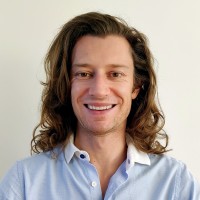
AeroLeads people directory · profile
James Flewellen Email & Phone Number
Research Associate – Biosensor Commercialisation Lead
at
The University of Edinburgh
1 work email found
@ed.ac.uk
LinkedIn matched
✓ Verified July 2026
4 data sources
Profile completeness 100%
Current company
Role
Research Associate – Biosensor Commercialisation Lead
Location
London, England, United Kingdom
Who is James Flewellen? Overview
A concise factual answer block for searchers comparing this professional profile.
Quick answer
James Flewellen is listed as Research Associate – Biosensor Commercialisation Lead at The University of Edinburgh, based in London, England, United Kingdom. AeroLeads shows a work email signal at ed.ac.uk and a matched LinkedIn profile for James Flewellen.
James Flewellen previously worked as Director at James Flewellen Wine and Postdoctoral Research Scientist at Ucl. James Flewellen holds D. Phil., Biophysics from University Of Oxford.
Company email context
Email format at The University of Edinburgh
This section adds company-level context without repeating James Flewellen's masked contact details.
{first}.{last}@ed.ac.uk
86% confidence
AeroLeads found 1 current-domain work email signal for James Flewellen. Compare company email patterns before reaching out.
Profile bio
About James Flewellen
Highly experienced multi-disciplinary scientist working at the interface of physics and biology. I am currently exploring applications of novel whole-cell biosensors developed at the University of Edinburgh. These sensors give real-time, near-instantaneous detection of minute quantities of chemicals and biomarkers. They deliver the data in an electronic format, integrating with other circuitry. I'm currently exploring applications in the water industry, food and drink, point-of-care diagnostics, drug discovery, autonomous marine vehicles and environmental monitoring. If you think this technology could be applied in your industry, please get in touch. Recently, I completed a five-year period at The Francis Crick Institute, London. I worked as a single-molecule biophysicist in a B-cell immunology group led by Prof. Pavel Tolar. I developed a novel technique for single-molecule force spectroscopy by integrating magnetic tweezers with digital holographic microscopy for 3D imaging. The research focused on the force-mediated immune response to HIV; however the techniques I developed could be applied to any antigen-antibody, or protein-protein, interaction.This role was a return to academia following a personal interest in applying novel physics and technology to cutting-edge issues in biomedical research.Prior to this role I co-founded and managed Speckle Technologies Ltd, a biotechnology start-up developing mobile diagnostics devices using digital holographic technology. My previous PhD and postdoctoral research at the University of Oxford was the development of 3D microscopy techniques to study the motile behaviour of microorganisms. I have a strong interest in science education and communication, with many years experience teaching and tutoring. I am also a wine communicator, educator and consultant. I run wine tastings in the UK and further afield. I co-wrote 'The Concise Guide to Wine and Blind Tasting', published in 2014, which was awarded a Gourmand Award for Best Drinks Education book. In 2020 I launched my innovative, infographic wine guides.Specialties: biotechnology, biophysics, optical microscopy, innovation, interdisciplinary science, single molecule techniques, holography, science communication, science education, tutoring, wine tasting, wine education.
Listed skills include Physics, Microscopy, Science, Research, and 33 others.
Current workplace
James Flewellen's current company
Company context helps verify the profile and gives searchers a useful next step.
16 roles · 24 years
James Flewellen work experience
A career timeline built from the work history available for this profile.
Research Associate – Biosensor Commercialisation Lead
CurrentDeveloping a spinout company based around a novel biosensor technology.We have developed a novel bioelectronic interface technology that leverages the exquisite sensing capabilities of microorganisms to detect trace chemicals in liquid environments, and couples this to a custom integrated circuit to produce an electronic output. My role is partly technical: bringing to life a prototype device by overseeing integration of microbiology, electronics, liquid handling and surface chemistry, as well as leading on device design and some specific bioengineering aspects. And partly business development: identifying product-market fit, beachhead markets, angel customers; securing funding for technology and business development; and building a team around me to form a company to take this university innovation into the world.I have raised >£330k in grant funding for commercialisation activities so far, through Innovate UK ICURe Programmes, Scottish Enterprise, IBioIC and Edinburgh Venture Builder Incubator.
Nov 2021 - Present

Director
CurrentCreator of a new way to learn about wine via my innovative visual wine guides. This is a unique project combining high quality data on wine regions with a beautiful designed aesthetic. "Everything you need to know about a wine region on a single piece of paper." They are perfect for wine students and wine lovers seeking to further understand their wine knowledge.I am also an award-winning author (for the original edition of "The Concise Guide to Wine and Blind Tasting" which won the Gourmand Award for Best Drinks Education Book (UK)) and have over 10 years experience teaching and communicating about wine.My introduction to wine came through competitive blind tasting, and I competed in – and won – numerous university wine tasting competitions – both domestically in the UK and internationally. I hold the WSET Level 4 Diploma in Wine and Spirits and am a judge for the International Wine Challenge based in London.I also run wine tastings in the UK and further afield and You can find out more at www.jamesflewellen.com.
Aug 2011 - Present

Postdoctoral Research Scientist
During this role, I developed a novel microscopy system for single-molecule force spectroscopy. This was achieved through integrating magnetic tweezers with digital holographic microscopy for 3D imaging of microscopic objects. I designed the experimental apparatus, wrote a 3D holographic image analysis software suite, and conducted force spectroscopy experiments of a range of protein-protein interactions.The aim of the project was to explore the biomechanics of B lymphocyte interaction with HIV envelope proteins under applied load, which better represents the physiological situation. However, the techniques I developed are applicable to a wide range of antibody-antigen and other protein-protein interactions.I worked at the interface of biophysics and immunology in this role in the laboratory of Pavel Tolar. The laboratory was based in the Francis Crick Institute, although I was initially employed by Imperial College London, until the adminstration of the funding grant was transferred to University College London in 2020.
Jul 2020 - Sep 2021
Postdoctoral Research Scientist
I worked at the interface of biophysics and immunology in this role in the laboratory of Pavel Tolar.My laboratory was based at the Francis Crick Institute; however I was employed first by Imperial College London and then University College London when the administration of the funding grant was moved.During this role, I developed a novel microscopy system for single-molecule force spectroscopy. This was achieved through integrating magnetic tweezers with digital holographic microscopy for 3D imaging of microscopic objects. I designed the experimental apparatus, wrote a 3D holographic image analysis software suite, and conducted force spectroscopy experiments of a range of protein-protein interactions.The aim of the project was to explore the biomechanics of B lymphocyte interaction with HIV envelope proteins under applied load, which better represents the physiological situation. However, the techniques I developed are applicable to a wide range of antibody-antigen and other protein-protein interactions.I also co-founded and ran the Single-Molecule Network – a network of London-based multidisciplinary scientists working at the cutting edge of single-molecule research. I helped establish this network and set up a series of half-day conferences at the Crick Institute to bring together single-molecule researchers working on disparate problems in the biomedical space.
Jun 2016 - Sep 2021

Postdoctoral Research Scientist
During this role, I developed a novel microscopy system for single-molecule force spectroscopy. This was achieved through integrating magnetic tweezers with digital holographic microscopy for 3D imaging of microscopic objects. I designed the experimental apparatus, wrote a 3D holographic image analysis software suite, and conducted force spectroscopy experiments of a range of protein-protein interactions.The aim of the project was to explore the biomechanics of B lymphocyte interaction with HIV envelope proteins under applied load, which better represents the physiological situation. However, the techniques I developed are applicable to a wide range of antibody-antigen and other protein-protein interactions.I worked at the interface of biophysics and immunology in this role in the laboratory of Pavel Tolar. The laboratory was based in the Francis Crick Institute, although I was employed by Imperial College London, until the adminstration of the funding grant was transferred to University College London in 2020.
Jun 2016 - Jun 2020
Co-Founder And Ceo
Speckle Technologies
Emerging from my academic research at Oxford University, Speckle Technologies was created to develop a mobile medical diagnostics platform. Speckle combines 3D imaging techniques with machine learning algorithms to produce optical diagnostics routines that are fast, efficient and cheaper than conventional laboratory-based techniques. Application areas include: medical diagnostics, veterinary science, food and beverage quality assurance, water quality verification and novel research laboratory instruments.
Aug 2013 - Nov 2016
Lecturer
Tutoring undergraduate students in physics. I have taught: 1st year mathematical methods, 1st year mechanics, 2nd year mathematical methods, 2nd year quantum mechanics, 2nd year thermodynamics, 3rd year biophysics.
Sep 2011 - Jun 2016

Doctoral Research Student
Research student in the field of biophysics/bionanotechnology. Particularly interested in novel technologies based on new understanding of biological organisms/components at the cellular and sub-cellular level.My thesis (defended January 2013) is titled: "Digital Holographic Microscopy for Three-Dimensional Studies of Microorganisms". It describes the development of a modular, multiple-magnification digital holographic microscope capable of operating in both off-axis and inline imaging modalities. Holograms can be acquired at up to 2,000 frames per second. The microscope was used for preliminary studies into the 3D swimming behaviour of populations of bacteriaResearch interests: bacterial motility, technological applications of bacteria, microhydrodynamics, optical trapping techniques, holography, micro-fluid dynamics, particle image velocimetry
Oct 2008 - Oct 2012
Post-Doctoral Research Scientist
Research physicist developing novel forms of digital holographic microscopy for three-dimensional studies of bacterial motility along with miniaturizing digital holographic microscopes for commercial applications.
Oct 2012 - Oct 2014

Alto Lay Clerk
Professional counter-tenor lay clerk for Christ Church, Oxford.
Jan 2009 - Sep 2009
Research Physicist
Veritide Ltd
Employed part time as a research physicist involved in the R&D of the company's latest biodetection technology.I developed fundamental physics research behind optical detection of diabetes and assisted in bringing this technology to the clinical prototype stage.
Oct 2007 - Oct 2008

Mathematics Tutor
Tutor for 2nd year mathematics courses. Taught linear algebra, vector spaces, differential equations, vector calculus.
Feb 2006 - Jun 2008
Tutor And Tactile Transcriber For Disability Support
Specialised in teaching university-level mathematics to blind and visually-impaired students.Helped to pioneer a graphical tactile system for blind students of science, transcribing visual figures, graphs, diagrams etc into a braille-compatible tactile format.
Nov 2005 - Jun 2008
Wedding Photographer
Sydenham Photographics
Part time photographer, mostly weddings but some commercial work also.Digital processing, enhancement and restoration of damaged photographs.
2004 - 2008
~4 yrs
Alto Choral Scholar
Christ Church Cathedral Choir, Nz
2003 - 2008
~5 yrs
4 education records
James Flewellen education
D. Phil., Biophysics
M.Sc., Physics
B.A., English, Mathematics
B.Sc.(Hons), Physics
FAQ
Frequently asked questions about James Flewellen
Quick answers generated from the profile data available on this page.
What company does James Flewellen work for?
James Flewellen works for The University of Edinburgh.
What is James Flewellen's role at The University of Edinburgh?
James Flewellen is listed as Research Associate – Biosensor Commercialisation Lead at The University of Edinburgh.
What is James Flewellen's email address?
AeroLeads has found 1 work email signal at @ed.ac.uk for James Flewellen at The University of Edinburgh.
Where is James Flewellen based?
James Flewellen is based in London, England, United Kingdom while working with The University of Edinburgh.
What companies has James Flewellen worked for?
James Flewellen has worked for The University Of Edinburgh, James Flewellen Wine, Ucl, The Francis Crick Institute, and Imperial College London.
How can I contact James Flewellen?
You can use AeroLeads to view verified contact signals for James Flewellen at The University of Edinburgh, including work email, phone, and LinkedIn data when available.
What schools did James Flewellen attend?
James Flewellen holds D. Phil., Biophysics from University Of Oxford.
What skills is James Flewellen known for?
James Flewellen is listed with skills including Physics, Microscopy, Science, Research, Experimentation, Statistics, Latex, and Mathematical Modeling.
Find 750M verified contacts
Search by job title, company, industry, location, and seniority. Export verified B2B contact data when you need it.
Start free trialPeople with similar names
Check these profiles if this is not the James Flewellen you were looking for.
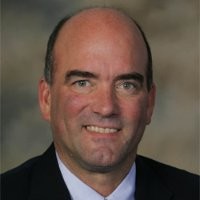
Jim Flewellen
2 email domains