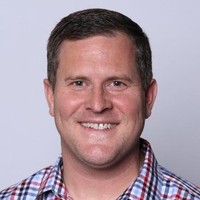
Research Scientist
CurrentApplying deep generative modeling to forecasts, e.g. of renewable energy, for grid optimization.
Mar 2022 - Present
Please complete the CAPTCHA to continue
@gridmatic.com
✓
2 phones found area 630
✓
LinkedIn matched
A concise factual answer block for searchers comparing this professional profile.
Jamie Ray is listed as Research Scientist at Gridmatic, based in Stanford, California, United States. AeroLeads shows a work email signal at gridmatic.com, phone signal with area code 630, and a matched LinkedIn profile for Jamie Ray.
Jamie Ray previously worked as Model Engineer at Ghost and Machine Learning Scientist at Susquehanna International Group, Llp (Sig). Jamie Ray holds Master Of Science (Ms), Electrical Engineering, 4.0 from Stanford University.
This section adds company-level context without repeating Jamie Ray's masked contact details.
AeroLeads found 1 current-domain work email signal for Jamie Ray. Compare company email patterns before reaching out.
Experience: Computer vision, machine learning, applied research to adapt cutting-edge algorithms for real-world applications.Skills: Python (PyTorch, Caffe2), Lua (Torch), C++
Listed skills include C++, Data Analysis, Physics, Research, and 35 others.
Company context helps verify the profile and gives searchers a useful next step.
A career timeline built from the work history available for this profile.
Campbell, California, United States
Applying deep generative modeling to forecasts, e.g. of renewable energy, for grid optimization.

Mountain View, California, United States
Applying machine learning and computer vision to build models for autonomous driving.- Scene understanding- Lane detection- Deep learning on limited data

Palo Alto, California, United States
Applying machine learning to problems in finance.
San Francisco Bay Area
- Contracted on several research projects / consulted with expert networks looking for AI advice- Developed methods for unsupervised hierarchical clustering / classification (combining ideas from classification trees and deep learning)- Applied to PhD programs and was in the process of choosing when Covid hit... decided not to go

Menlo Park
Pleasanton
- Developed and benchmarked proprietary computer vision algorithms to detect, track, andrecognize objects in video through system that is highly parallelizable and robust to noise.- Explained technology (with demos) to several investor groups.- Recognition system achieves > 80% verification on restricted LFW dataset.
Stanford, CA
- Adapted state of the art recommendation system algorithms to a professional social networkusing a probabilistic graphical model.- Designed all elements of back-end pipeline (API, algorithm, and graph database).- Application to seed dataset from applicant tracking system yielded 3x relative throughput ofhire-able candidates at a low (< 20%) miss rate.

Mountain View, CA
Wrote and tested ground software (C++) to assist with the team's processing of high-resolution satellite imagery. Independently developed a video compression module (FFMpeg h.264 standard) to generate a commercial video product with a variety of encoding parameters.
Enhanced a low-temperature experiment measuring electron transport in 'artificial atoms,' or quantumdots. Designed and built shielding, measurement electronics, and regulated power supplies.Performed characterization of novel device designs at 4 Kelvin temperature and high vacuum.
Wrote machine learning software (using neural networks and BDTs) to improve photon identificationwith a combination of detector variables in Monte Carlo simulation. Application to Higgs Bosonsearch gave 30% improved performance; algorithm is now leveraged in other physics analyses.
Assembled, operated, and tested a prototype cosmic ray detector. Developed software package withgraphical user interface to analyze cosmic ray events. Analyzed data from particle collisionsproducing a two-photon signature predicted in the decay of exotic particles (Higgs Boson).

Assisted postdoctoral researcher with analysis of particle collisions producing a two-photon signaturepredicted in the decay of exotic particles (Higgs Boson). Focused on development and documentation ofsoftware. Full-time summer (6/2008 – 9/2008), otherwise 8 hours/wk.

Activities and Societies: Tau Beta Pi Intramural Sports Volleyball Distance RunningMachine Learning, Image Processing, Computer Vision.
Activities and Societies: Coursework in Physics, Computer Science, Energy Technology, and Math. Intramural Sports, Running ClubSolved.
9/2006 6/2009) Advanced Placement courses in calculus, physics, and chemistry. Independent Study of quantum mechanics. Participated in.
Quick answers generated from the profile data available on this page.
Jamie Ray works for Gridmatic.
Jamie Ray is listed as Research Scientist at Gridmatic.
AeroLeads has found 1 work email signal at @gridmatic.com for Jamie Ray at Gridmatic.
AeroLeads has found 2 phone signal(s) with area code 630 for Jamie Ray at Gridmatic.
Jamie Ray is based in Stanford, California, United States while working with Gridmatic.
Jamie Ray has worked for Gridmatic, Ghost, Susquehanna International Group, Llp (Sig), Self-Employed, and Facebook.
You can use AeroLeads to view verified contact signals for Jamie Ray at Gridmatic, including work email, phone, and LinkedIn data when available.
Jamie Ray holds Master Of Science (Ms), Electrical Engineering, 4.0 from Stanford University.
Jamie Ray is listed with skills including C++, Data Analysis, Physics, Research, Programming, Matlab, C, and Engineering.
Search by job title, company, industry, location, and seniority. Export verified B2B contact data when you need it.
Start free trial Search contactsCheck these profiles if this is not the Jamie Ray you were looking for.