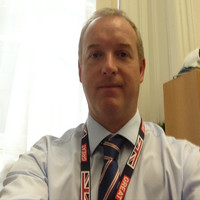

I’ve had a long and interesting career that has spanned mechanical calculators, telephony viewed as a natural monopoly, a single MNOS transistor and smartphones. You can see more specific detail about my work at https://preciseai.co.uk/about-precise-intelligence/Throughout my life I’ve had three main technical interests:• Mathematics• Electronics and Computers• Speech and LanguageI have focused my energies on these throughout my career and personal life. As a hobby I have also loved learning languages. It is this ongoing combined fascination that has enabled me to finally discover the essential mathematics for Natural Language Understanding.Marconi –17 years: I worked on all aspects of speech coding and ran a government funded research program on speech recognition for five years. I designed the world's first human-quality text-to-speech system for the UK National Air Traffic Service (Automated Volmet) installed at Heathrow and other international airports. I also designed the worlds first standalone connected speech recogniser the Marconi SR128, which was flown in a BAC 1-11 civil aircraft, a Buccaneer fighter jet and a Wessex helicopter. At the end of this period I then designed many speech and text systems for telecoms.Telsis – 27 years: I set up Telsis, a leading international supplier of innovative text and voice services equipment. We initially focused on Voice Services Equipment, later expanding into SMS text messaging technology and then ISDN video services equipment. I was chairman for over 25 years and sales averaged out £10m+ per year - with customers in 40+ countries. I was very hands on with research and development. There was so much innovation during this period and there is a trail of patents.Precise Intelligence – 8 years: In 2014, I started to work full time on the problem of Natural Language Understanding – a mathematical problem of geometry. By disregarding previous work and applying my own unique experience of maths and linguistics, I identified the invariant features of language so that I could classify sentences, which led to the solution to Natural Language Understanding. The company’s research variant of an AI Assistant was used to investigate issues of context in human-quality conversations.In 2016 I discovered The Fundamental Theorem Of Cognition (TFTOC). A partial implementation of TFTOC was added to HPD, and by late 2019 it was possible to carry out a large number of Smoking Gun tests – which verified that TFTOC is essential for Natural Language Understanding.
-
Managing DirectorPrecise Intelligence Ltd Jan 2015 - PresentFareham, England, United KingdomPrecise Intelligence Ltd researches the problem of Natural Language Understanding (NLU). I learned during my research into speech recognition that it can be easier to solve a hard problem than a simple one. The beauty of mathematics is to find simple solutions to seemingly complex problems. Many researchers have tried to simplify the problem of NLU by ignoring anaphors, common sense, context, explainability and even statements, which are critical to human-quality conversations. I have had lessons in French, German, Spanish and the basics of Arabic. I have also looked at Chinese and am now learning Korean. Such diverse languages have complex peculiarities. By disregarding previous work and applying my own experience, I was able to identify the invariant features of language so that I could classify sentences. One of the issues with traditional linguistics has been an unhealthy focus on single standalone sentences. To ensure I work with human-quality language, I use short conversational tests as these provide a focus on context. There were two key issues with conventional AI research. Firstly, confusion between form and meaning, and secondly, the seeming invisibility of statements. Statements are a key component of human conversations and hence understanding statements, which require the creation of unstructured cognitive memories, is critical to Natural Language Understanding. In a conversation between two people the meaning of a sentence will be interpreted differently by each of the individuals depending on the preceding information and each person's cognitive memories. Following on from the first generation of TFTOC code in HPD I have continued to work on two key research areas:• Representation – given the novelty of Abstracts and TFTOC, it is important to have terse and simple representations – so this is an ongoing activity.• Language theory – given the novelty of the new mathematics it remains important to continue to simplify it. -

DirectorPrecise Intelligence Ltd 2015 - Present
-
Business OwnerTelsis Jun 1987 - Feb 2014Fareham, England, United KingdomI became involved in the design of start-at-the-beginning network announcers and set up Telsis, a leading international supplier of innovative text and voice services equipment. We initially focused on Voice Services Equipment, later expanding into SMS text messaging technology, then ISDN video services equipment.I was chairman for over 25 years. Sales averaged at £10m+ per year with customers in 40 countries and £¼ billion+ sales of innovative products and services. I was hands on with research and development and there were many innovations and a trail of patents.Our first product was Hi-Call, a disc-based Voice Services Equipment with Direct Dial In interfaces. The approval number in Germany was 001, as Hi-Call was the first such equipment approved for the Deutsche Telekom network.The system used dual discs for fault tolerance and 10 hours of audio storage on a 170 MB disc (the largest disc of its type that could be bought in 1987!). Design to supply of the first Hi-Call was 6 months.We added a voice activity detector, DTMF tone detection and even rotary dial handset pulse detection capability for those networks still using it. Hi-Call also offered live feed capability. It was possible to dial in and listen to sports events. Later audioconferencing was added.When television started using “Call Now” it put the networks under pressure. Telsis developed an Ocean family of Intelligent Network components including a Service Control Point (the brains of the system) a Service Switching Point (for call routing) and an Intelligent Peripheral (for terminating calls). It was nonblocking with an extremely high level of fault tolerance and used our own safeC language.Telsis had its own SS7 signalling stack and was able to offer extremely robust service solutions.SMS became a highly successful addition to the voice channel and Telsis developed a range of products to route and terminate SMS messages including SMS Home Routing.
-
System Design EngineerMarconi Sep 1970 - Jun 1987In my early years at Marconi I worked in different divisions, which helped develop my design skills, creating tolerant designs that worked in difficult environments, were producible and testable, and when appropriate failed safely. A focus on security has remained with me throughout my career. National Air Traffic Services - Automated Volmet weather announcement system.Every commercial airport takes half hourly weather measurements. These are sent as coded messages to central locations, where they were read by human operators onto a tape loop. This was then broadcast.The approach was costly and audio quality variable, given the number of different speakers. I designed and built an automated solution. It used a technique called Synthesis by Word Concatenation with different spoken forms for each word. With a lot of attention to detail the system was truly human-quality. A visitor once asked when our automated system was going live – some months after it had done so! It was installed in the control tower at Heathrow Airport and went live on the 5th of May 1981. Marconi sold further systems overseas. My career at Marconi focused on voice technology for civil, military and telecoms applications. Military applications were mostly low bit rate speech coding. I built both channel and LPC military grade vocoders, worked on other waveform coding techniques for telecom applications, and managed a government funded research program on speech recognition in high noise environments. We developed the world’s first standalone connected speech recogniser, the Marconi SR-128, and it was flown for evaluation purposes in a BAC 1-11 civil aircraft, a Wessex helicopter and a Buccaneer jet. On one occasion I got to fly nap-of-the-earth in the co-pilot’s seat of a Wessex helicopter, as the pilot used an SR-128 to control his instruments by voice.My division also produced a number of digital network announcers for both BT and other service providers.
Jeff Wilson Education Details
-
2 Degrees In Electricalengineer And Geophysics
Frequently Asked Questions about Jeff Wilson
What company does Jeff Wilson work for?
Jeff Wilson works for Precise Intelligence Ltd
What is Jeff Wilson's role at the current company?
Jeff Wilson's current role is TMT – technology, media, telecomms.
What schools did Jeff Wilson attend?
Jeff Wilson attended Imperial College London.
Not the Jeff Wilson you were looking for?
-
Jeff Wilson
Director , Producer And Series Producer For Bbc Studios , Disney +, Netflix , Currently Working For Silverback FilmsGreater Bristol Area, United Kingdom -
1aibonline.org
-
3yahoo.co.uk, international.gc.ca, gmail.com
-
Free Chrome Extension
Find emails, phones & company data instantly
Aero Online
Your AI prospecting assistant
Select data to include:
0 records × $0.02 per record
Download 750 million emails and 100 million phone numbers
Access emails and phone numbers of over 750 million business users. Instantly download verified profiles using 20+ filters, including location, job title, company, function, and industry.
Start your free trial