
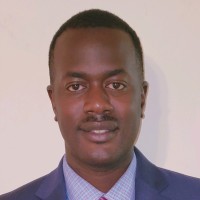
AeroLeads people directory · profile
Joab Odera, Ph.D. Email & Phone Number
Postdoctoral Fellow - Duke Aging Center and the Duke TORCHE Lab
at
Duke University School of Medicine
LinkedIn matched
✓ Verified Jul 2026
3 data sources
Profile completeness 86%
Current company
Role
Postdoctoral Fellow - Duke Aging Center and the Duke TORCHE Lab
Location
Durham, North Carolina, United States
Who is Joab Odera, Ph.D.? Overview
A concise factual answer block for searchers comparing this professional profile.
Quick answer
Joab Odera, Ph.D. is listed as Postdoctoral Fellow - Duke Aging Center and the Duke TORCHE Lab at Duke University School of Medicine, based in Durham, North Carolina, United States. AeroLeads shows a matched LinkedIn profile for Joab Odera, Ph.D..
Joab Odera, Ph.D. previously worked as Postdoctoral Researcher - Cancer Biostatistics, Epidemiology and Data Science at Duke Head And Neck Surgery & Communication Sciences and Lead Data Scientist and Statistician (Volunteer) at Diabesity Nutrition Centre. Joab Odera, Ph.D. holds Certificate In Clinical Trials Data Management, Clinical Research Coordinator from Durham Technical Community College.
Company email context
Email format at Duke University School of Medicine
This section adds company-level context without repeating Joab Odera, Ph.D.'s masked contact details.
Duke University School of Medicine
Review company-level records connected to Joab Odera, Ph.D. before choosing the right outreach path.
Profile bio
About Joab Odera, Ph.D.
Scientist with fifteen years of experience in molecular biology, biochemistry, cell biology, and data analysis techniques, as well as nine years of GMP/GxP, and seven years of GCP training. Strategic leader with a successful history in training, mentoring, and supervising junior scientists. Excellent verbal and written communication. Demonstrated ability to solve complex problems with diverse teams through collaboration and building genuine relationships while securing progressive roles requiring increased leadership aptitude and responsibility. Highly self-motivated. Seeking a position where I can leverage my problem-solving and strong interpersonal skills to engage stakeholders, increase my skillset, and support the ongoing growth of an organization.
Current workplace
Joab Odera, Ph.D.'s current company
Company context helps verify the profile and gives searchers a useful next step.
Duke University School Of Medicine
Website
AeroLeads page
17 roles · 18 years
Joab Odera, Ph.D. work experience
A career timeline built from the work history available for this profile.

Postdoctoral Researcher - Cancer Biostatistics, Epidemiology And Data Science

Lead Data Scientist And Statistician (Volunteer)
Poor food handling practices impact the lives of many children globally rendering them to high malnutrition rates, frequent illness, and poor growth and development. Each year 125,000 infants and young children die from diseases and complications attributed to foodborne illness. As the lead data scientist and statistician on this project, I am using:Pandas, Numpy, Scipy, and Statsmodels libraries to analyze responses from questionnaires provided by 424 study participantsSupervised machine learning models to predict the effect of food safety knowledge, attitudes, and practices on socioeconomic standards and trainingSupervised machine learning algorithms to identify patterns in food safety responses based on certain socio-demographic characteristicsUnsupervised machine learning clustering analyses comparing childhood and adulthood weight and diabetes clusters to identify relationships between various family households
Postdoctoral Associate
As a postdoctoral scientist, my research was focused on how RNA splicing was involved in ancestral-related health disparities in non-small cell lung cancer (NSCLC). We aimed to identify RNA splice variants involved in cancer development by ancestry, determine the mechanism of action including the effect of modified protein molecules on downstream signaling, and lastly, target mRNA splice variants with specifically designed oligo-switching nucleotides.Used bioinformatic tools such as TCGA spliceSeq, Cansplice, CCLE, COSMIC, UCSC, and Ensmble to understand the effect of splicing on translation or the effect of CRISPR exon deletion on transcription of a target gene. Cell culture to grow NSCLC cell linesCRISPR -Cas9 technology (CRISPR vector technology) in the removal of specific exons to study the effect of RNA splicing in cancer development RT-PCR to confirm CRISPR deletionqPCR to investigate the downstream effect of exon deletion on transcription Incucyte to observe changes in cell proliferation and migrationWestern blot to observe changes in protein cell signalingPython and R programming, machine learning, and use of 5’UTR-specific bioinformatic tools to interrogate the presence of specific translation efficiency sequencesProliferation and migration phase and colorimetric( Cell-Titer Glo) plate assaysJournal article reading and preparationTraining new lab members
Sep 2020 - Nov 2023

Graduate
Data is getting created at a rapid pace. It is estimated that more than 2 quintillion bytes of data have been created each day in the last two years. As organizations experience an overflow of data, they are sparing no effort to extract meaningful insights to make smarter business decisions. In order to help you unravel the true worth of data, MIT Professional Education offers Applied Data Science Program, which aims to prepare data-driven decision makers for the future.In this program that lasts for 12 weeks, you will be able to upgrade your data analytics skills by learning the theory and practical application of supervised and unsupervised learning, time-series analysis, neural networks, recommendation engines, regression, and computer vision, to name a few.Upon successful fulfillment of requirements, you will receive a Certificate of Completion from MIT Professional Education at the end of the program.
Jun 2023 - Aug 2023
Phd Candidate
Research Advisor: Dr. Xiaoxin Luke ChenEsophageal Squamous Cell Carcinoma (ESCC) is the sixth highest incidence cancer in the world, and has one of the highest morbidity and mortality rates among cancers. Our work involved the study of NFE2L2 or NRF2, a transcription factor that has been shown to upregulate metabolism in cancer cells, and which is commonly mutated in ESCC cases from Asia, Africa, and among African-American patients. We investigated the role of NRF2 in ethanol metabolism and esophageal carcinogenesis.In this role, I did the following:Conducted cell culture of ESCC cell lines e.g. KYSE70, KYSE180 & KYSE4103D organoid culture to test cell invasion of Nrf2−/−, wild-type, Keap1−/− mouse esophagi with or without ethanol exposure. Western blot to determine expression of NRF2, ACSS1, ACSS2, ACSS3, GAPDH and 𝛃-actin in NRF2 low and high ESCC cell lines, and Nrf2−/−, wild-type, Keap1−/− and Sox2CreER;LSL-Nrf2E79Q/+ mice. Immunohistochemistry to check the expression of NRF2 and ACSS2 human, Nrf2−/−, wild-type, Keap1−/− and Sox2CreER;LSL-Nrf2E79Q/+ mouse tissues. siRNA and plasmid transfection to determine NRF2, ACSS1, ACSS2, and ACSS3 expression Run ChIP-PCR to determine NRF2 binding to mouse Acss2 gene in Keap1−/− esophagus, but not in Nrf2−/− and wild-type esophagiRun Seahorse cell mito-stress assays to characterize the effect of NRF2, ACSS2, and ethanol on cell energy phenotype and oxidative phosphorylation in ESCCH&E staining and Immunohistochemistry Animal Handling and rodent dosing (Oral gavage and SubQ) of Nrf2−/−, wild-type, Keap1−/− and Sox2CreER; LSL-Nrf2E79Q/+ miceMicroscopy: Phase, Inverted, and Incucyte were used to view cells and quantitate cell proliferation and cell migrationImageXpress Pico microscopy was used to analyze and quantitate cell invasion of NRF2 and ACSS2 ESCC cell lines with or without ethanol exposureTraining, mentoring, and supervising undergraduate students
Aug 2015 - May 2020

Lead Tutor, Quantitative Skills Center
Responsibilities: • Assist students with various Mathematics and Science problems (Quantitative Skills Center)• Developing modules and workshops for tutor training• Mentoring and guiding student tutors• Assisting with tutor training and following of center protocols• Managing work tutor work distribution.
May 2013 - Aug 2015
Writing Consultant
Responsibilities: • Provide writing, reading, and communication assistance to all WSSU students, faculty, and staff. • Assist with writing projects, speeches and oral presentations, resumes, cover letters, personal statements, and visuals for incorporation into a paper or a presentation for any course.• Assist at any point in the writing process from brainstorming through final revisions to developing an outline, and perfecting one's presentation style.• Provide skills that would help students, faculty, and staff become more confident, self-sufficient writers, readers, and communicators.
Sep 2012 - Aug 2015
Research Assistant
Was responsible for HIV genotype/subtype identification for samples collected from over 800 patients from Nigeria, West Africa.Research responsibilities included:RNA Isolation and purificationConfirming RNA product purification: use of NanoDropReverse Transcriptase PCRDeveloping cDNA LibraryPreparing cDNA for sequencingPresenting findings at Lab meetingsAssist in conducting Journal club meetingsTraining and mentoring undergraduate students ICH GMP training on handling viral samples obtained from human samplesCell culture training and maintenance (Malaria and Leishmaniasis)
Oct 2013 - Jul 2015
Research Associate
Tengion
As a part of the Bioprocessing and Research Development team at Tengion, I was trained in the manufacturing process of the Neo Kidney Augment, and Quality analysis and release testing following Standard Operating Procedures (SOPs) for Regenerative medicine products: . Neo-Urinary Conduit™, and the Neo-Kidney Augment™ (NKA). GLP/cGMP was required training for this position. Further duties included development of cell-based potency assays. Manufacturing skills used included: ● Development and maintenance of cultures ●Cryopreservation ● Maintaining cell lines and record keeping ● Tissue development (NKA selective processing methods)Skills used in Analysis and Research included:• ELISA (MMP 1-10, IL4-8)• Flow Cytometry• Metabolism potency assays• 3D and 2D Tissue Culture • Angiogenesis and Tubulogenesis assays• Real Time PCR• Gene silencingWork was conducted under Dr. Dominic Justewicz.
May 2014 - Dec 2014

Oct 2013 - Jan 2014

Research Assistant
As a summer intern, and a later a Research Assistant, I developed experiment protocols for mtDNA processing prior to Next Generation sequencing.Research responsibilities included:• Identifying and enhancing a novel mtDNA extraction method• Evaluating mtDNA extraction from cells through plating and fluorescence microscopy• Conducting enzyme digestion and PCR reactions specific to human mtDNA • Electrophoresis and Restriction fragment analysis• Quantitating purity of mtDNA via Qubit fluorometer Experiments were designed and carried out independently with guidance from Dr. Guthold (Research Mentor), and Mr. Jason Gagliano (Graduate student). Research was presented at Research Day 2012, Wake Forest University
May 2012 - Jun 2013
Office Assistant
Jan 2013 - May 2013
Maths And Science Tutor
Responsibilities: • Assist students with various Mathematics and Science problems (Quantitative Skills Center).• Mentoring and guiding student tutors• Assisting with tutor training and following of center protocols
Jan 2010 - May 2013
Graduate - Molecular Biology
TrainingTrained in the use of the following techniques: Presto-blue Assay, MTT assay, ELISA, Flow Cytometry (Guava, Attune Acoustic, & 2100 Agilent Bioanalyzer), Angiogenesis and tubulogenesis assays, Gas Chromatography- Mass Spectrophotometry, UV spectroscopy, H-MNR, IR-Spectrophotometry, UV-Visible spectrophotometry, Bradford, Lowry, BCA, Biuretic protein assays, Size-exclusion chromatography, Ion exclusion chromatography, adsorption and absorption spectroscopy, Quantitative fluorometry (Qubit 2.0 & NanoDrop), Protein-Chromatin-DNA-mtDNA-RNA extraction, protein crystallization, Southern Blot, Western Blot, Affinity Chromatography, centrifugal chromatography, gram staining, confocal microscopy, UV microscopy, fluorescent microcopy, vector cloning, cell culture, tissue culture (tumor and immune cells), tissue dissection and homogenization (rat liver, brain, heart, and kidney), electrophoresis, PCR, Reverse-Transcriptase PCR, Real-Time PCR, bacterial transformation, GFP staining, GFP chromatography, animal surgery (rat), cardiac data analysis, animal care(rat), enzyme restriction/digestion, enzyme kinetics
2009 - 2013
~4 yrs
Research Assistant
I worked in the laboratory of Dr. Azeez Aileru, under Dr. Exazevia Logan. The research was focused on the effects of Ouabain on blood pressure. During experimentation phase, Ouabain was infused into the bloodstream of the normotensive and hypertensive rats left femoral vein and artery at 2Ug and 4Ug. Experimentation revealed Ouabain’s ability in triggering vasoconstriction, thus leading to hypertension. It further explained the effects of Ouabain on the hormonal system.
Dec 2011 - Mar 2012
Lifegaurd
Patrol or monitor recreational areas such as trails, slopes, and swimming areas, on foot, in vehicles, or from towersExamine injured persons and administer first aid or cardiopulmonary resuscitation, if necessary, using training and medical supplies and equipmentInspect recreational facilities for cleanlinessExhibit their understanding of ensuring a safe work environmentFurther clarify their academic focus and career goals
Oct 2009 - Sep 2011
6 education records
Joab Odera, Ph.D. education

Certificate In Clinical Trials Data Management, Clinical Research Coordinator

Clinical Data Science Specialization, Clinical Data Science
Certificate, Applied Data Sience, Exceptional
Doctor Of Philosophy - Phd, Integrated Biosciences - Biology
Molecular Biology, Biochemistry And Molecular Biology, Undergraduate
Education record
Malezi School
FAQ
Frequently asked questions about Joab Odera, Ph.D.
Quick answers generated from the profile data available on this page.
What company does Joab Odera, Ph.D. work for?
Joab Odera, Ph.D. works for Duke University School of Medicine.
What is Joab Odera, Ph.D.'s role at Duke University School of Medicine?
Joab Odera, Ph.D. is listed as Postdoctoral Fellow - Duke Aging Center and the Duke TORCHE Lab at Duke University School of Medicine.
Where is Joab Odera, Ph.D. based?
Joab Odera, Ph.D. is based in Durham, North Carolina, United States while working with Duke University School of Medicine.
What companies has Joab Odera, Ph.D. worked for?
Joab Odera, Ph.D. has worked for Duke University School Of Medicine, Duke Head And Neck Surgery & Communication Sciences, Diabesity Nutrition Centre, Duke University, and Mit School Of Engineering.
How can I contact Joab Odera, Ph.D.?
You can use AeroLeads to view verified contact signals for Joab Odera, Ph.D. at Duke University School of Medicine, including work email, phone, and LinkedIn data when available.
What schools did Joab Odera, Ph.D. attend?
Joab Odera, Ph.D. holds Certificate In Clinical Trials Data Management, Clinical Research Coordinator from Durham Technical Community College.
Find 750M verified contacts
Search by job title, company, industry, location, and seniority. Export verified B2B contact data when you need it.
Start free trial