Adjunct Associate Professor
South College
Please complete the CAPTCHA to continue
@nanohmics.com
✓
2 phones found area 800 and 210
✓
LinkedIn matched
A concise factual answer block for searchers comparing this professional profile.
John Bruno is listed as Adjunct Associate Professor at South College, based in Austin, Texas, United States. AeroLeads shows a work email signal at nanohmics.com, phone signal with area code 800, 210, and a matched LinkedIn profile for John Bruno.
John Bruno previously worked as Principal Scientist and Director of Biotechnology at Nanohmics and Principal Scientist & Director of Biotechnology at Nanohmics. John Bruno holds Ph.D, Microbiology; Immunology from University Of Arizona.
This section adds company-level context without repeating John Bruno's masked contact details.
AeroLeads found 1 current-domain work email signal for John Bruno. Compare company email patterns before reaching out.
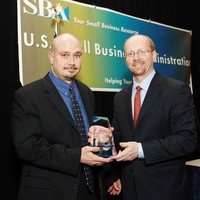
Career Summary/Highlights:- Spearheaded acquisition/licensing of DNA Aptamer technology to ApolloDx and CibusDx.- Led team at Pronucleotein, Inc. which won 2nd Place (49 competitors) in the 2014 FDA Food Safety Testing Tech Challenge ($120K in total prize money;http://www.foodsafetychallenge.com/).- Launched a profitable DNA Aptamer sales website www.OTCBiotech.com.- Winner of the 2011 Small Business Administration’s Tibbetts Award for Excellence in SBIR R&D.- Awarded > 80 SBIR/STTR, other federal and state R & D contracts totaling > $22.5M. - Published 117 total peer-reviewed journal articles, 8 book chaps. & inventor on 16 issued US & EU patents. - Edited & contributed 3 chapters to a book entitled "Biomedical Applications of Aptamers," Nova Science Publishers (formerly Plenum Press).- Patented a method for producing intrachain FRET-aptamers and assays - Patented and published a facile 3’ attachment chemistry to couple PCR products to proteins for low-cost industrial-scale mass production of DNA-3’-protein conjugates which are stable in vivo.- Invented and published DNA Aptamer-Complement conjugates to kill antibiotic-resistant infections (3 Patents Issued on Technology).- Invented and published DNA Aptamer-Fc opsonins to combat encapsulated pathogenic bacteria.- Developed & published DNA aptamer-based colloidal gold and fluorescent (nanoparticle and quantum dot-based) lateral flow test strips for the US Army to detect key hemorrhagic and other pathogenic viruses (e.g., Chikungunya, Crimean-Congo, Dengue, and West Nile viruses).- Developed an aptamer beacon assay for C-telopeptide (CTx) to monitor astronaut bone loss for NASA. Also developed N-acetylglucosamine and chitin aptamers to monitor recycled water aboard spacecraft for NASA under Phase 1 and Phase 2 SBIR contracts.- Invented and published novel FRET-Aptamer methodology and assays for bone markers, calcidiol, and organophosphorus nerve agent detection and quantification.
Listed skills include Biotechnology, Biochemistry, Molecular Biology, Microbiology, and 26 others.
Company context helps verify the profile and gives searchers a useful next step.

A career timeline built from the work history available for this profile.
Austin, Tx, Us

San Antonio, Texas, Us
In charge of writing government BAA, SBIR, and STTR proposals and conducting cutting edge R & D for DNA Aptamer-based therapeutic, diagnostic, and biosensor technologies with the goal of spinning out a biotechnology company for OpTech currently called; Accrued ~ $11 M in government contracts by writing SBIR, STTR and BAA proposals. Provided patented aptamer intellectual property for ApolloDx/CibusDx in Utah. Highlights included publication of and patents for: 1) a novel 3' adenine attachment chemistry to enable mass production of NSF/NIH-funded long-lived therapeutic DNA-3'-protein conjugates, 2) novel DNA aptamer-C1qrs complement conjugates to kill antibiotic-resistant bacteria, cancer cells, and parasites, 3) aptamer-Fc opsonins, 4) ultrasensitive one-step adherent aptamer-magnetic bead-quantum dot assay for foodborne pathogen detection, and 5) DNA aptamer or FRET (Fluorescence Resonance Energy Transfer) aptamer development by novel patented methods to detect acetylcholine, nerve agents or their metabolites, and waterborne pathogenic bacteria. Authored 100 peer-reviewed research journal articles, 16 issued patents and one book about aptamer applications.

San Antonio, Tx, Us
Taught evening courses including Introduction to Biotechnology (BITC 1311), Lab Methods & Techniques (BITC 1402) and Sophomore-level courses in Biotechnology Lab Instrumentation (BITC 2311), Cell Culture (BITC 2431), and Molecular Biology/Molecular Lab Techniques (2441), a hybrid Bio-Nanotechnology Lab Techniques course (BITC 2412 and NANO 2407) as well as Human Anatomy and Physiology and General Microbiology for Science Majors (BIOL 2420/2421). Received Two Adjunct Faculty Excellence in Teaching Awards for Biotechnology in 2009 and Microbiology in 2018. Also served as the Nanotechnology Program Advisory Committee Chairman 2015-2016. See ratings: http://www.ratemyprofessors.com/ShowRatings.jsp?tid=1274615.

Austin, Tx, Us
Systems and Processes Engineering Corp. (SPEC) and OmniSite BioDiagnostics (Wholly Owned Subsidiary of SPEC), Sensors and Biosensors Division; Responsibilities included R & D of novel biomedical products, especially biosensors and associated biochemical reagents. In particular, responsible for implementing an in-house DNA Aptamer (SELEX: Systematic Evolution of Ligands by EXponential enrichment) program. Preparation of SBIR grants and proposals to various government agencies and all aspects of managing and executing contract R & D work. Accrued greater than $4M in government contracts as the proposal writer.

San Antonio, Texas, Us
UTHSCSA). Responsible for microwave bio-effects research on eukaryotic cell lines, development of nitrated protein assays and biological warfare detection technologies, including Systematic Evolution of Ligands by EXponential enrichment (SELEX, DNA Aptamer) development, at the Brooks Air Force Base (AFB) operating location. Self-funded position with a $200K Army R & D contract for anthrax aptamer development.

Albuquerque, Nm, Us
Involved in basic R & D of novel molecular recognition elements for use in biosensors for hazardous environmental wastes of concern to the Defense Dept. Projects involved screening of large random DNA libraries for high affinity binding Aptamers to small organic pollutant molecules by SELEX and exploration of electrochemiluminescent (ECL) properties of marine invertebrate metal ion accumulators (tunicates) and their blood pigments ("tunichromes") for detection and identification of toxic metal ions using biosensors.

San Antonio, Tx, Us
Taught at least 4 evening credit hours per semester in Microbiology, Human Anatomy & Physiology, or General Zoology.

Randolph Afb, Tx, Us
U.S. Air Force, Armstrong Laboratory, Crew Systems Directorate (AL/CFD) Detachment – Edgewood Research Development and Engineering Center (ERDEC), Aberdeen Proving Ground, MD. Involved in development of Immunomagnetic separation and detection devices (especially the IGEN (BioVeris) ORIGEN® ECL analyzer) and other biotechnologies (including PCR-based microbial identification) of concern to the Air Force and Army Chemical and Biological Defense Program. Aided IGEN/Bioveris to enter both the Biowarfare/Bioterrorism and Food Safety Testing markets via joint assay development, testing and publication. See papers in Biosensors & Bioelectronics & Appl. Environ. Microbiol. 1995-96. Developed a large volume immunomagnetic separator for blood via a $425K grant from USAMRIID, Ft. Detrick, MD from 1993-95. Obtained USAF patent for device and published work.

Involved in investigations of non-thermal microwave radiation effects on mammalian and bacterial cells. Work also focused on development of an intracellular chemiluminescent microwave- sensitive polymer (diazoluminomelanin; DALM) and nitrate reductase gene transfected macrophage nitrate metabolism. Work also resulted in the deposition of 3 new transfected cell lines (NR101, NR102 and NR8005) at American Type Culture Collection (ATCC

Tucson, Arizona, Us
Under Dr. George Olson centered on image analysis of retinoic acid-induced differentiation of HL-60 myeloid leukemia cells. Work also included cell culture, SDS PAGE, Western blotting, HPLC, immunoperoxidase and immunofluorescent staining of cytocentrifuged cell preparations, production of polyclonal rabbit antisera to bromodeoxyuridine, and ELISA. Taught an undergraduate Microbiology laboratory course and substitute taught Immunology lectures for my advisor.

Tucson, Arizona, Us
Under Dr. Jack Copeland. Involved in investigation of heart transplantation rejection process, assisted in development of experimental immunosuppressive drug regimens for prednisone, cyclosporine, and anti-thymocyte globulin as well as an atrial natriuretic hormone (ANH) and urinary polyamine assays for detection of early transplant rejection responses and the pathologic progression of induced myocardial infarctions in canines.
Quick answers generated from the profile data available on this page.
John Bruno works for South College.
John Bruno is listed as Adjunct Associate Professor at South College.
AeroLeads has found 1 work email signal at @nanohmics.com for John Bruno at South College.
AeroLeads has found 2 phone signal(s) with area code 800, 210 for John Bruno at South College.
John Bruno is based in Austin, Texas, United States while working with South College.
John Bruno has worked for South College, Nanohmics, Operational Technologies Corporation (Optech), Northwest Vista College, and Spec (Systems & Processes Engineering Corp).
You can use AeroLeads to view verified contact signals for John Bruno at South College, including work email, phone, and LinkedIn data when available.
John Bruno holds Ph.D, Microbiology; Immunology from University Of Arizona.
John Bruno is listed with skills including Biotechnology, Biochemistry, Molecular Biology, Microbiology, R&D, Protein Chemistry, Commercialization, and Immunology.
Search by job title, company, industry, location, and seniority. Export verified B2B contact data when you need it.
Start free trial Search contacts