
Control Systems Engineer
Current
Jan 2015 - Present
Please complete the CAPTCHA to continue
@ge.com
✓
LinkedIn matched
A concise factual answer block for searchers comparing this professional profile.
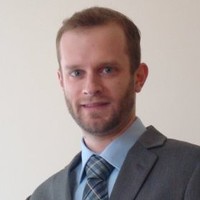
Justin E. Barton is listed as Control Systems Engineer at GE Global Research at GE Global Research, a with 1653 employees, based in Schenectady, New York, United States. AeroLeads shows a work email signal at ge.com and a matched LinkedIn profile for Justin E. Barton.
Justin E. Barton previously worked as Control Systems Engineer at Ge Global Research and Graduate Research Assistant at Lehigh University. Justin E. Barton holds Doctor Of Philosophy (Ph.D.), Mechanical Engineering from Lehigh University.
This section adds company-level context without repeating Justin E. Barton's masked contact details.
AeroLeads found 1 current-domain work email signal for Justin E. Barton. Compare company email patterns before reaching out.
I am currently a graduate research assistant at Lehigh University working towards completing the requirements for a Ph.D. degree in Mechanical Engineering (expected completion, 2014). My research has primarily focused on developing physics-based models of nonlinear, multivariable, distributed parameter systems and subsequently embedding the physics of those models into algorithms to control the system dynamics by utilizing advanced model-based control design techniques. I have focused on applying these methods to develop algorithms to optimize and actively control the magnetic and thermal state dynamics of the reactant plasma in nuclear fusion magnetic confinement tokamak devices. The algorithms were developed to enable the study of desired operating regimes, control the proximity to plasma stability limits and clarify the physics aspects important to robust tokamak operation. The effectiveness of the algorithms was demonstrated through simulation with MATLAB/Simulink models of the plasma dynamics. Additionally, I have implemented and experimentally tested several of the control algorithms on the DIII-D tokamak, and these experiments represented the first time first-principles-driven, physics-model-based, closed-loop control of the entire plasma magnetic profile was demonstrated in a tokamak. During my graduate program I have completed research assistantships at the Centre de Recherches en Physique des Plasmas (Lausanne, Switzerland) and at General Atomics (San Diego, California). Additionally, I have taught both project-oriented and traditional mechanical engineering courses at Lehigh Univeristy.Prior to starting my graduate education, I received my Bachelor of Science degree in Mechanical Engineering with a minor in Aerospace Engineering from Lehigh University in 2009. During my undergraduate program I completed research internships at the Bettis Atomic Power Laboratory (Pittsburgh, Pennsylvania) and at Consol Energy Incorporated (Pittsburgh, Pennsylvania).
Listed skills include Modeling, Control Systems Design, Optimization, Numerical Analysis, and 8 others.
Company context helps verify the profile and gives searchers a useful next step.
A career timeline built from the work history available for this profile.

Bethlehem, Pa, Usa
I conducted research aimed at advancing the state-of-the-art in optimizing and actively controlling the magnetic and thermal state evolution of the reactant plasma in nuclear fusion magnetic confinement tokamak devices with the goals of enabling the study of desired operating regimes, making operating scenarios more reproducible, controlling the proximity to plasma stability limits and clarifying the physics aspects important to robust tokamak operation.I developed physics-based, nonlinear, multivariable, distributed parameter dynamic models of the plasma magnetic and thermal state evolution for general, reactor-relevant scenarios that were suitable for control design. Subsequently, I validated the model prediction against both simulated data obtained from complex physics simulations and experimentally achieved plasma state parameters.By employing advanced model-based control design techniques (nonlinear constrained optimization and robust control theory in particular), I numerically designed feedforward and feedback control algorithms to steer the plasma magnetic and thermal state through the tokamak operating space to reach physically relevant targets. I developed these control schemes for various tokamaks, including DIII-D and TCV (modern day devices in San Diego, CA and Lausanne, Switzerland, respectively) and ITER (future reactor under construction in France), and validated the ability of the algorithms to track physically relevant targets while avoiding stability limits through simulations with MATLAB/Simulink models of the plasma dynamics.Additionally, I experimentally demonstrated closed-loop control of the plasma magnetic profile in the DIII-D tokamak. These experiments constituted the first time first-principles-driven, physic-based, closed-loop control of the magnetic profile was demonstrated in a tokamak. To conduct the experiments, I implemented a general framework for real-time control of the plasma state into the DIII-D Plasma Control System.
Bethlehem, Pa, Usa
Introduction to Engineering Practice (Instructor): I co-developed a hands-on mini wind turbine design project to provide first year students with an introduction to the many principles utilized in mechanical engineering. We first introduced the students to the SolidWorks 3D computer aided design modeling software and assisted them in designing mini wind turbine blades. The students designs were then fabricated using a Stratasys 3D Printer. Finally, we aided the students in setting up and testing their wind turbine designs by utilizing a wind source, various universal turbine blade hub connectors (to allow students to test their designs in multiple configurations, such as the number of blades and the pitch of the blades relative to the incoming wind), a pulley system and an electrical generator.Numerical Methods in Mechanical Engineering (Teaching Assistant): I ran on-campus laboratory sessions designed to reinforce and clarify the concepts of engineering applications of Excel, simple numerical methods, and basic MATLAB introduced by the course professor through video lectures. Additionally, I assisted students in competing laboratory exercise, homework and project assignments and held weekly office hours to complement the laboratory sessions and ran exam review sessions. Finally, I proctored student exams and graded student homework and project assignments.Nuclear Fusion and Radiation Protection (Teaching Assistant): I taught lectures on the design of nuclear fusion tokamak devices, radioactivity and various radioactive decay processes. Additionally, I proctored student exams and graded student exams and homework assignments.Graphics for Engineering Design (Teaching Assistant): I ran laboratory sessions where students learned to construct parts and assemblies using the NX I-DEAS (Integrated Design and Engineering Analysis Software) 3D computer aided design modeling software. Additionally, I graded student semester long projects and homework assignments.
Centre De Recherches En Physique Des Plasmas (Crpp), Lausanne, Switzerland
I developed a general physics-based modeling approach to convert the physics models that describe the plasma electrical current profile and internal energy dynamics in tokamaks into a form suitable for control algorithm design for general, reactor-relevant, burning (one with a significant number of fusion reactions) plasma scenarios. I then tailored the model to burning plasma scenarios in ITER, which is a reactor under construction that is designed to study the scientific feasibility of the tokamak concept to nuclear fusion energy production. Subsequently, I compared the model prediction to the plasma state evolution predicted by the DINA-CH&CRONOS tokamak simulation code (complex, physics-based plasma state evolution code utilized to study the achievability of desired operating scenarios) to obtain a sense of the range of applicability of the control-oriented model of the plasma dynamics. I also incorporated functionality into the DINA-CH&CRONOS code for closed-loop control of the magnetic and thermal plasma profiles to allow for validation of proposed control schemes for ITER. Additionally, I assisted in the instruction of a week long basic control theory course for the graduate students at the CRPP. Finally, I presented a seminar on the active control of the plasma electrical current profile in the DIII-D tokamak.

Fusion Energy Research Group, San Diego, Ca, Usa
Utilizing the Simulink modeling software, I developed a simulation model of the distributed dynamics of the plasma electrical current profile in the DIII-D tokamak. This simulation model was subsequently interfaced with the DIII-D Plasma Control System (PCS) to test the real-time code utilized to control the plasma current profile evolution in the DIII-D tokamak. Finally, I employed the simulation model to determine the effectiveness of current profile controllers and the correctness of their real-time implementation prior to the execution of experimental tests in DIII-D.

Bettis Atomic Power Laboratory, Pittsburgh, Pa, Usa
I designed an application using LabVIEW to map various kinds of temperature calculations onto a 3D Computer Aided Design (CAD) model of a test piece as colors in real time. The application was designed to: be computationally efficient for real-time deployment, be easily configurable to any test section with any geometry, provide the end user with a physical sense of the events occurring in the test section in a concise manner and be easily readable and understood for maintenance and upgrading. Additionally, I designed a data player that could replay old test runs for analyst use. Finally, I updated the data acquisition code to be compatible with the application.
Bettis Atomic Power Laboratory, Pittsburgh, Pa, Usa
I developed an preliminary application using LabVIEW to map various kinds of temperature calculations onto a 3D Computer Aided Design (CAD) model of a test piece as colors in real time. Additionally, I completed LabVIEW training courses (Basics I and II, Intermediate I and II and Advanced) at Data Science Automation to enhance my knowledge of LabVIEW.

Research And Development Division, Pittsburgh, Pa, Usa
I composed process flow diagrams and wrote process descriptions of the subsystems in the Pressurized Fluidized Bed Combustion Technology-Pilot Test Facility (PFBC-PTF), which is a next generation coal power plant designed to burn waste coal. In order to test the flow of the coal-paste fuel without needing to start the entire plant, I designed a separate pressurization system that mimicked the plant operating conditions. Additionally, I worked with other engineers to update Piping and Instrumentation Diagrams of PFBC-PTF. Finally, I ran the water treatment and gas analyzer systems of the PFBC-PTF.
Other employees you can reach at geglobalresearch.com. View company contacts for 1653 employees →
 Karin Ostrom
Colleague at Ge Global ResearchOakland, California, United States
View →
KS
Karin Ostrom
Colleague at Ge Global ResearchOakland, California, United States
View →
KS
 Kit Siu
Colleague at Ge Global ResearchSchenectady, New York, United States
View →
DH
Kit Siu
Colleague at Ge Global ResearchSchenectady, New York, United States
View →
DH
 Don Hamilton
Colleague at Ge Global ResearchBurnt Hills, New York, United States
View →
UD
Don Hamilton
Colleague at Ge Global ResearchBurnt Hills, New York, United States
View →
UD
 Ural Davis
Colleague at Ge Global ResearchSchenectady, New York, United States
View →
RB
Ural Davis
Colleague at Ge Global ResearchSchenectady, New York, United States
View →
RB
 Rupam Basak
Colleague at Ge Global ResearchHaora, West Bengal, India
View →
BM
Rupam Basak
Colleague at Ge Global ResearchHaora, West Bengal, India
View →
BM
 Brian Mitchell
Colleague at Ge Global ResearchSaratoga County, New York, United States
View →
DC
Brian Mitchell
Colleague at Ge Global ResearchSaratoga County, New York, United States
View →
DC
 Dennis Coyle
Colleague at Ge Global ResearchSchenectady, New York, United States
View →
JI
Dennis Coyle
Colleague at Ge Global ResearchSchenectady, New York, United States
View →
JI
 Jared Iverson
Colleague at Ge Global ResearchSchenectady, New York, United States
View →
DH
Jared Iverson
Colleague at Ge Global ResearchSchenectady, New York, United States
View →
DH
 Dave Horney
Colleague at Ge Global ResearchSchenectady, New York, United States
View →
LP
Dave Horney
Colleague at Ge Global ResearchSchenectady, New York, United States
View →
LP
 Lorraine Peacock
Colleague at Ge Global ResearchBengaluru, Karnataka, India
View →
Lorraine Peacock
Colleague at Ge Global ResearchBengaluru, Karnataka, India
View →
Activities and Societies: American Physical Society (APS), Institute of Electrical and Electronics Engineers (IEEE), Rossin Doctoral Fellows
Activities and Societies: Rossin Junior Fellows, Pi Tau Sigma Honorary Mechanical Engineering Fraternity, Tau Beta Pi Engineering Honor.
Quick answers generated from the profile data available on this page.
Justin E. Barton works for GE Global Research.
Justin E. Barton is listed as Control Systems Engineer at GE Global Research at GE Global Research.
AeroLeads has found 1 work email signal at @ge.com for Justin E. Barton at GE Global Research.
Justin E. Barton is based in Schenectady, New York, United States while working with GE Global Research.
Justin E. Barton has worked for Ge Global Research, Lehigh University, Ecole Polytechnique Fédérale De Lausanne (Epfl), General Atomics, and Bechtel Marine Propulsion Corporation.
Justin E. Barton's colleagues at GE Global Research include Karin Ostrom, Kit Siu, Don Hamilton, Ural Davis, and Rupam Basak.
You can use AeroLeads to view verified contact signals for Justin E. Barton at GE Global Research, including work email, phone, and LinkedIn data when available.
Justin E. Barton holds Doctor Of Philosophy (Ph.D.), Mechanical Engineering from Lehigh University.
Justin E. Barton is listed with skills including Modeling, Control Systems Design, Optimization, Numerical Analysis, Simulations, Experimental Testing, Matlab, and Simulink.
Search by job title, company, industry, location, and seniority. Export verified B2B contact data when you need it.
Start free trial Search contacts