
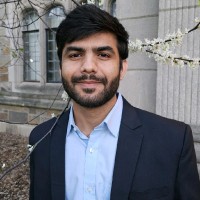
AeroLeads people directory · profile
Jwalandhar Girnar Email & Phone Number
Engineer Team Leader: Sensing and Perception
at
Transportation Research Center Inc.
LinkedIn matched
✓ Verified Jul 2026
3 data sources
Profile completeness 86%
Current company
Role
Engineer Team Leader: Sensing and Perception
Location
Ann Arbor, Michigan, United States
Company size
Who is Jwalandhar Girnar? Overview
A concise factual answer block for searchers comparing this professional profile.
Quick answer
Jwalandhar Girnar is listed as Engineer Team Leader: Sensing and Perception at Transportation Research Center Inc., a with 273 employees, based in Ann Arbor, Michigan, United States. AeroLeads shows a matched LinkedIn profile for Jwalandhar Girnar.
Jwalandhar Girnar previously worked as Perception Tech Lead for WAYMO Group at Transportation Research Center Inc. and Test Engineer at Transportation Research Center Inc.. Jwalandhar Girnar holds Master'S Degree, Mechatronics, Robotics, And Automation Engineering from University Of Michigan.
Company email context
Email format at Transportation Research Center Inc.
This section adds company-level context without repeating Jwalandhar Girnar's masked contact details.
Transportation Research Center Inc.
Review company-level records connected to Jwalandhar Girnar before choosing the right outreach path.
Profile bio
About Jwalandhar Girnar
As a University of Michigan graduate with a Master’s in Robotics, my focus is on autonomous vehicles, particularly in ADAS perception and deep learning. Currently, a Test Engineer at TRC testing Waymo's sensing capabilities. Previously as a Research Assistant at UMTRI, I was engaged in projects that explore advanced perception algorithms using both classical ML techniques and deep learning for autonomous vehicle systems. This work sharpens my skills in real-time object detection and scene analysis while fueling my passion for automotive innovation.While my primary expertise lies in ADAS perception and deep learning, my experience also extends to SLAM (Simultaneous Localization and Mapping), sensor fusion, and control systems. These skills collectively enhance my understanding of the complex dynamics of autonomous vehicles.I am actively seeking full-time opportunities in the autonomous vehicle sector, eager to contribute my expertise in deep learning and perception to help shape the future of transportation.
Current workplace
Jwalandhar Girnar's current company
Company context helps verify the profile and gives searchers a useful next step.
Transportation Research Center Inc.
9 roles
Jwalandhar Girnar work experience
A career timeline built from the work history available for this profile.
Perception Tech Lead For Waymo Group
Test Engineer

Research Assistant
Multi-Sensor Fusion for Intersection Object Detection and TrackingProject Aim: Contributed to the USDOT Safety Intersection Challenge by enhancing object detection and tracking at intersections using data from multiple sensors. The goal was to improve detection accuracy and collision prediction for safer intersection management.Key Contributions:- Data Integration: Processed and synchronized data from 8 visual cameras, 5 thermal cameras, and 2 LiDAR sensors for robust multi-sensor fusion.- Calibration: Used picked points method to precisely calibrate thermal and visual cameras with the LiDAR frame, ensuring accurate alignment across all sensors.- YOLOv10 Model Training: Trained a YOLOv10 object detection model for thermal cameras, optimizing predictions in low-light conditions to address visibility challenges, especially during night operations.- 3D Object Localization: Converted 2D detections from thermal cameras into 3D coordinates in the LiDAR frame using depth data, improving spatial accuracy for tracking.- Collision Prediction: Developed algorithms to track objects over time and predict potential collisions, contributing to safer intersections.Significance: This project represents a critical advancement in multi-sensor fusion for intersection safety, leveraging thermal and visual camera data to achieve accurate object detection and reliable collision prediction, particularly in low-light environments.Note: Further details of this ongoing project cannot be disclosed at this time.
Aug 2024 - Nov 2024
Research Assistant
Dense Optical Flow Project Aim: Developed a novel approach to optical flow using stixels instead of pixels, significantly reducing computational costs. This project aims to enhance the efficiency and accuracy of optical flow computation in automotive applications.Classical Machine Learning Integration:Image Division: Divided images into stixels with a specific fixed width.Segmentation: Segmented each stixel based on pixel intensity.Tracking: Tracked intensity changes across different frames to achieve dense optical flow.Innovative Approach:-Utilized classical ML techniques rather than deep learning models, providing greater transparency and reducing hallucinations.-Incorporated factor graphs for tracking, enhancing confidence in predictions.Significance: This method represents a significant advancement in optical flow computation, particularly in reducing computational costs and improving prediction reliability.Note: As this is an ongoing project, further details cannot be disclosed.
Jun 2024 - Nov 2024
Research Assistant
Sensor Failure DetectionI am currently engaged in an innovative project at the University of Michigan Transportation Research Institute (UMTRI), where we're developing cutting-edge metrics to detect camera malfunctions in autonomous vehicles. Our goal is to significantly enhance vehicle safety systems, especially in scenarios where camera reliability is critical for navigation and obstacle detection.Progress and Highlights:Innovative Approach to Camera Malfunction Detection: We are pioneering methods to simulate camera impairments by applying a broken camera glass filter to images. By testing blend ratios of 0.35 and 0.5, we aim to replicate various levels of lens damage and understand how these impairments impact object detection systems.Analytical Deep Dive with YOLOv8: A core aspect of our research involves analyzing the capabilities of object detection models like YOLOv8 in multi-object detection and tracking. Our preliminary results show a significant variance in mean Average Precision (mAP) based on IoU metrics across different filter conditions, which provides valuable insights into the model's resilience under simulated camera failures.Future Research Trajectory: Looking ahead, we plan to expand our research to include comprehensive testing across larger datasets and experimenting with diverse object detection models. This approach will enable us to refine our understanding of camera failure impacts in broader operational contexts.Integration into Simulation Environments: An exciting development is our initiative to integrate these findings into a vehicle simulation environment. This step is crucial for a holistic assessment of how camera malfunctions affect overall vehicle operation and will be instrumental in advancing sensor failure detection technologies.
Jan 2024 - Nov 2024
Research Assistant
3D Face and Torso DetectionProject Aim: Focused on developing advanced 3D face and torso tracking algorithms. This project is part of a broader initiative to study passenger motion sickness in the context of automotive travel.Multimodal Data Integration: Tasked with the complex challenge of integrating and synchronizing multimodal data. This includes managing and processing camera footage, depth data, and vehicle telemetry data collected from a Mcity test vehicle.Deep Learning Implementation: Currently in the process of implementing cutting-edge, deep learning-based object tracking algorithms. These algorithms are specifically designed to accurately determine the relative positions of a passenger's face and torso, which is a crucial factor in understanding and mitigating motion sickness.Innovative Approach: This work represents a significant step in leveraging technology to enhance passenger comfort and safety, particularly in the evolving field of autonomous and advanced vehicle systems.
Jan 2024 - Nov 2024
Research Assistant
Level 2 Autonomous Vehicle Dynamics Analysis and Optimization L2 Autonomous Vehicle Development: Played a pivotal role in developing an autonomous vehicle using Dataspeed technology. Integrated state-of-the-art GNSS, IMU, and LiDAR sensors for enhanced navigation and control.ROS2 Proficiency & Data Analysis: Managed extraction and analysis of vehicle dynamics data using ROS2. Focused on ensuring the reliability and accuracy of data for testing and validation of autonomous systems.Data Interpolation & Unified Dataset Creation: Executed advanced data interpolation techniques to synchronize sensor feeds of varying frequencies. Created a GPS-aligned dataset, significantly improving the precision of autonomous navigation.Data Processing Pipeline Development: Developed a comprehensive data processing pipeline. Focused on extracting and analyzing critical vehicle parameters such as velocity, acceleration, and jerk to support informed decision-making in autonomous vehicle navigation.GUI Development for Data Analysis: Designed a user-friendly Python-based GUI using Tkinter. Streamlined the data analysis process and enabled real-time visualization of vehicle performance metrics.Route Profile Optimization: Utilized analytical insights to construct accurate vehicle route profiles. This work was instrumental in optimizing test scenarios, thereby enhancing the overall efficiency and safety of autonomous driving systems.
Jun 2023 - Dec 2023
Research Intern
Exoskeleton Design for Enhanced Soldier SupportInnovative Design: Pioneered the design of an exoskeleton to act as gun support for soldiers, focusing on enhancing their endurance and reducing fatigue. The exoskeleton was specifically engineered to support a 7kg gun load.Mechanical Engineering Solutions: Integrated springs as a passive gravity compensation mechanism. This innovative approach was crucial in balancing the weight and improving the usability of the exoskeleton.Simulation and Analysis: Developed a detailed CAD model of the exoskeleton and conducted simulations using ADAMS and ANSYS. These simulations were pivotal in refining the design and ensuring its feasibility and effectiveness.Experimental Validation: Performed a comprehensive experiment to determine the Cost of Metabolism (COT) with and without the exoskeleton. Results indicated a significant reduction in COT by approximately 4.6% when using the mechanism, highlighting its efficiency in energy conservation.Research and Development: Compiled extensive research on existing active and passive lower limb exoskeletons, contributing valuable insights into the current state of exoskeleton technology.Advanced CAD Modeling: Designed a CAD model for a passive lower limb exoskeleton, tailored for an 80kg subject to facilitate effortless squatting motions. Additionally, proposed an innovative concept for converting this passive mechanism into an active system, paving the way for future developments in exoskeleton technology.
Nov 2020 - May 2021
Team & coworkers
Colleagues at Transportation Research Center Inc.
Other employees you can reach at trcpg.com. View company contacts for 273 employees →
JH
 Josh Hendricks
Colleague at Transportation Research Center Inc.Columbus, Ohio Metropolitan Area, United States
View →
AC
Josh Hendricks
Colleague at Transportation Research Center Inc.Columbus, Ohio Metropolitan Area, United States
View →
AC
 Andrew Carlson
Colleague at Transportation Research Center Inc.Lima, Ohio, United States
View →
JR
Andrew Carlson
Colleague at Transportation Research Center Inc.Lima, Ohio, United States
View →
JR
 Jennifer Richter-Dunn
Colleague at Transportation Research Center Inc.Bellefontaine, Ohio, United States
View →
LK
Jennifer Richter-Dunn
Colleague at Transportation Research Center Inc.Bellefontaine, Ohio, United States
View →
LK
 Lauren Kelly
Colleague at Transportation Research Center Inc.Bellefontaine, Ohio, United States
View →
LK
Lauren Kelly
Colleague at Transportation Research Center Inc.Bellefontaine, Ohio, United States
View →
LK
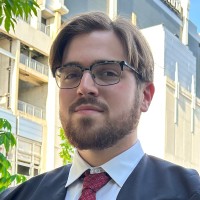 Liam Kearns
Colleague at Transportation Research Center Inc.Columbus, Ohio, United States
View →
JK
Liam Kearns
Colleague at Transportation Research Center Inc.Columbus, Ohio, United States
View →
JK
 Joshua Klaas
Colleague at Transportation Research Center Inc.Russells Point, Ohio, United States
View →
RS
Joshua Klaas
Colleague at Transportation Research Center Inc.Russells Point, Ohio, United States
View →
RS
 Rutvik Shende
Colleague at Transportation Research Center Inc.Dublin, Ohio, United States
View →
CK
Rutvik Shende
Colleague at Transportation Research Center Inc.Dublin, Ohio, United States
View →
CK
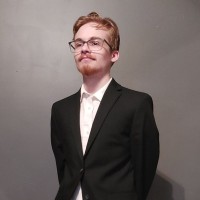 Cameron Killin
Colleague at Transportation Research Center Inc.Xenia, Ohio, United States
View →
DM
Cameron Killin
Colleague at Transportation Research Center Inc.Xenia, Ohio, United States
View →
DM
 Devin Mcelroy
Colleague at Transportation Research Center Inc.Ada, Ohio, United States
View →
CW
Devin Mcelroy
Colleague at Transportation Research Center Inc.Ada, Ohio, United States
View →
CW
 Cole Weston
Colleague at Transportation Research Center Inc.Dublin, Ohio, United States
View →
Cole Weston
Colleague at Transportation Research Center Inc.Dublin, Ohio, United States
View →
Josh Hendricks
Colleague at Transportation Research Center Inc.Columbus, Ohio Metropolitan Area, United States
View →
AC
Andrew Carlson
Colleague at Transportation Research Center Inc.Lima, Ohio, United States
View →
JR
Jennifer Richter-Dunn
Colleague at Transportation Research Center Inc.Bellefontaine, Ohio, United States
View →
LK
Lauren Kelly
Colleague at Transportation Research Center Inc.Bellefontaine, Ohio, United States
View →
LK
Liam Kearns
Colleague at Transportation Research Center Inc.Columbus, Ohio, United States
View →
JK
Joshua Klaas
Colleague at Transportation Research Center Inc.Russells Point, Ohio, United States
View →
RS
Rutvik Shende
Colleague at Transportation Research Center Inc.Dublin, Ohio, United States
View →
CK
Cameron Killin
Colleague at Transportation Research Center Inc.Xenia, Ohio, United States
View →
DM
Devin Mcelroy
Colleague at Transportation Research Center Inc.Ada, Ohio, United States
View →
CW
Cole Weston
Colleague at Transportation Research Center Inc.Dublin, Ohio, United States
View →
2 education records
Jwalandhar Girnar education

Master'S Degree, Mechatronics, Robotics, And Automation Engineering

Bachelor Of Technology - Btech, Mechanical Engineering, 9.42
FAQ
Frequently asked questions about Jwalandhar Girnar
Quick answers generated from the profile data available on this page.
What company does Jwalandhar Girnar work for?
Jwalandhar Girnar works for Transportation Research Center Inc..
What is Jwalandhar Girnar's role at Transportation Research Center Inc.?
Jwalandhar Girnar is listed as Engineer Team Leader: Sensing and Perception at Transportation Research Center Inc..
Where is Jwalandhar Girnar based?
Jwalandhar Girnar is based in Ann Arbor, Michigan, United States while working with Transportation Research Center Inc..
What companies has Jwalandhar Girnar worked for?
Jwalandhar Girnar has worked for Transportation Research Center Inc., University Of Michigan Transportation Research Institute, and Drdo, Ministry Of Defence, Govt. Of India.
Who are Jwalandhar Girnar's colleagues at Transportation Research Center Inc.?
Jwalandhar Girnar's colleagues at Transportation Research Center Inc. include Josh Hendricks, Andrew Carlson, Jennifer Richter-Dunn, Lauren Kelly, and Liam Kearns.
How can I contact Jwalandhar Girnar?
You can use AeroLeads to view verified contact signals for Jwalandhar Girnar at Transportation Research Center Inc., including work email, phone, and LinkedIn data when available.
What schools did Jwalandhar Girnar attend?
Jwalandhar Girnar holds Master'S Degree, Mechatronics, Robotics, And Automation Engineering from University Of Michigan.
Find 750M verified contacts
Search by job title, company, industry, location, and seniority. Export verified B2B contact data when you need it.
Start free trial