
AeroLeads people directory · profile
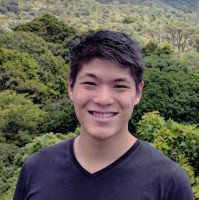
John F. Wu, Phd Email & Phone Number
Associate Astronomer
at
Space Telescope Science Institute
1 work email found
@stsci.edu
LinkedIn matched
✓ Verified July 2026
4 data sources
Profile completeness 86%
Current company
Role
Associate Astronomer
Location
Baltimore, Maryland, United States
Company size
Who is John F. Wu, Phd? Overview
A concise factual answer block for searchers comparing this professional profile.
Quick answer
John F. Wu, Phd is listed as Associate Astronomer at Space Telescope Science Institute, a with 768 employees, based in Baltimore, Maryland, United States. AeroLeads shows a work email signal at stsci.edu and a matched LinkedIn profile for John F. Wu, Phd.
John F. Wu, Phd previously worked as Assistant Astronomer at Space Telescope Science Institute and Postdoctoral Researcher at Space Telescope Science Institute. John F. Wu, Phd holds Doctor Of Philosophy - Phd, Astrophysics from Rutgers University–New Brunswick.
Company email context
Email format at Space Telescope Science Institute
This section adds company-level context without repeating John F. Wu, Phd's masked contact details.
*@stsci.edu
71% confidence
AeroLeads found 1 current-domain work email signal for John F. Wu, Phd. Compare company email patterns before reaching out.
Profile bio
About John F. Wu, Phd
I am an astronomer who likes to tackle messy data with scientific machine learning algorithms and cutting-edge AI tools. I have led teams that built and evaluated Retrieval-Augmented Generation apps to improve the usage of LLMs in research astronomy. I also led development of the Roman Data Monitoring Tool for autonomously monitoring data for the upcoming NASA Roman Space Telescope mission.My research group actively publishes on cutting-edge astronomical machine learning topics. We've demonstrated that deep convolutional neural networks and graph neural networks can transform our understanding of how galaxies grow and evolve. I have five years of experience supervising ML projects, and I have over ten years of experience mentoring and supervising PhD and undergraduate students. On the technical side, I primarily code in Python (~15 years). My expertise covers the Numpy/Scipy/Pandas/Scikit-learn stack, the Pytorch deep learning framework, modern AI tools such as Sthe HuggingFace Transformers and OpenAI API, and 7+ years experience deploying local and cloud platforms for serverless, HPC, and GPU processing (GCP and AWS).
Current workplace
John F. Wu, Phd's current company
Company context helps verify the profile and gives searchers a useful next step.
Space Telescope Science Institute
8 roles
John F. Wu, Phd work experience
A career timeline built from the work history available for this profile.
Assistant Astronomer
CurrentI am currently a tenure-track Assistant Astronomer and the AI Scientist in the Data Science Mission Office. between Jan 2022 and Aug 2024, I was an Instrument Scientist in the Roman Telescope Branch of the Instruments Division.
Jan 2022 - Present
Postdoctoral Researcher
I am a postdoctoral member of the ISM*@ST research group, and I focus on understanding how galaxies grow and evolve by using massive imaging data sets and sophisticated machine learning methods. I am collaborating with various other research groups in order to study various galaxy populations, including dwarf galaxy satellites, rare local analogs of very distant galaxies, and other gas-rich systems. Using novel deep learning methods, I have identified the largest ever sample of faint nearby galaxies, with which we can investigate cosmic substructure in unprecedented detail.
Aug 2020 - Jan 2022

Associate Research Scientist
Current
Aug 2022 - Present
Postdoctoral Fellow
I created a novel way to learn about a galaxy's cold gas content based on just an image and achieved state-of-the-art results by combining convolutional neural networks for regression and pattern recognition. I also worked on three ways to investigate and interpret the neural networks:- use Gradient-weighted Class Activation Maps to identify salient galaxy features in the images- analyze the encoded representations using dimensionality reduction and data visualization tools- probe correlations between variables (e.g., galaxy properties) by studying out-of-distribution neural network performanceThis work will appear in the Astrophysical Journal; see https://arxiv.org/abs/2001.00018 for a preprint, or the blog post for a light introduction to visualizing the trained models.
Sep 2019 - Jul 2020

Graduate Research Assistant
My thesis research included small independent projects to large international collaborations. I worked on multi-wavelength observations from all kinds of telescopes, and analyzed data using models ranging from simple Bayesian regression to deep convolutional neural networks. - Trained and tested machine learning models to recognize galaxy properties from astronomical imaging- Cleaned and analyzed data from heterogeneous sources, including the Hubble, Herschel, and ALMA telescopes- Performed statistical analyses in order to constrain physical models of galaxy growth and evolution- Developed and tested software pipelines for the calibration and imaging of the new MeerKAT telescope array (LADUMA survey)See my blog post on using deep learning to better understand elemental abundances in other galaxies below.
Sep 2013 - Aug 2019

Undergraduate Research Assistant
Analyzed the stellar properties of a million cluster galaxies by writing a custom Python-based pipeline.
Jun 2012 - May 2013
Intern
Cmu Cylab
Implemented and tested new facial recognition software based on PCA.
May 2011 - Aug 2011
Team & coworkers
Colleagues at Space Telescope Science Institute
Other employees you can reach at stsci.edu. View company contacts for 768 employees →
JH
 Jonathan Hargis
Colleague at Space Telescope Science InstituteBaltimore City County, Maryland, United States
View →
BS
Jonathan Hargis
Colleague at Space Telescope Science InstituteBaltimore City County, Maryland, United States
View →
BS
 Bernie Shiao
Colleague at Space Telescope Science InstituteSparks, Maryland, United States
View →
DC
Bernie Shiao
Colleague at Space Telescope Science InstituteSparks, Maryland, United States
View →
DC
 Delondrae Carter
Colleague at Space Telescope Science InstituteGlendale, Arizona, United States
View →
MM
Delondrae Carter
Colleague at Space Telescope Science InstituteGlendale, Arizona, United States
View →
MM
 Meaghan Mcdonald
Colleague at Space Telescope Science InstituteWashington Dc-Baltimore Area, United States
View →
TW
Meaghan Mcdonald
Colleague at Space Telescope Science InstituteWashington Dc-Baltimore Area, United States
View →
TW
 Thomas Wheeler
Colleague at Space Telescope Science InstituteRosedale, Maryland, United States
View →
SG
Thomas Wheeler
Colleague at Space Telescope Science InstituteRosedale, Maryland, United States
View →
SG
 Steve Goldman, Phd
Colleague at Space Telescope Science InstituteUnited States
View →
SD
Steve Goldman, Phd
Colleague at Space Telescope Science InstituteUnited States
View →
SD
 Sami Daoud
Colleague at Space Telescope Science InstituteHenderson, Nevada, United States
View →
HB
Sami Daoud
Colleague at Space Telescope Science InstituteHenderson, Nevada, United States
View →
HB
 Hannah Bish
Colleague at Space Telescope Science InstituteBaltimore, Maryland, United States
View →
PH
Hannah Bish
Colleague at Space Telescope Science InstituteBaltimore, Maryland, United States
View →
PH
 Paul Hendricks
Colleague at Space Telescope Science InstituteEdgewater, Maryland, United States
View →
MG
Paul Hendricks
Colleague at Space Telescope Science InstituteEdgewater, Maryland, United States
View →
MG
 Mark Giuliano
Colleague at Space Telescope Science InstituteBaltimore, Maryland, United States
View →
Mark Giuliano
Colleague at Space Telescope Science InstituteBaltimore, Maryland, United States
View →
Jonathan Hargis
Colleague at Space Telescope Science InstituteBaltimore City County, Maryland, United States
View →
BS
Bernie Shiao
Colleague at Space Telescope Science InstituteSparks, Maryland, United States
View →
DC
Delondrae Carter
Colleague at Space Telescope Science InstituteGlendale, Arizona, United States
View →
MM
Meaghan Mcdonald
Colleague at Space Telescope Science InstituteWashington Dc-Baltimore Area, United States
View →
TW
Thomas Wheeler
Colleague at Space Telescope Science InstituteRosedale, Maryland, United States
View →
SG
Steve Goldman, Phd
Colleague at Space Telescope Science InstituteUnited States
View →
SD
Sami Daoud
Colleague at Space Telescope Science InstituteHenderson, Nevada, United States
View →
HB
Hannah Bish
Colleague at Space Telescope Science InstituteBaltimore, Maryland, United States
View →
PH
Paul Hendricks
Colleague at Space Telescope Science InstituteEdgewater, Maryland, United States
View →
MG
Mark Giuliano
Colleague at Space Telescope Science InstituteBaltimore, Maryland, United States
View →
2 education records
John F. Wu, Phd education
Doctor Of Philosophy - Phd, Astrophysics
Bachelor Of Science - Bs, Physics/Astrophysics
FAQ
Frequently asked questions about John F. Wu, Phd
Quick answers generated from the profile data available on this page.
What company does John F. Wu, Phd work for?
John F. Wu, Phd works for Space Telescope Science Institute.
What is John F. Wu, Phd's role at Space Telescope Science Institute?
John F. Wu, Phd is listed as Associate Astronomer at Space Telescope Science Institute.
What is John F. Wu, Phd's email address?
AeroLeads has found 1 work email signal at @stsci.edu for John F. Wu, Phd at Space Telescope Science Institute.
Where is John F. Wu, Phd based?
John F. Wu, Phd is based in Baltimore, Maryland, United States while working with Space Telescope Science Institute.
What companies has John F. Wu, Phd worked for?
John F. Wu, Phd has worked for Space Telescope Science Institute, The Johns Hopkins University, Rutgers University–New Brunswick, Carnegie Mellon University, and Cmu Cylab.
Who are John F. Wu, Phd's colleagues at Space Telescope Science Institute?
John F. Wu, Phd's colleagues at Space Telescope Science Institute include Jonathan Hargis, Bernie Shiao, Delondrae Carter, Meaghan Mcdonald, and Thomas Wheeler.
How can I contact John F. Wu, Phd?
You can use AeroLeads to view verified contact signals for John F. Wu, Phd at Space Telescope Science Institute, including work email, phone, and LinkedIn data when available.
What schools did John F. Wu, Phd attend?
John F. Wu, Phd holds Doctor Of Philosophy - Phd, Astrophysics from Rutgers University–New Brunswick.
Find 750M verified contacts
Search by job title, company, industry, location, and seniority. Export verified B2B contact data when you need it.
Start free trial