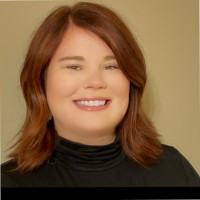
AeroLeads people directory · profile
Katy Cummings Email & Phone Number
Seagrass Field Ecologist
at
University of Florida
1 work email found
@myfwc.com
4 phones found area 262
LinkedIn matched
✓ Verified July 2026
4 data sources
Profile completeness 100%
Current company
Role
Seagrass Field Ecologist
Location
Monroe County, Florida, United States
Company size
Who is Katy Cummings? Overview
A concise factual answer block for searchers comparing this professional profile.
Quick answer
Katy Cummings is listed as Seagrass Field Ecologist at University of Florida, a with 30863 employees, based in Monroe County, Florida, United States. AeroLeads shows a work email signal at myfwc.com, phone signal with area code 262, and a matched LinkedIn profile for Katy Cummings.
Katy Cummings previously worked as Biological Scientist II at Florida Fish & Wildlife Conservation Commission and Biological Science Technician at Florida Fish & Wildlife Conservation Commission. Katy Cummings holds Master Of Science (Ms), Interdisciplinary Ecology from University Of Florida.
Company email context
Email format at University of Florida
This section adds company-level context without repeating Katy Cummings's masked contact details.
{first}.{last}@myfwc.com
86% confidence
AeroLeads found 1 current-domain work email signal for Katy Cummings. Compare company email patterns before reaching out.
Profile bio
About Katy Cummings
Experienced biological scientist with a demonstrated history of working on conservation projects. Skilled in research and monitoring, habitat management, scuba diving, and field operations. Strong research professional with a Master of Science (MSc) focused in Interdisciplinary Ecology from the University of Florida. Interests include holistic views towards ecosystem management which include long-term monitoring, active management, public outreach, interaction with stakeholders, and incorporating aspects of economics and learning theories into conservation.
Listed skills include Ecology, Research, Arcgis, Microsoft Office, and 27 others.
Current workplace
Katy Cummings's current company
Company context helps verify the profile and gives searchers a useful next step.
University Of Florida
17 roles
Katy Cummings work experience
A career timeline built from the work history available for this profile.
Biological Scientist Ii
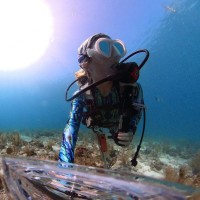
CurrentAs part of the Coral Reef Evaluation and Monitoring Project (CREMP), I participate in field data collection through scuba to assess the condition, status, and abundance of scleractinian corals and octocorals at monitoring sites within the Florida Keys National Marine Sanctuary and Dry Tortugas National Park. I also managed a longterm water temperature dataset for the Florida Keys and Dry Tortugas as part of CREMP. I also served as a coral team lead to determine ecological indicators of health for coral reef ecosystems in the Gulf of Mexico and develop a long-term monitoring program to be implemented as part of the Restore Act.
Mar 2016 - Present
Biological Science Technician
As part of the Coral Reef Evaluation and Monitoring Project (CREMP), I participate in field data collection to assess the condition, status, and abundance of scleractinian corals and octocorals at monitoring sites within the Florida Keys National Marine Sanctuary and Dry Tortugas National Park.
Apr 2015 - Mar 2016
Florida Keys Aquatic Preserves Manager
Florida’s Aquatic Preserve program protects areas of outstanding waters throughout the state. I manage the two southernmost aquatic preserves located in the Florida Keys, Lignumvitae Key Aquatic Preserve in Islamorada and Coupon Bight Aquatic Preserve in Big Pine Key.
Sep 2019 - Jan 2021
Biological Science Technician
Hurricane Irma had devastating impacts to the marine and coastal communities of South Florida and the Florida Keys. I worked as part of a team to remove massive amounts of marine debris deposited by Hurricane Irma onto the Florida Reef Tract and the mangrove forests fringing much of the shorelines within the Park.
Apr 2019 - Sep 2019
Graduate Research Assistant
To fully understand the recent and future changes of seagrasses, a historical perspective is critically needed. Using the paleontological record to provide a historical perspective on present-day ecosystems is an emerging tool of ecological conservation and restoration efforts. However, seagrasses do not fossilize well, and it is difficult to examine their long-term responses to past environmental changes. We developed a tool to help determine how seagrass has changed through time using molluscan assemblages as a proxy for seagrass characteristics and to assess their utility in determining within-habitat differences. Mollusk distribution patterns were described from seagrass sediments collected from a steep nutrient gradient along the Florida Gulf Coast, with N:P ratios decreasing northward. Results indicate that molluscan death assemblages preserve environmental gradients and record subtle differences within the seagrass beds. Assemblages from the same estuaries group together in ordination space and are less similar in faunal composition to assemblages from more distant estuaries. The controlling factor of molluscan composition appears to be primary production, strongly correlated with total P concentration. The generally high fidelity between living and death assemblages suggests that this region has remained stable over recent centuries despite local anthropogenic stressors. Functional groups of the mollusks (feeding guild and trophic level) also show system-level differentiation, highlighting the potential for this proxy to be used in other areas. This proxy has potential for assessing how seagrasses have responded to historical environmental conditions and thus help us to develop effective conservation plans for seagrass ecosystems. Besides my research, I assisted on other research projects involving mollusks and conservation paleobiology in the Bahamas, Panama, and north Florida springs, and outreach events at the Florida Museum of Natural History
Aug 2013 - May 2016

Coastal Intern
I assisted with restoration and monitoring of oyster reefs, shoreline habitat, and longleaf pine ecosystems in southern Alabama and the Florida panhandle. I worked to make the Betty and Crawford Rainwater Perdido River Nature Preserve more accessible to the public by developing trail signs, brochures, and collaborating with county officials to install a parking lot. I also researched historical storms in Alabama from 1916 to the present to aid in a discussion about how artificial oyster reefs have been affecting shoreline erosion rates. Other miscellaneous tasks included grounds and facilities maintenance, taking notes at a public hearing for the appropriation of the BP Deepwater Horizon oil spill money, and georeferencing and tracing shoreline position using ArcGIS.
Jun 2013 - Aug 2013
Climate Change Intern
As a 2012 George Melendez Wright Climate Change Intern at Sequoia and Kings Canyon National Parks, I researched how climate change could effect the Southern Sierra Nevada region and how land managers and other conservation workers should prepare for these changes. I developed materials for participants of the Southern Sierra Change Adaptation Workshop, mainly information briefs of important focal resources of the southern Sierra region. At the workshop itself, I helped facilitate group exercises, helped with logistics, and will assist in writing the final report.
Dec 2012 - Jun 2013
Door Peninsula Conservation Intern
As one of The Nature Conservancy's Diversity Interns, I mapped native and exotic stands of Phragmites with a handheld GPS unit and created ArcGIS maps for management tools. My other duties included removing invasive plants from TNC properties in the Door County Peninsula of WI, as well as helping with research projects on the endangered Hine's Emerald Dragonfly. I also developed a long-term monitoring protocol for native Phragmites patches, wrote a white paper to disseminate to other land management agencies, and did other miscellaneous needs as arose (boundary postings, assisting with Legacy Club hikes, etc.).
Jun 2012 - Aug 2012
Paleontology Intern
Smithsonian Tropical Research Institute
I excavated 16-22myo fossils along the Panama Canal, prepared them for analysis, and cataloged them.
Jan 2012 - May 2012
Stewardship Intern
Heckodt Wetland Reserve
I was the sole land steward on the 80-acre reserve and managed invasive species on the property by hand, tools, and herbicide. I also led volunteer crews and undertook a risk assessment for the susceptibility of ash trees to emerald ash borer infestation. I designed the methodology, collected data with a handheld GPS, and wrote the associated report, which included management options and ArcGIS maps for management tools.
Jun 2011 - Sep 2011
Volunteer
The Reef Ball Foundation
I volunteered in Barbuda, Montserrat, and Antigua assessing a potential reef restoration site, transplanting imperiled corals, and monitoring an established artificial reef. I recently published an assessment of coral growth on The Reef Ball Foundation restoration project on Antigua (see below).
Dec 2010 - Sep 2011
Introduction To Geology Lab Assistant
Lawrence University Geology Department
I assisted students in understanding labs for the Introduction to Geology class. I answered questions and helped the students prepare for lab reports and exams.
Mar 2011 - Jun 2011
Resource Management Intern - National Park Service
Controlled for aquatic and terrestrial invasive plant species on the St. Croix National Scenic Riverway by hand, tool, and herbicide. Used Trimble GPS device to map locations and extent of infestations. Conducted breeding bird and frog surveys. Operated kayaks, canoes, and pulled a trailer.
Jun 2010 - Sep 2010
Summer Steward
Controlled invasive plants on the Nachusa Grasslands, a tallgrass prairie, by hand, tools, and herbicide. Maintained facilities and vehicles.
Jun 2009 - Sep 2009
Conservation Practitioner I
Controlled invasive plant species by hand and using simple tools on the Lulu Lake and Crooked Creek Preserves in southeast Wisconsin.
May 2005 - Sep 2005
Conservation Practitioner Ii
Controlled invasive plant species by hand and simple tools and maintained facilities at the Lulu Lake and Crooked Creek Preserves in southeast Wisconsin.
May 2004 - Sep 2004
2 education records
Katy Cummings education
Master Of Science (Ms), Interdisciplinary Ecology
B.A., Biology, Geology
FAQ
Frequently asked questions about Katy Cummings
Quick answers generated from the profile data available on this page.
What company does Katy Cummings work for?
Katy Cummings works for University of Florida.
What is Katy Cummings's role at University of Florida?
Katy Cummings is listed as Seagrass Field Ecologist at University of Florida.
What is Katy Cummings's email address?
AeroLeads has found 1 work email signal at @myfwc.com for Katy Cummings at University of Florida.
What is Katy Cummings's phone number?
AeroLeads has found 4 phone signal(s) with area code 262 for Katy Cummings at University of Florida.
Where is Katy Cummings based?
Katy Cummings is based in Monroe County, Florida, United States while working with University of Florida.
What companies has Katy Cummings worked for?
Katy Cummings has worked for University Of Florida, Florida Fish & Wildlife Conservation Commission, Florida Department Of Environmental Protection, National Park Service, and The Nature Conservancy.
How can I contact Katy Cummings?
You can use AeroLeads to view verified contact signals for Katy Cummings at University of Florida, including work email, phone, and LinkedIn data when available.
What schools did Katy Cummings attend?
Katy Cummings holds Master Of Science (Ms), Interdisciplinary Ecology from University Of Florida.
What skills is Katy Cummings known for?
Katy Cummings is listed with skills including Ecology, Research, Arcgis, Microsoft Office, Plant Identification, Biology, Scientific Writing, and Scuba Diving.
Find 750M verified contacts
Search by job title, company, industry, location, and seniority. Export verified B2B contact data when you need it.
Start free trialPeople with similar names
Check these profiles if this is not the Katy Cummings you were looking for.
View similar profiles