
Science Teacher
Current
Aug 2024 - Present
Please complete the CAPTCHA to continue
A concise factual answer block for searchers comparing this professional profile.
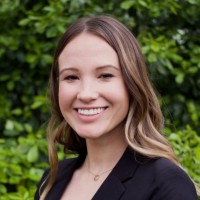
Kimberly Corrigan is listed as Science Teacher at Cleveland Heights-University Heights School District, a with 473 employees, based in Cleveland, Ohio, United States. AeroLeads shows a matched LinkedIn profile for Kimberly Corrigan.
Kimberly Corrigan previously worked as Director of STEM Engagement, Science Teacher at Laurel School and Education Consultant & Curriculum Writer at Ignited. Kimberly Corrigan holds Master'S Of Education (M.Ed.), Stem Curriculum & Instruction from University Of Cincinnati.
This section adds company-level context without repeating Kimberly Corrigan's masked contact details.
Review company-level records connected to Kimberly Corrigan before choosing the right outreach path.
Creative, personable, and innovative teacher-researcher and freelance curriculum designer.
Company context helps verify the profile and gives searchers a useful next step.
A career timeline built from the work history available for this profile.

AP Environmental Science, Biology, Engineering, Chemistry, Forensic Science

Santa Clara, California
Has included servicing as a contracted curriculum writer for a two-year biotechnology elective science course in collaboration with Discovery Education. Includes published science curriculum work for private biotech and aerospace companies.



University Of Cincinnati
Synthesis of nanoparticles is among the fastest growing areas of scientific research due to the unique physicochemical properties attributed by the intermediate nanoscale size (1-100 nm) of the particles between quantum and bulk materials and large surface area-to-volume ratios that enable novel applications. In this study, copper/polyvinyl alcohol (Cu/PVA) nanocomposites were synthesized using chemical reduction method and characterized by various microscopic and spectroscopic analytical techniques. Dynamic light scattering (DLS) technique implied a promising preliminary result on the formation of a stable nanosuspension. UV–Vis absorption spectra showed a UV peak of wavelength of 490 nm with an increase in absorbance intensity as a function of increasing PVA concentration. Transmission electron microscopy (TEM) images revealed the presence of monodispersed and nearly spherical nanoparticles with sizes less than 5 nm. On the other hand, energy dispersive x-ray (EDX), which is attached to TEM, confirmed the presence of strong Cu spectra. The stability analysis of the synthesized nanoparticles under various environmental conditions such as pH, ionic strength, electrolyte valance, and humic acid demonstrated the stability of the particles at pH values at 7 and above. The rate of the catalytic degradation for a methyl blue dye was found to increase with increasing the concentration of Cu/PVA nanoparticles. The stability of the synthesized nanocomposites in various environmental conditions will be a potential advantage for wider applications of catalytic degradation of organic pollutants.
Pasadena, Ca
Fatty Acid Recovery and Identification in Mars Analogue Soil SamplesKimberly Lykens 1,2 and Michael Tuite 21 STEM Teacher and Researcher Program, 2 Jet Propulsion Laboratory, California Institute of Technology,Pasadena, California, 91109A primary goal of NASA’s Mars 2020 mission is to gather and store samples of Mars soilthat could possibly be returned to Earth in a future mission for investigations into past orpresent life. In years leading up to a potential sample return mission on Mars andpotentially other worlds, samples taken from Chile’s Atacama Desert, the most arid,biologically limited desert in the world, are valuable in developing a capacity forbiosignature detection, specifically when exploring fatty acid abundance. Eighteensamples were collected from two sites in the Atacama characterized by biological soilcrusts (BSC). BSCs are areas of the desert where photosynthetic bacteria and simpleplants live within the uppermost portion of the desert floor. Soil samples from each sitewere processed in a Total Fatty Acid (TFA) lab procedure as described by Graber andTsechansky (2009) and analyzed by using gas chromatography (GC). The resulting GCchromatograms were analyzed for the presence and abundance of various types of fattyacids, a family of organic molecules necessary for metabolism and the formation of cellmembranes. Further analysis of these fatty acids and possible identification of the hostmicroorganisms will be investigated in an effort to reconstruct the composition andhistory of BSC. Ultimately, the results of this study further understanding of present fattyacids in the Atacama’s microbial life; thus, granting insight into biosignatures that mightreveal the presence of living organisms capable of sustaining biological processes inextreme, Mars-like climatic conditions.

Boulder, Co
Kenyan Climate Variation Assessment through Rainfall Anomalies and SeaSurface Temperature CorrelationsRecurring droughts and severe flooding are major concerns for local farmers and governmental entities of all levels, including international. The purpose of this study is to identify and categorize differences in rainfall trends over Kenya and to examine relationships between seasonal rainfall anomalies of sea surface temperature (SST), with an ultimate goal to improve predictions of wet season rainfall amounts. The analysis began with data from 27 national and cooperative weather stations. Several of these records were incomplete; therefore, a gridded and complete alternative data set was obtained with data dating back to 1901. Through careful graphical comparison,seasonal rainfall cycles showing similar trends were used to determine two distinct climate regions: Kenyan Rift Valley and Eastern Kenya. Interannual correlations, potentially useful tools for predicting seasonal total rainfall, are fairly similar for each of the regions. The gridded data for each region was used to observe correlations with SST values in the Indian and Pacific Ocean. During March – May, there are weak positive correlations in the equatorial western Pacific that are unlikely to be of much value to forecasters. During the short wet season, however, strong relationships exist, implying a potential predictive skill of forecasts. A warm Western Indian Ocean and/or a warm Eastern Pacific Ocean, implying El Niño, are both conducive to above-average rainfall in Kenya. Interannual trends of rainfall show a decrease in rainfall during the long rainy seasons of both regions . Furthermore, an increase in rainfall during the short rainy season is observed in both regions. These results confirm a large drying trend for long wet seasons, a problematic result for an agriculturally dependent nation, while SST correlations imply a potential new method of rainfall prediction in both Kenyan regions.
Pasadena, Ca
Research Abstract:Preservation of Biosignature Molecule in potential Sample Return container of the Mars 2020 MissionKimberly Lykens1 and Fei Chen2 1Wittenberg University, Springfield, Ohio 45501 2Jet Propulsion Laboratory, Pasadena, California, 91109One requirement for sustainable life on terrestrial planets includes the presence of organic polymers, compounds that are essential for major biological functions such as replication and catalysis. An identified goal of the Mars mission in the year 2020 is to implement a sample return to identify and validate signs of life on Mars through the discovery of biosignature molecules in Martian core samples. Martian core samples recovered during a sample-return mission will likely remain in contact with a metal container for anywhere up to ten years; therefore, understanding how molecular evidence of life will interact with potential metals over time is essential in finding true data upon sample-return. Three types of organic molecules, Adenosine triphosphate, amino acids, and bacterial endotoxins, were used to represent biosignature molecules. These organic molecules were recovered from separate coupons composed of the three metal potentials for the sample return container: titanium, stainless steel, and the unique shape-memory metal alloy of nickel titanium. Known concentrations of the organic molecules were individually placed on the three different metal coupons, corrosion tests using electrolysis on Mars simulate soil samples were imposed on the prepared metal coupons to replicate metal decay overtime. These organic molecules were recovered from the coupon surfaces and the appropriate assays for each molecule were conducted to evaluate the preservation of biosignatures after the metal in contact undergoes electrochemical oxidation. The results of these study will be importance for choosing the material for the sample container to ensure sample integrity and biosignature preservation upon return.

Richland, Washington Area
Research Abstract:Cytochrome Purification from Fe (III)-reducing Sheweanella oneidensisKimberly Lykens1 and Liang Shi2Sheweanella oneidensis is Gram-negative bacterium that undergoes a unique process for reducing metals in anaerobic environments. In addition to oxygen acting as an electron acceptor during cellular respiration, ferric oxide has been identified as one of the electron acceptors in S. oneidensis. Due to its insolubility in water, Fe (III) oxides are unable to enter the S. oneidensis cells where electrons accumulate. A pathway within the cell has been identified in which electrons travel through the inner membrane, bacterial periplasm, outer membrane, and eventually is delivered to the surface of Fe (III) oxide. A series of proteins known as cytochromes assists in the movement of these electrons. To understand how these cytochromes transfer electrons, the key heme groups of the cytochromes were mutated and purified. Protein purification of the mutated cytochromes was conducted using immobilized metal-ion affinity chromatography. The isolated proteins were visually presented and confirmed using Gomassie-heme and Western after SDS-Page. The effect of the mutation on the transfer of electrons passing through these cytochromes is further determined using electrochemistry. The overall purpose of this research is to gain knowledge on cytochrome’s role in the electron transport system in regards to reducing metals. This will ultimately lead to the development and understanding of electron transfer mechanisms by cytochromes.Teaching Professional Development:Participated in a STEM education professional development book club and developed inquiry based teaching strategies for STEM classrooms. Also connected simultaneous research with possible lesson plans for research incorporation.

Springfield, Oh
Research Abstract:Water balance characteristics reflect microhabitat differences between two closely related sand fiddler crabsKimberly E. Lykens, Sarah E. Funderburg, Jay A. Yoder, and Matthew H. CollierThis study examined the water conservation strategies of two sand fiddler crab species, Uca pugilator and Uca panacea to determine if water balance in part explains why these crabs occupy different ecological niches is estuarine communities. The two species are morphologically similar and have distributions that overlap along the gulf coast of the United States and Mexico; in addition, U. pugilator inhabits the Atlantic Coast of the United States from Florida to Massachusetts. Though both species can coexist in the same geographical location, they occupy different ecological niches in that U. pugilator generally inhabits sandy intertidal zones (Thurman 1984; Figures 2D, 2F) while U. panacea is most commonly found in non-tidal areas including algal and vegetated mud flats (Powers and Cole 1976; Figures 2B, 2C). Due to the fact that the two species occupy two different ecological niches (Salmon et al. 1978), it was hypothesized that difference in water conservation strategies (i.e., cuticular permeability) would be detected.
Other employees you can reach at chuh.org. View company contacts for 473 employees →
 Maya Smith
Colleague at Cleveland Heights-University Heights School DistrictUnited States
View →
BM
Maya Smith
Colleague at Cleveland Heights-University Heights School DistrictUnited States
View →
BM
 Brett Munn
Colleague at Cleveland Heights-University Heights School DistrictCleveland, Ohio, United States
View →
GD
Brett Munn
Colleague at Cleveland Heights-University Heights School DistrictCleveland, Ohio, United States
View →
GD
 Gabriella Didona
Colleague at Cleveland Heights-University Heights School DistrictCleveland, Ohio, United States
View →
MF
Gabriella Didona
Colleague at Cleveland Heights-University Heights School DistrictCleveland, Ohio, United States
View →
MF
 Maria Francis
Colleague at Cleveland Heights-University Heights School DistrictCleveland, Ohio, United States
View →
HH
Maria Francis
Colleague at Cleveland Heights-University Heights School DistrictCleveland, Ohio, United States
View →
HH
 Heaven Hayes
Colleague at Cleveland Heights-University Heights School DistrictCleveland, Ohio, United States
View →
TT
Heaven Hayes
Colleague at Cleveland Heights-University Heights School DistrictCleveland, Ohio, United States
View →
TT
 Tenille Threatt
Colleague at Cleveland Heights-University Heights School DistrictGreater Cleveland, United States
View →
TH
Tenille Threatt
Colleague at Cleveland Heights-University Heights School DistrictGreater Cleveland, United States
View →
TH
 Tamika Husain, M.Ed.
Colleague at Cleveland Heights-University Heights School DistrictCleveland, Ohio, United States
View →
RA
Tamika Husain, M.Ed.
Colleague at Cleveland Heights-University Heights School DistrictCleveland, Ohio, United States
View →
RA
 Rachael Alberty
Colleague at Cleveland Heights-University Heights School DistrictChagrin Falls, Ohio, United States
View →
JP
Rachael Alberty
Colleague at Cleveland Heights-University Heights School DistrictChagrin Falls, Ohio, United States
View →
JP
 James Pavsek
Colleague at Cleveland Heights-University Heights School DistrictChesterland, Ohio, United States
View →
LD
James Pavsek
Colleague at Cleveland Heights-University Heights School DistrictChesterland, Ohio, United States
View →
LD
 Leatrice Douglas
Colleague at Cleveland Heights-University Heights School DistrictCleveland, Ohio, United States
View →
Leatrice Douglas
Colleague at Cleveland Heights-University Heights School DistrictCleveland, Ohio, United States
View →

Quick answers generated from the profile data available on this page.
Kimberly Corrigan works for Cleveland Heights-University Heights School District.
Kimberly Corrigan is listed as Science Teacher at Cleveland Heights-University Heights School District.
Kimberly Corrigan is based in Cleveland, Ohio, United States while working with Cleveland Heights-University Heights School District.
Kimberly Corrigan has worked for Cleveland Heights-University Heights School District, Laurel School, Ignited, Anoka-Hennepin School District, and Stebbins High School.
Kimberly Corrigan's colleagues at Cleveland Heights-University Heights School District include Maya Smith, Brett Munn, Gabriella Didona, Maria Francis, and Heaven Hayes.
You can use AeroLeads to view verified contact signals for Kimberly Corrigan at Cleveland Heights-University Heights School District, including work email, phone, and LinkedIn data when available.
Kimberly Corrigan holds Master'S Of Education (M.Ed.), Stem Curriculum & Instruction from University Of Cincinnati.
Search by job title, company, industry, location, and seniority. Export verified B2B contact data when you need it.
Start free trial Search contactsCheck these profiles if this is not the Kimberly Corrigan you were looking for.