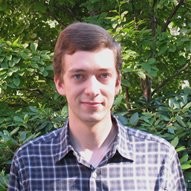
Kirill Korolev Email and Phone Number
Kirill Korolev work email
- Valid
- Valid
- Valid
Kirill Korolev personal email
- Valid
Kirill Korolev is a Associate Professor of Physics and Bioinformatics at Boston University. He possess expertise in matlab, physics, theory, science, research and 10 more skills.

-
Associate Professor Of Physics And BioinformaticsBoston UniversityCambridge, Ma, Us
-
Associate Professor Of Physics And BioinformaticsBoston University May 2020 - PresentBoston, Ma, Us
-
Assistant Professor Of Physics And BioinformaticsBoston University Jul 2013 - May 2020Boston, Ma, UsMany phenomena are complex and unintuitive. I study them through the lens of simple mathematical models that capture only the most essential aspects of the problem, but still make good quantitative predictions. My work focuses on questions in biology and physics related to population dynamics. One area of my research is ecology and evolution of interacting species ranging from a two-species population of cooperators and defectors to multi-species microbial communities comprising the human microbiome. I also work on evolutionary dynamics of cancer progression and adaptation in populations undergoing a geographic expansion. Other research interests include switching between alternative states of an ecosystem and fundamental questions in evolution like the role of horizontal gene transfer, epigenetics, and genetic architecture. This type of work often draws on the ideas and methods from statistical physics and stochastic processes, and involves both analytical and computational analysis.
-
 Pappalardo Postdoctoral FellowMit Sep 2010 - Jun 2013Cambridge, Ma, UsA Pappalardo postdoctoral fellowship in Physics at MIT allowed me to begin independent work in biological physics and establish my own research directions. I continued to explore the connection between nonequilibrium physics and biology and found new mechanisms that can promote or inhibit cooperation among microbes (PRL 2011 and PLoS Comp. Bio. 2013). My predictions were later confirmed by experiments in the Murray laboratory at Harvard University and the Gore laboratory at MIT (PNAS 2013). The joint work with Jeff Gore further developed in a long- lasting collaboration on sudden ecological transitions. In a series of high-profile publications, we demonstrated that such transitions can be forecast from the pattern of temporal and spatial fluctuations (Science 2012), developed new indicators of impending transitions (Nature 2013), and created a framework to understand how ecosystems respond to multiple environmental drivers (PNAS 2015). I also started a collaboration with the genomics group of Leonid Mirny to understand cancer progression. Most existing theories postulate that fewer than ten mutations are needed for cancer initiation, yet tumors typically harbor thousands of mutations. My work showed that these mutations are damaging to the tumor and prevent majority of genetic lesions from becoming clinical cancers (PNAS 2013). The tug-of-war between damaging and activating mutations is supported by clear signatures in genomic and clinical data sets that were previously unknown or remained unexplained (PNAS 2014). More important, this work suggests that damaging mutations are a potential target for anticancer drugs.
 -
 Postdoctoral ResearcherHarvard University Apr 2010 - Aug 2010Cambridge, Massachusetts, UsI found competition between microbes in growing microbial colonies is quite different from that in well-mixed laboratory cultures. Specifically, the spread of advantageous mutations may be orders of magnitude slower, which slows down evolution but produced greater genetic diversity because many beneficial mutations could be present at the same time (Physical Biology 2012).
 -
Research And Teaching AssistantHarvard University Jun 2006 - Apr 2010Cambridge, Massachusetts, UsI analyzed how an orientational order parameter induces interactions among inclusions in a thin film of a liquid crystal (Phys. Rev. E 2008). Developed to describe protein clusters in cellular membranes, this theoretical work led me to explore fascinating questions outside traditional physics and even become an experimental biologist for two short-term projects. For the remainder of my PhD work, I collaborated with the experimental groups of Andrew Murray and Kevin Foster to understand evolution in microbial colonies. I found that demographic stochasticity creates a patchy distribution of genotypes, which can slow down or accelerate evolution by orders of magnitude (American Naturalist 2011 and Physical Biology 2012). Borrowing from the field of nonequilibrium phase transitions, I developed effective theories to understand how spatial patterns influence evolution (Rev. Mod. Phys. 2010); these results are now used by many microbiology laboratories around the world. My work on evolution also provided a new perspective on the stochastic Fisher equation, a classical problem in nonequilibrium physics, and yielded a long-sought solution in the limit of large fluctuations (PRL 2009).
-
Research AssistantInstitute Of Solid State Physics 2003 - 2005At ISSP, I conducted experimental research on high-temperature super conductors. Although super conductors have vanishing resistivity for small currents, magnetic field created by large currents lead to energy loss. One consequence of this energy dissipation, is the loss of magnetization with time. I found that the rate of magnetization loss depends on the spatial pattern of the magnetic field in thin but not thick samples of high-temperature superconductors. This difference between the two geometries is caused by nonlocal interactions between the electric current and magnetic field in thin samples, which could be used to reducing energy loss.
Kirill Korolev Skills
Kirill Korolev Education Details
-
 Harvard UniversityTheoretical Condensed Matter Physics
 -
Harvard UniversityPhysics
-
Moscow Institute Of Physics And Technology (State University) (Mipt)Applied Mathematics
Frequently Asked Questions about Kirill Korolev
What company does Kirill Korolev work for?
Kirill Korolev works for Boston University
What is Kirill Korolev's role at the current company?
Kirill Korolev's current role is Associate Professor of Physics and Bioinformatics.
What is Kirill Korolev's email address?
Kirill Korolev's email address is ki****@****ail.com
What schools did Kirill Korolev attend?
Kirill Korolev attended Harvard University, Harvard University, Moscow Institute Of Physics And Technology (State University) (Mipt).
What skills is Kirill Korolev known for?
Kirill Korolev has skills like Matlab, Physics, Theory, Science, Research, C++, Mathematica, Mathematical Modeling, Scientific Computing, Bioinformatics, Latex, Data Analysis.
Free Chrome Extension
Find emails, phones & company data instantly
Aero Online
Your AI prospecting assistant
Select data to include:
0 records × $0.02 per record
Download 750 million emails and 100 million phone numbers
Access emails and phone numbers of over 750 million business users. Instantly download verified profiles using 20+ filters, including location, job title, company, function, and industry.
Start your free trial