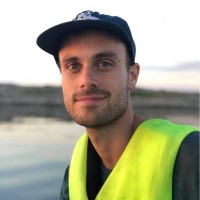
Kristoffer Stedt Email and Phone Number
Kristoffer Stedt work email
- Valid
Kristoffer Stedt personal email
I am a researcher at the Department of Marine Sciences, University of Gothenburg. I am currently working with optimization of seaweed aquaculture and investigating how to increase biomass yields and protein content of different Swedish seaweed species

University Of Gothenburg
View-
 ResearcherUniversity Of Gothenburg Dec 2023 - PresentTjärnö Marine Laboratory
 -
Phd-StudentUniversity Of Gothenburg Sep 2019 - Jan 2024Gothenburg, SwedenI am a PhD-student working at the Tjärnö Marine Laboratory, University of Gothenburg. In my PhD-project I investigate how to optimize seaweed cultivations with focus on increased growth and protein content of the seaweeds. I am interested in the potential of cultivating different seaweeds in process waters (i.e. waste waters from different industries).
-
 Naturvårdshandläggare (Hydrobiolog)Länsstyrelsen I Hallands Län Sep 2018 - Jul 2019Halmstad, SwedenTjänstledig fr.om juli 2019 för att bedriva doktorandstudier på Göteborgs UniversitetTillsyn enligt miljöbalken inom skyddade områden som naturreservat och Natura 2000-områden. Handläggning av ärenden enligt artskyddsförordningen samt tillstånd- och dispensansökningar inom naturreservat. Som sakkunnig svara på internremisser och delta på samrådsmöten gällande vattenfrågor såsom dagvatten, omprövning av villkor för vattenkraftverk samt övrig vattenverksamhet.
 -
 Naturvägledare På Naturum KullabergCounty Administrative Board Of Skåne Mar 2016 - Sep 2018
 -
ForemanKosteralg Ab Mar 2018 - Jun 2018Tjärnö
-
 Master Degree Project In Marine SciencesAkvafuture As Mar 2017 - Jan 2018Brønnøysund, NorwayAquaculture systems leak considerable amounts of nutrients to the surroundings, which could lead to eutrophication and deterioration of the environment. Recently, the idea of using seaweeds and mussels as extractive species to clean the effluents from fish farms have been addressed. Studies from land-based aquaculture systems show that the potential for integration with extractive species is high. However, few studies have been made in sea-based aquaculture systems. In this study, the growth and nitrogen content of the brown seaweed Saccharina latissima was examined in different concentrations of effluents from a sea-based semi-closed aquaculture system. Furthermore, the uptake efficiency of dissolved inorganic nitrogen and particulate organic nitrogen by S. latissima and the blue mussel Mytilus edulis was examined in different flows and mixtures of fish water and ambient water. The experiments were run for approximately one month. The results show a positive correlation between growth and increased ratio of fish water, and between nitrogen content and increased ratio of fish water. Seaweed exposed to fish water had 75 % higher growth rate and 72 % higher nitrogen content compared to seaweed exposed to ambient water. The uptake efficiency for total dissolved inorganic nitrogen (TDIN; nitrate, nitrite and ammonium) of the seaweed was 68 % in fish water and 63 % in ambient water, while the uptake efficiency for ammonium (NH4+) was 50 % with no difference between water ratios. Neither uptake efficiency of TDIN nor NH4+ was affected by water flow. The mussels’ uptake efficiency of particulate organic nitrogen in ambient water was 15 % in high flow, and 38 % in low flow. The results from this study indicate that S. latissima and M. edulis are suitable bioremediative species for integration with fish farms, and that they can generate high ecological values to the systems.
 -
 Verksamhetsförlagt ProjektLänsstyrelsen I Västra Götalands Län Nov 2016 - Jan 2017Gothenburg, SwedenKartläggning och sammanställning av information kring det yrkesmässiga fisket samt fritidsfisket i Kosterhavets nationalpark och Väderöarnas naturreservat, för att bidra till förvaltningen av de båda naturskyddade områdena.
 -
 Bachelor Degree Project In Marine EcologyUniversidade Eduardo Mondlane Mar 2015 - Sep 2015Inhaca Marine Biology Research StationThe neonicotinoid insecticide imidacloprid is considered very effective as pest control and due to its high efficiency it is being increasingly used. It is not intended to be used in the aquatic environment, but can nevertheless end up in the water by run-off from land. Elevated concentrations of the insecticide are therefore to be expected in the aquatic environment, affecting non-target organisms. However, the effects of imidacloprid to the aquatic environment have rarely been studied. In addition, imidacloprid has not been believed to affect vertebrates to the same extent as invertebrates, and therefore even fewer studies have been carried out regarding its effect on vertebrates. This study examined the effects of two different concentrations of imidacloprid on the antipredator behaviour of the fish specie Terapon jarbua. A lower, environmentally realistic concentration as well as a higher concentration was used. The antipredator behaviour was induced by simulating an overhead attack, made by a dummy avian predator. The results from the study show that the higher concentration had a direct effect on the fish, lowering the chances of survival on the first day after the exposure, but on the last day of the experiment they managed the threat to the same extent as the unexposed fish. However, the environmentally realistic concentration affected the fish negatively, when exposed to it for a longer period of time. On the last day of the experiment the low exposed individuals did not perform antipredator responses as well as the unexposed or as the high exposed individuals. These novel findings indicate that imidacloprid could have negative effects on aquatic vertebrates, and that low concentrations could be more harmful than high concentrations. However, more research is needed to fully grasp the potential hazards of imidacloprid to the aquatic environment.
Kristoffer Stedt Education Details
-
Natural Sciences Specialising In Marine Sciences
-
Marine Sciences
-
 Climate Change: Challenges And Solutions, Online
 -
 Marine Sciences
 -
Geografiska Informationssystem Ii (Gis)
-
 Tropical Marine Biology, Online
 -
Marine Biology And Biological Oceanography
Frequently Asked Questions about Kristoffer Stedt
What company does Kristoffer Stedt work for?
Kristoffer Stedt works for University Of Gothenburg
What is Kristoffer Stedt's role at the current company?
Kristoffer Stedt's current role is Researcher | Seaweed Cultivation | Marine Sciences |University of Gothenburg.
What is Kristoffer Stedt's email address?
Kristoffer Stedt's email address is kristoffer.stedt@gu.se
What schools did Kristoffer Stedt attend?
Kristoffer Stedt attended University Of Gothenburg, University Of Gothenburg, University Of Exeter, University Of Southampton, University Of Gothenburg, Stockholm University, University Of Gothenburg.
Free Chrome Extension
Find emails, phones & company data instantly
Download 750 million emails and 100 million phone numbers
Access emails and phone numbers of over 750 million business users. Instantly download verified profiles using 20+ filters, including location, job title, company, function, and industry.
Start your free trial