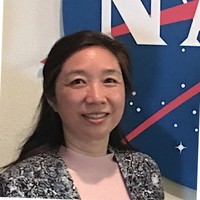
More than 30 years experience in multidisciplinary systems analysis of advanced aerospace vehicles including subsonic, supersonic, and hypersonic aircraft, space launch vehicles, and spacecraft for modeling, conceptual design, and system-level trade studies. Primary areas of technical expertise include design, modeling, analysis and sizing of structures, design, analysis and integration of composites, and creation and design of multidisciplinary analysis tools. Wrote Loft, an aerospace vehicle finite element auto-meshing code designed for preliminary design, parametric studies, and batch analysis integration. Loft can be downloaded for free from software.nasa.gov.Lead roles have included serving as a Subproject Manager on the Advanced Composites Project (ACP) managing work across multiple NASA centers, corporate partners, and academic researchers. The Predictive Capabilities Technical Challenge made up about half of ACP's $25M annual effort and focused on creating, maturing, and validating computational tools to reduce certification time for composite structure on commercial aircraft.Other lead technical roles include Systems Analysis Lead, principal composites and loads analyst for the SLS/Ares-V Payload Fairing team, lead for the Langley Research Center Structures Integrated Disciplinary Leadership Team (IDLT), and structures team lead for the Vehicle Analysis Branch.Created tools for performing multidisciplinary vehicle analysis and design including Loft and HSLoad. Loft is an automatic parametric finite element mesh creation tool for stiffened shell aerospace vehicles. It has been used to model lunar landers, NGLT wings, hypersonic orbiters, supersonic aircraft and every payload fairing configuration considered by the Ares-V, SLS, ACT, and CoEx projects. HSLoad allows the batch use of Collier Research’s HyperSizer/HyperX vehicle sizing codes. Both codes have been integrated into the low-boom supersonic aircraft design system.Supervisory experience as manager of the Space Concepts Analysis group for Swales Aerospace included task creation and reporting, employee evaluations, and interactions with task monitors and branch management for planning, evaluation and funding.
Listed skills include Systems Engineering, Modeling, Analysis, Spacecraft, and 27 others.