
Co-Founder
CurrentCo-founder of the first company in Colombia to offer engineering services in integrated circuit design.
Feb 2023 - Present
Please complete the CAPTCHA to continue
A concise factual answer block for searchers comparing this professional profile.
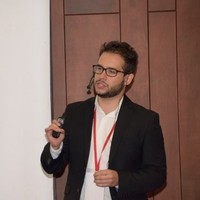
Luis Eduardo Rueda Guerrero is listed as OnSilicon Co-Founder. Senior Analog IC Designer at OnSilicon, based in Bucaramanga, Santander, Colombia. AeroLeads shows a matched LinkedIn profile for Luis Eduardo Rueda Guerrero.
Luis Eduardo Rueda Guerrero previously worked as Co-Founder at Onsilicon and PhD. Microelectronics at Universidad Industrial De Santander. Luis Eduardo Rueda Guerrero holds Doctor Of Philosophy (Phd), Electronic Engineering, Track - Microelectronics, 4.7/5 from Universidad Industrial De Santander.
This section adds company-level context without repeating Luis Eduardo Rueda Guerrero's masked contact details.
Review company-level records connected to Luis Eduardo Rueda Guerrero before choosing the right outreach path.
Luis E. Rueda G. received his bachelor degree in electronic engineering (cum laude) from the Universidad Industrial de Santander (UIS), in 2010, and his MSc. degree in electrical engineering from the Delft University of Technology in 2014. From 2010 to 2012, he was part of the IC Brazil Cadence program. As part of the program, he did an internship as analog IC designer at Freescale Semiconductors from 2011 to 2012, working on the embedded memory group, where he co-authored a patent on a voltage ramp-up protection circuit. At TU Delft, he joined the Electronic Instrumentation Laboratory at TU Delft in September 2013, to conclude his master thesis in CO2 sensors, in collaboration with NXP Semiconductors. From December 2014 to September 2015, he worked as analog IC designer (TMC contractor) at IMEC, Belgium. He joined the Integrated Systems Research Group - Onchip at UIS in 2016, to start his Ph.D. research on machine learning (mainly deeplearning) accelerators, while working as an adjunct professor at the electrical engineering school. In 2023, Luis co-founded OnSilicon, the first Colombian company offering engineering services in the semiconductor industry.Interests: machine learning accelerators, deeplearning, energy efficiency, ultra-low power design, (self-)calibration techniques, precision analog circuits, rf circuits. Professional proficiency in: english, spanish and portuguese.
Listed skills include Semiconductors, Circuit Design, Matlab, Microelectronics, and 21 others.
Company context helps verify the profile and gives searchers a useful next step.
A career timeline built from the work history available for this profile.
Bucaramanga, Santander, Colombia
Co-founder of the first company in Colombia to offer engineering services in integrated circuit design.
Bucaramanga, Colombia
Lecturer of : Fundamentals of Analog Circuits , Communication Systems, Signals and Systems and Microelectronics courses for junior EE students. Verification of the assignments and final projects.
Bucaramanga, Colombia

Eindhoven, The Netherlands
During my stay in NXP Eindhoven, I worked in three different projects:1. Integrated Hall-Sensor: Layout, integration and sign-off of a protoype of a chip that uses the hall effect to sense current. This project was focused on layout and chip finishing. The design was already done, but it was desired to arrange the main blocks in a different way, to test a new approach on a previous designed hall sensor. The chip is ready to tape-out.2. Time-Domain ADC: Verification, improvement, layout and sign-off of an ADC protoype using a time-domain principle. The design was done previously by some other NXP intern, but still there were some bugs that needed to be addressed. Improvements were done in the final design. The chip is ready to tape-out.3. Capacitive-matrix Sensor: A capacitive matrix sensor for particle detection applications (e.g., gas sensing, bio-sensing, etc.) was proposed, with very promising initial simulations. Although there was not enough time to complete the entire design, 80% of a read-out circuit of a capacitive-to-digital converter with a sigma-delta core was done. Initial simulations across corners, show the promising of this architecture, outperforming previous design speed by x76.8 and with lower power consumption at same resolution and dynamic range target.

Leuven, Belgium
I was involved in a project where the larger goal was to create a prosthetic hand system that moves and provides sensation like a natural hand. Our work was related to sensory feedback, especially from the hand. This is vitally important for many functions, and the peripheral nerve stimulation seeks to create a sensory experience so rich and vibrant that users would want to wear their prostheses full time. Without this feedback, even the most advanced prosthetic limbs remain numb to users, a factor that impairs the limbs’ effectiveness and their wearers’ willingness to use them. We designed a chip that can be implanted in the remaining peripheral nerves of the amputee and can stimulate or record from these intact fibers. My specific task was primarily related to design the current sources necessary for stimulation.

Delft, The Netherlands
As a member of the Ultrasound ASICs & Energy-Efficient Sensors Group, guided by Michiel Pertijs, I was involved in the research of CMOS-compatible CO2 sensors. The goal is to develop CO2 sensors that can be fabricated in standard CMOS technology with minimum post-processing steps, so as to enable low-cost CO2 sensing in home- and building-automation applications. The sensors that we work on measure the CO2-dependent thermal conductivity of ambient air, by measuring the temperature rise of a small on-chip suspended heater. Since the changes in thermal conductivity, and hence the changes in temperature, are very small (at the ppm level), the readout of this kind of sensors is extremely challenging. Both the power dissipated in the heater as well its temperature need to be measured very accurately.I developed an IC that aims to do exactly that. Starting from a relatively broad problem statement, I managed to come up with a concrete system architecture that exploits a high-resolution ADC developed previously in our lab, to which I added a precision front-end circuit that enables the measurement of the voltage across the sensor and the current through it, so as to be able to calculate the sensor's resistance and power dissipation. My chip also measures ambient temperature using on-chip bipolar transistors. I carefully analyzed the errors sources in this architecture and constructed a Matlab model to predict the performance that can be obtained. The circuit was implemented in a 0.16um CMOS technology provided by NXP Semiconductors, the company that is our research partner in this project.Also, I constructed a complex measurement setup to experimentally verify the performance of the chip. This involved the development of Matlab and FPGA code to automate the measurements and to control the climate chamber in which the chip was tested. Using this setup, It was demonstrated that the chip is fully functional, and to a large extent achieves the expected performance.

Campinas, Brazil
Responsibilities: + Verication and improvement of Analog blocks. + Verilog-A/AMS modeling (specially the modeling of a Sigma-Delta ADC). + Design of a VOLTAGE RAMP-UP PROTECTION (used in a Bandgap voltage reference). Co-author of a US-Patent (US8729951 B1).
Activities and Societies: Integrated Circuit Design Research Group (Onchip)Integrated Deep Learning Networks for the Internet of Things.
Activities and Societies: Electronic Instrumentation Research Group
Activities and Societies: Cadence, CI Brasil, NSCADThe Brazilian IC design training Center #1 (CT1) was created in March 2008.
Activities and Societies: Research Group of Integrated Circuit Design (CIDIC)
Quick answers generated from the profile data available on this page.
Luis Eduardo Rueda Guerrero works for OnSilicon.
Luis Eduardo Rueda Guerrero is listed as OnSilicon Co-Founder. Senior Analog IC Designer at OnSilicon.
Luis Eduardo Rueda Guerrero is based in Bucaramanga, Santander, Colombia while working with OnSilicon.
Luis Eduardo Rueda Guerrero has worked for Onsilicon, Universidad Industrial De Santander, Integrated Systems Research Group - Onchip, Nxp Semiconductors, and Tmc.
You can use AeroLeads to view verified contact signals for Luis Eduardo Rueda Guerrero at OnSilicon, including work email, phone, and LinkedIn data when available.
Luis Eduardo Rueda Guerrero holds Doctor Of Philosophy (Phd), Electronic Engineering, Track - Microelectronics, 4.7/5 from Universidad Industrial De Santander.
Luis Eduardo Rueda Guerrero is listed with skills including Semiconductors, Circuit Design, Matlab, Microelectronics, Integrated Circuit Design, Analog Circuit Design, Ic, and Mixed Signal.
Search by job title, company, industry, location, and seniority. Export verified B2B contact data when you need it.
Start free trial Search contacts