Liz Marie Albertorio Sáez Email and Phone Number
Liz Marie Albertorio Sáez work email
- Valid
Liz Marie Albertorio Sáez personal email
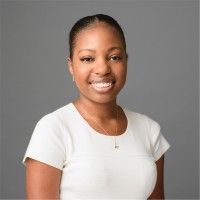
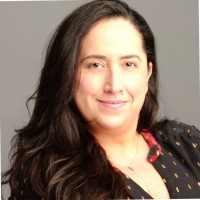
As a Tissue and Cell Culture Scientist, I am interested in the immunology, cell biology, and epigenetics of chronic pain, inflammation, cancer, and autoimmunity. At EpiCypher®, I help lead our cell and tissue culture division, working with customers to achieve high-resolution chromatin profiling for their research. I also handle BSL2 compliance, support tissue culture facility operations, and create engaging epigenetics-related science content.My interest in how the immune system drives disease progression -especially in chronic pain, inflammation, and autoimmunity- has always been a key career motivator. I have expertise in multiplex molecular and cell biology techniques to measure and identify biomarkers, including those that can predict post-traumatic adverse outcomes. Lately, I've been focusing on developing epigenetic-based techniques and studies to understand various health issues, like immunological cell fate and cancer-related epigenetic changes. Some of my current projects revolve around the improvement of cell and nuclei isolation techniques of difficult tissues (such as rare tumors) for successful processing and data generation in epigenetic-based assays such as CUT&RUN. Beyond my lab work, I'm passionate about science outreach and education. I founded Thinkerleaf Science Outreach to help schools, companies, and teachers with tools to make science concepts accessible and engaging. I believe in active learning and love sharing knowledge with diverse audiences, helping other scientists do the same with their research. I consider myself a lifelong learner, and teaching has made me a better scientist and person.
Epicypher, Inc.
View- Website:
- epicypher.com
- Employees:
- 33
-
Tissue Culture Research Associate IiiEpicypher, Inc. May 2023 - PresentDurham, North Carolina, United StatesPart of a team working towards providing tissue culture services at EpiCypher® and customers. I leverage my skills in tissue culture and molecular biology to support the delivery of epigenetic assay development and services. -
Tissue Culture Research Associate IiEpicypher, Inc. Nov 2022 - May 2023Durham, North Carolina, United StatesLeverage my skills in tissue culture and molecular biology to establish a tissue culture facility. This facility aims to support the company's creation and delivery of epigenetic assay development and services.Lead internal projects with relative independence, including experimental design and routine troubleshooting. Lead EpiCypher colleagues in interpreting cell quality and troubleshooting for all ongoing projects. Assist in cell-based experimental design, troubleshooting, and interpreting cell quality. -
Founder, Science Outreach ConsultantThinkerleaf Science Outreach Consulting Sep 2018 - PresentCharlotte, North Carolina, United StatesAssisting educators, graduate students, professors, and educational centers in creating effective science, coding, and environmental education outreach activities. -
Science Advisor (Research Technician)University Of North Carolina At Chapel Hill Oct 2022 - Oct 2024Chapel Hill, N.C.Provide scientific advice on all the protocols, equipment, and technology found in the lab. Mentor undergraduate students in completing their independent projects. Conceptualize, write and edit manuscripts currently in the process of drafting. -
Anesthesiology Research TechnicianUniversity Of North Carolina At Chapel Hill Oct 2020 - Jun 2023Chapel Hill, N.C.Research Technician for the Linnstaedt Lab (https://med.unc.edu/itr/linnstaedt-lab/). I investigate how complex molecular and immunological mechanisms drive the development of chronic pain after trauma. I am also interested in the immunological changes that happens during trauma recovery. - Supervise the BSL-2 tissue culture room including inventorying, maintenance, supply, and subculturing of cell lines (primary cell lines and murine/human secondary lines). Maintain inventory of reagents, microscope, and other equipment, and certifications from Environmental and Health Safety. Training of students and staff in cell culture room-specific aseptic techniques, cryopreservation, sterile handling, counting cells both manually (hemacytometer) and automatically (digital counter), and biological contamination prevention and remediation. Manage 3 multiplexing projects, LC-MS, and RNA sequencing in a large human cohort of trauma recovery.Maintain all aspects of running a laboratory such as EHS compliance, mentoring, supplies, etc. Repair and maintain equipment such as Luminex-based Magpix®, qPCR machines, and microscopes. -
Stem Educator, Coding And ProgrammingDiscovery Place Dec 2019 - Mar 2020Charlotte, North Carolina AreaCreat currriculum and teach introductory programming to middle school students. -
Environmental EducatorU.S. National Whitewater Center Jan 2019 - Mar 2020Charlotte, North Carolina Area -
Laboratory TechnicianN.C. State University Plants For Human Health Institute May 2019 - Nov 2019Kannapolis, North CarolinaAs part of the team at Dr. Debora Esposito's lab I focused on the application of plant-based bioactives to three interconnected research areas: 1) inflammation and tissue regeneration as it applies to wound healing and skin care; 2) cell-based biological screening in cell cultures and 3) muscle aging and repair.Supervised the BSL-2 tissue culture equipment and cell lines (murine RAW 264.7 and human HDFa). Designed and performed cell-line-specific assays on established cell lines that included dermal wound healing and toxicity models. Maintain inventory of reagents, microscope, and other equipment and train in biological contamination prevention and remediation.Drafted and established ten Standard Operating Procedures (SOP) for the proper functioning of the different areas of the laboratory. Conducted, collected, and analyzed data related to the role of Açai fruit extracts and brassinosteroids in in-vitro immune modulation and dermal wound healing. Conducted toxicity experiments of plant brassinosteroids on a human dermal cell model. Drafted and edited (2) manuscripts on oat genetics, and brassinosteroid effects on wound healing. Maintained pre-established mice colony and assisted with surgical IACUC-approved procedures -
Environmental EducatorAnne Springs Close Greenway Apr 2019 - Sep 2019Connect people to nature on and off the ASCG Greenway through program facilitation in the areas of environmental education, outdoor recreation, and natural resources to help promote conservation awareness and develop future stewards of the land.Facilitate all curriculum-based programming both on and off the Greenway including outreach programs, Girl Scout Programs, and recreation activities. -
Lab EducatorDiscovery Place Jul 2017 - Aug 2018Charlotte, North Carolina AreaManaged the Explore More Me Lab in the absence of the Lab Coordinator.Engaged with visitors in the lab space, educated visitors about experiments and facilitated interaction with exhibits.Conducted classes, home schools, and workshops for children grades 3-12 in various physical sciences, utilizing museum displays to augment standard teaching methods and adapting course content and complexity to the ages and interests of students.Provided science programming in the Explore More Life (Biology, Ecology, Earth Sciences), and the Explore More Stuff (Physics, Chemistry and Robotics) labs.Developed innovative classes, lab units, and other lab programming, and special events for the labs.Organized, cleaned, and prepped all lab materials, including ordering, fabricating, and inventorying of classroom and other lab supplies.Maintained proper use and care of chemicals, 3D printers, and other lab equipment.Assisted live care department, lab coordinator, and lab manager in providing animal care for in-house animals.Engaged with volunteers in meaningful ways setting a standard of excellence which will enhance the visitor experience.Assisted with the training of volunteers on all lab equipment, including microscopes, Vernier equipment, projectors, LEGO Mindstorm equipment, Arduino Microcontrollers, computer equipment, 3D printing, and other lab supplies. -
Volunteer CoordinatorRochester Museum & Science Center Jun 2016 - Jul 2017Rochester, New York AreaResponsible for the recruitment, screening, selection, training, development, recognition, and management of over 300+ volunteers. Identified and consolidated all volunteer-related tasks, databases, and volunteer liaisons into a sustainable and easily transferable framework.Created an online volunteer database to organize volunteer information and track volunteered hours in-campus and remotely (database valued at $10,000).Assist the Advancement and Education Departments in the planning and placement of volunteers at fundraising events. Established new connections for future recruitment and volunteer support by attending local volunteer fairs. Redesigned volunteer descriptions on promotional materials and applicationsDesigned policies and procedures to accommodate the different types of volunteers serving the institution. Created partnerships between local universities and the institution to promote volunteerism. -
Graduate Research AssistantUniversity Of Rochester Medical Center Jan 2016 - Dec 2016Supervisor: Dr. Craig Morrell Project: “Platelets as innate immune cells bridging the adaptive and innate immune systems” Platelets have been shown to express several immune-related receptors, secrete immune-related mediators, synthesize proteins de novo, and crosstalk with cells of the immune system. The complex implications of these capabilities are starting to change how we approach and understand inflammation and vascular diseases. Several investigators have championed research to understand how platelets modulate immune responses and inflammation. Based on insights on the role of platelets within the immune system, some researchers have called to consider platelets as immune cells. With an evolution- based perspective, my thesis proposed that platelets, rather than immune cells themselves, are adapted megakaryocytes that carry out dual hemostatic and immunomodulatory functions during vascular and organismal evolution. Conclusions drawn from this proposal will require that research moves along a collaborative path between immunology and platelet biology fostered by granting institutions, with a focus on improving technologies that can recapitulate cellular environments of the bone marrow and blood shear force in circulation.Managed the project “Platelets as innate immune cells bridging the adaptive and innate immune systems” which was supervised by Dr. Craig Morrell.Optimized protocols to isolate murine stem cells using flow cytometry. -
Due Diligence ConsultantCbethnk Consulting Dec 2015 - Jul 2016University Of RochesterCarry out due diligence reports on selected local start-ups for local investors. -
Project Coordinator (Intern) For High School Stem Enrichment Program, National Institutes Of HealthNational Institutes Of Health Jul 2015 - Aug 2015Bethesda, MdIntern Project Coordinator of HiSTEP program under the supervision of Dr. Natasha Lugo-Escobar, Director HiSTEP program. -
Graduate Research AssistantUniversity Of Rochester Medical Center May 2014 - Apr 2015Supervisor: Dr. Christopher Ritchlin Project: “Regulation of osteoclastogenesis by the ITIM on the Dendritic Cell-Specific Transmembrane Protein (DCSTAMP)” The focus of Dr. Ritchlin’s laboratory is directed towards understanding the mechanisms that underlie pathologic bone resorption and new bone formation in psoriatic arthritis and rheumatoid arthritis. Using a translational approach, investigators in his lab are analyzing the cell surface molecules expressed by osteoclast and dendritic cell precursors with the goal to identify susceptibility and response biomarkers in patients with inflammatory arthritis. The lab is also studying the effect of anti-TNF agents on dendritic cell differentiation in RA and PsA patients.- Supervised the BSL-2 tissue culture equipment and cell lines (murine RAW 264.7,). Designed and performed cell-line specific assays on established cells lines that included transfection protocols, and development of osteoclasts from macrophages. Extensive troubleshooting of transfection protocols with different methods (including Lipofectamine® and FuGENE® among others)- Managed the project “Regulation of osteoclastogenesis by the ITIM on the Dendritic Cell-Specific Transmembrane Protein (DCSTAMP)” which was supervised by Dr. Christopher Ritchlin Managed laboratory tasks and biological supply inventory. - Conducted, collected, and analyzed data related to the role of DC-STAMP in osteoclastogenesis in a murine model of psoriatic arthritis. - Maintained pre-established murine colonies. Assisted with IACUC approved surgical procedures. - Maintained cell cultures, including RAW 264.7 and primary cell lines. - Monitored and maintained laboratory analytical equipment and laboratory supplies. -
Immunology Research Assistant (Post Baccalaureate)University Of Rochester Medical Center Jun 2012 - Jul 2013Rochester, New York AreaCharacterization of nonclassical MHC-class I-interacting T-cells expressing an invariant T cell receptor in Xenopus laevis.The amphibian Xenopus laevis is a unique comparative model well suited for immunological studies. Advantages of this model include amenability for experimentation in the early stages of embryonic development along with a high level of conservation of the Xenopus immune system with that of humans. Like humans, Xenopus express Major Histocompatibility Complex (MHC) class I and class II molecules. MHC class I molecules, are divided into two groups; classical MHC (class Ia) and non-classical MHC (class Ib) molecules. In Xenopus 30 different non-classical genes (XNC’s) have been identified and subdivided into 11 different families. Advisors: Dr. Eva-Stina Edholm & Dr. Jacques Robert -
Population Genetics Undergraduate Research AssistantUniversity Of Puerto Rico May 2009 - May 2012Mayagüez, Puerto Rico"The Local Genome Diversity Studies: Frequency of Disease Related Mutation in TLR4 Gene in the San Germán Municipality of Puerto Rico"The Local Genome Diversity Studies (LGDS) is an NSF funded project that aims to develop a strong research foundation in the transition from in-class learning to independent student research. The ultimate research goal of the project is to create a DNA repository of 96 saliva samples from each of the 78 municipalities in Puerto Rico. This collection can serve as a resource for future projects that will study genetic variation across the island, and identify local polymorphic genetic variants related to human disease. My hypothesis is that polymorphism rs4986790, which has been associated to hypo-responsiveness of the TLR4 gene, thus creating favorable conditions for the initiation of endometriosis on women in a region of India, may be found in Puerto Rico. To test my hypothesis, I extracted and applied molecular techniques to estimate its frequency.Advisors: Dr. Juan Carlos Martinez Cruzado & Dr. Taras Oleksyk -
Immunology Summer Research StudentJohns Hopkins School Of Medicine Jun 2011 - Aug 2011Baltimore, Maryland Area"Deleterious Consequences of Misregulated V(D)J recombination"The chance of a child developing leukemia by age 15 is 1 in 2,000. Chromosomal abnormalities are found in high proportion of leukemias and are associated with processes that destabilize the genome, such as V(D)J recombination. V(D)J recombination is a form of programmed DNA rearrangement that assembles antigen receptor genes in developing lymphocytes. The RAG protein complex, which consists of two subunits, RAG-1 and RAG-2, initiates recombination by cleaving DNA at specific recombination signal sequences (RSS). The DNA double strand breaks produced by RAG are normally repaired by non-homologous end joining. Errors in the repair of these breaks can generate genomic instability and lead ultimately to cancer. RAG activity is tightly regulated at several levels: (1) Expression of the RAG subunits is restricted to lymphoid cells and within the lymphoid lineages is developmentally controlled. (2) Assembly of antigen receptor genes is restricted with respect to genetic locus, so that only a subset of gene segments is rearranged in each lymphoid lineage and at specific developmental stages. (3) RAG activity is temporally constrained to the G0/G1 cell cycle phases by the periodic destruction of RAG-2 in cycling cells. We are studying how mutations that impair temporal regulation or locus specificity of RAG-2 are associated with errors in timing or targeting of V(D)J recombination. We are testing the specific hypothesis that mutations that uncouple RAG activity from epigenetic control will also impair ordered rearrangement. To this end we are optimizing a polymerase chain reaction-based assay for immunoglobulin kappa gene rearrangement in vivo. We have defined reaction conditions and primers that allow us to detect rearrangements to all four Jk segments in normal mouse spleen.Advisors: Dr. Stephen Desiderio & Alyssa Ward, B.S. -
Immunology Summer Research StudentHarvard Medical School Jun 2010 - Aug 2010Boston, Massachusetts"Identification of Factors in a Novel DNA Repair Pathway"DNA damage, either caused by environmental factors (e.g. UV exposure) or metabolic byproducts (free radicals), can result in mutations, un-repaired breaks or aberrant joining of chromosomes. In vertebrates, the two major DNA repair pathways for DNA double-strand breaks are homologous recombination and “classical” non-homologous DNA end-joining. Recently, a third pathway has been identified, “Alternative” non-homologous DNA end-joining, by studying the repair of DNA breaks during B cell antibody diversification. The identity of the factors required for Alternative End-Joining is unknown. We tested whether DNA Ligase 3, one of the three DNA ligases in mammalian cells and its accessory protein (Xrcc1), play a role in the Alternative End-Joining pathway.Advisors: Dr. Frederick Alt & Dr. Cristian Boboila -
Summer Medical And Dental Educational Program StudentAamc Jun 2009 - Jul 2009Omaha, Nebraska.Shadow physicians and take courses in Histology, Physics and Chemistry. Strong emphasis on Health Disparities in the US. Program Director Dr. Rubens J. Pamies at the University of Nebraska Medical Center.
Liz Marie Albertorio Sáez Skills
Liz Marie Albertorio Sáez Education Details
-
Microbiology (Immunology) -
Immunology -
Biology (Genetics)
Frequently Asked Questions about Liz Marie Albertorio Sáez
What company does Liz Marie Albertorio Sáez work for?
Liz Marie Albertorio Sáez works for Epicypher, Inc.
What is Liz Marie Albertorio Sáez's role at the current company?
Liz Marie Albertorio Sáez's current role is Tissue and Cell Culture Scientist | Science Communication | Science Outreach Informal Educator.
What is Liz Marie Albertorio Sáez's email address?
Liz Marie Albertorio Sáez's email address is li****@****upr.edu
What schools did Liz Marie Albertorio Sáez attend?
Liz Marie Albertorio Sáez attended University Of Rochester, University Of Rochester, University Of Puerto Rico-Mayaguez.
What are some of Liz Marie Albertorio Sáez's interests?
Liz Marie Albertorio Sáez has interest in Molecular Biology Research, Teaching, Children, Languages, Population Genetics, Environment, Intelligence, Mentoring, Education, Poverty Alleviation.
What skills is Liz Marie Albertorio Sáez known for?
Liz Marie Albertorio Sáez has skills like Molecular Biology, Science, Genetics, Research, Microbiology, Immunology, Cell Culture, Cell Biology, Genomics, Protein Chemistry, Teamwork, Flow Cytometry.
Who are Liz Marie Albertorio Sáez's colleagues?
Liz Marie Albertorio Sáez's colleagues are Rebekah Picard, Anup Vaidya, Irina Popova, Matthew Marunde, Kelsey Noll, Zach Gillespie, Martha Dell'aquila.
Free Chrome Extension
Find emails, phones & company data instantly
Aero Online
Your AI prospecting assistant
Select data to include:
0 records × $0.02 per record
Download 750 million emails and 100 million phone numbers
Access emails and phone numbers of over 750 million business users. Instantly download verified profiles using 20+ filters, including location, job title, company, function, and industry.
Start your free trial