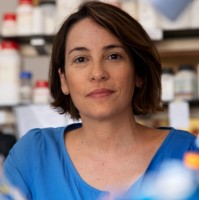
Luísa V. Lopes Email and Phone Number
Luísa V. Lopes work email
- Valid
Luísa V. Lopes personal email
I run a translational neuroscience research program@GIMM Lisboa (Gulbenkian Institute for Molecular Medicine, Portugal; https://gimm.pt/lab/luisa-lopes-lab/) aimed at understanding the mechanisms inducing the "early-aging" of the cognitive function. Our research primarily focuses on cognitive functions such as memory, learning, and aging. We aim at exploring how synaptic function influences brain plasticity and cognitive health, with a specific interest in understanding how disruptions in these systems (such as chronic stress and circadian dysfunction) contribute to age-related cognitive decline and dementia linked to neurodegenerative diseases.By employing animal models and neurophysiology approaches we study the molecular mechanisms underlying these processes, investigating how specific neuronal proteins that control glutamatergic transmission impact on synaptic plasticity and how these interactions affect cognition upon aging. Our work has established one of the underlying mechanisms for early synaptic degeneration in the hippocampus (Nature Neuroscience, 2017; Cell Reports 2019; Aging Cell 2023) and provided the first evidence of a neuro-immune link in short-term memory (Science Immunol 2019; Cell Reports 2021), following previous groundwork pinpointing circadian disorders as a trigger for accelerated cognitive loss (Mol. Psychiatry, 2013; Scientific Reports 2016). As a PI, I have coordinated multiple projects, both national and international and secured steady funding (FCT, Fritz Thyssen Foundation, MJFox Foundations, La Caixa, EU-H2020; France Regional Grants). Since starting my own lab in 2008, I have mentored 7 PhD students and 3 postdocs and published more than 60 papers in international peer-reviewed journals with over 3500 citations, in top journals such as Science, Nature Neuroscience, Molecular Psychiatry, Cell Reports, Science Immunology. Currently my lab has a core team of seven members: 2 post-Docs; 3 PhD students; one senior scientist; two clinical associates (MD, PhDs neurology and neurosurgery) and 2 MSc students. CONSULTING: The above expertise has proved valuable to pharma companies/biotechs, particularly in designing preclinical studies using models of neurodegeneration/aging and neuropsychiatric disorders.
-
 Group Leader At Gulbenkian Institute For Molecular MedicineGimmLisbon, Portugal
 -
 Group Leader At Gulbenkian Institute For Molecular MedicineGimm Oct 2024 - PresentPortugal
 -
Reviewer/EditorScientific Journals Oct 2005 - PresentEditor-invited peer review for multiple journals
-
ConsultantStart-Up Biotechs And Pharma Established Companies Jan 2005 - PresentRegular consultancy for preclinical studies using models of neurodegeneration; aging or neuropsychiatric disorders to test potential therapeutics
-
Teaching ExperiencePre- And Posgrad Training Jan 2004 - PresentMy lab is dedicated to providing research training and teaches regularly in PhD programs in Portugal and abroad, being also a partner of a funded H2020 Twinning action (SynaNet) dedicated to advanced training in Neurosciences. I have mentored several PhD students, postdocs and undergrad students in Neurosciences/Biomedical Sciences.My current lab has a core team of seven members with occasional exchange students from abroad: two postdocs, two PhD students, one senior scientist, one clinical associate (MD, Psychiatrist), and 1 MSc student. We host visiting professors and fellows regularly and has established long-standing collaborations with Harvard Medical School, US; University Mexico; INSERM, Lille, France; Uni. Göttingen and Uni. Bonn, Germany with student exchange and joint publications. People trained in my lab have obtained positions in places such as Max Planck Berlin, Germany, KU Leuven, Belgium, or in Pharma companies (Bial).I am a current faculty member in the iMM Biomed Doctoral Course; the FML Neurosciences doctoral course; the doctoral course on “Clinical Neurosciences and Neuropsychiatry” – Porto Medical School, Porto, Portugal; lectured in the Harvard Medical School-Portugal Workshop: Molecular Mechanisms in Neurodegeneration (2010) and Co-coordinator of the Neurobiology Course (MSc in Medical Biochemistry), Faculty Sciences, University Lisbon, Portugal (2007-2009), all aimed at post-graduation training in Neuroscience.
-
Group Leader - NeuroscientistInstituto De Medicina Molecular Jun 2013 - Sep 2024Lisbon, PortugalAs a PI, I have coordinated several projects, both national and international and secured steady funding (FCT, Fritz Thyssen Foundation, EUH2020; New York Acad Sciences), involving scientific and administrative management; mentoring students; networking and production of peer-reviewed publications. Currently my lab has a core team of seven members: one post-Doc; 3 PhD students; one senior scientist; one clinical associate (MD, Psychiatrist); 1 MSc student. Since starting my own lab in 2008, I have mentored 5 PhD students and 3 postdocs successfully and published more than 60 papers in international peer-reviewed journals with over 2500 citations, in top journals such as Nature Neuroscience, Molecular Psychiatry, Cell Reports, Science Immunology or Journal of Neuroscience. Selected publications:• Blum D, Lopes LV (2021) Stabilizing synapses. Science. doi: 10.1126/science.abm3902. • (2017) α-Synuclein interacts with PrPC to induce cognitive impairment through mGluR5 and NMDAR2B. Nature Neuroscience doi: 10.1038/nn.4648 *co-senior author• (2020) Age-related shift in LTD is dependent on neuronal adenosine A2A receptors interplay with mGluR5 and NMDA receptors, Molecular Psychiatry, doi: 10.1038/s41380-018-0110-9• (2021) IL-17 triggers the onset of cognitive and synaptic deficits in early stages of Alzheimer's disease. Cell Rep. doi: 10.1016/j.celrep.2021.109574.*co-senior• (2021) Transection of the Superior Sagittal Sinus Enables Bilateral Access to the Rodent Midline Brain Structures. eNeuro. doi: 10.1523/ENEURO.0146-21.2021(2019) Meningeal γδ T cell-derived IL-17 controls synaptic plasticity and short-term memory. Sci Immunol. doi: 10.1126/ sciimmunol.aay5199.
-
Career Development Fellow - Neurosciences UnitInstituto De Medicina Molecular Feb 2008 - Feb 2013Instituto De Medicina Molecular, Lisbon, PortugalResearch and development in biomedical sciencesNeurosciences, ageing and neurodegenerative diseasesSelected publications:Jorge S. Valadas; Vânia L. Batalha; Diana G. Ferreira; Rui Gomes, Joana E. Coelho, Ana M. Sebastião; Maria José Diógenes and Luísa V. Lopes (2012) Adenosine A2A receptors mediated neuroprotection is modulated by corticotrophin-releasing factor (CRF) in a model of glutamate induced cell death, Journal Neurochem.123(6):1030-40. doi: 10.1111/jnc.12050.Maria José Diógenes, Raquel B. Dias, Diogo M. Rombo, Hugo Vicente Miranda, Francesca Maiolino, Patrícia Guerreiro, Thomas Nasstrom, Henri G. Franquelim, Luís M. Oliveira, Miguel A.R.B. Castanho, Lars Lannfelt, Joakim Bergstrom, Martin Ingelsson, Alexandre Quintas, Ana M. Sebastião, Luísa V. Lopes and Tiago Fleming Outeiro (2012) Extracellular alpha-synuclein oligomers modulate synaptic transmission and impair LTP via NMDA-receptor activation. J. Neurosci. 32:11750-11762. Marques S, Batalha VL, Lopes LV, Outeiro TF.(2011) Modulating Alzheimer's disease through caffeine: a putative link to epigenetics. J Alzheimers Dis. 2011;24 Suppl 2:161-71. Lopes LV, Sebastião AM, Ribeiro JA. (2011) Adenosine and related drugs in brain diseases: present and future in clinical trials. Curr Top Med Chem. 2011;11(8):1087-101. Review.Luísa V. Lopes and Martin Kussmann (2011) Proteomics at the interface of psychology, gut physiology and dysfunction – an underexploited approach that deserves expansion. Exp. Rev. Proteomics, 8(5), 605–614
-
 Postdoctoral FellowNestlé Research Center Jan 2003 - Dec 2005Lausanne Area, SwitzerlandMy postdoctoral experience in a company setting (Nestlé Research Center; Switzerland), has provided me experience in coordinating projects from the basic scientific question through the clinical or nutritional application, and improved my competence in translational science.Focus: Effects of chronic stress on brain-gut interactions: combining function and proteome analysis; Supervisor: Martin Kussmann and Gabriela Bergonzelli. 2 publications as a result of this period, plus 3 from previous work:Luísa V. Lopes, Laure F. Marvin-Guy, Andreas Fuerholz, Michael Affolter, Ziad Ramadan, Martin Kussmann, Laurent B. Fay and Gabriela E. Bergonzelli (2008) Maternal deprivation affects the neuromuscular protein profile of the rat colon in response to an acute stressor later in life. J. Proteomics, 71, 80-88. Laure Marvin-Guy, Luísa V. Lopes*, Michael Affolter, Marie-Claude Courtet- Compondu, Sandrine Wagnière, Gabriela E. Bergonzelli, Laurent B. Fay and Martin Kussmann (2005) Proteomics of the rat gut: analysis of the myenteric plexus-longitudinal muscle preparation. Proteomics, 5, 2561-2569.*co-first authorChen JF, Sonsalla PK, Pedata F, Melani A, Domenici MR, Popoli P, Geiger J, Lopes LV, de Mendonça (2007) Adenosine A2A receptors and brain injury: broad spectrum of neuroprotection, multifaceted actions and "fine tuning" modulation. Prog. Neurobiol., 83, 310-31. Rebola N, Porciuncula LO, Lopes LV, Oliveira CR, Soares-da-Silva P, Cunha RA. (2005) Long-term Effect of Convulsive Behavior on the Density of Adenosine A1 and A2A Receptors in the Rat Cerebral Cortex. Epilepsia, 46, Suppl 5:159-65.Rodrigues RJ, Canas PM, Lopes LV, Oliveira CR, Cunha RA (2008) Modification of adenosine modulation of acetylcholine release in the hippocampus of aged rats. Neurobiol. Aging, 29, 1597-601
 -
 Phd StudentUniversity Of Cambridge 2000 - 2002Cambridge, United KingdomPhD exchange student using laser microdissection to dissect single cells followed by 3’ end RNA amplification (TPEA optimized in the host lab)) to prove co- localization of A1 and A2A receptors in hippocampal glutamatergic neurons. 3 joint publications resulted from this training period. Dept Pharmacology, Univ. Cambridge. Supervisor: Peter RichardsonLopes L.V., Rebola N., Pinheiro P.S., Richardson P.J., Oliveira C.R., and Cunha R.A. (2003) Adenosine A3 receptors are located in neurons of the rat hippocampus. Neuroreport.,14, 1645-1648. N. Rebola, R.J. Rodrigues, L.V. Lopes, P.J. Richardson, C.R. Oliveira and R.A. Cunha (2005) Adenosine A1 and A2A receptors are co-expressed in pyramidal neurons and co-localized in glutamatergic nerve terminals of the rat hippocampus. Neuroscience,133, 79-83. Lopes L.V., Rebola N., Costenla A.R., Halldner L., Jacobson M., Oliveira C.R., Richardson P.J., Fredholm B.B., Ribeiro J.A. and Cunha R.A. (2003) Adenosine A3 receptors in the rat hippocampus: lack of interaction with A1 receptors. Drug Develop. Res., 58, 428-438.
 -
 Phd StudentKarolinska Institutet 1999 - 2001Stockholm, SwedenGraduate student (PhD exchange) at the Section of Molecular Neuropharmacology, KI, Sweden during 6 months between 1999 and 2001. The aim was to work on the adenosine A1 and A2A knockout mice available at the host lab. 2 joint publications resulted from this exchange period.Supervisor: Bertil FredholmResulting publications:Lopes LV, Cunha RA, Kull B, Fredholm BB, Ribeiro JA (2002) Adenosine A2A receptor facilitation of hippocampal synaptic transmission is dependent on tonic A1 receptor inhibition. Neuroscience, 112, 319-329. Halldner L, Lopes L.V., Daré E., Lindstrom K, Johansson B., Ledent C., Chen JF, Cunha RA and Fredholm BB (2004) Binding of adenosine receptor ligands to brain of adenosine receptor knock-out mice – Evidence that CGS 21680 binds to A1 receptors in hippocampus. NS Archives of Pharmacol, 370: 270–278.
Luísa V. Lopes Skills
Luísa V. Lopes Education Details
-
 Adult Development And Aging
 -
 Faculdade De Medicina De LisboaHabilitation/Agregação
 -
 Biomedical Sciences - Neurosciences
 -
Faculdade De Ciências De LisboaBiochemistry
-
Neurosciences
Frequently Asked Questions about Luísa V. Lopes
What company does Luísa V. Lopes work for?
Luísa V. Lopes works for Gimm
What is Luísa V. Lopes's role at the current company?
Luísa V. Lopes's current role is Group Leader at Gulbenkian Institute for Molecular Medicine.
What is Luísa V. Lopes's email address?
Luísa V. Lopes's email address is llopes@ul.pt
What schools did Luísa V. Lopes attend?
Luísa V. Lopes attended Georgetown University, Faculdade De Medicina De Lisboa, Universidade De Lisboa, Faculdade De Ciências De Lisboa, Karolinska Institutet, University Of Cambridge.
What skills is Luísa V. Lopes known for?
Luísa V. Lopes has skills like Neurodegeneration, Neuropharmacology, Physiology, Proteomics, Science, Cell, Protein Expression, Animal Models, Qpcr, Molecular Cloning, Genomics, Scientific Writing.
Free Chrome Extension
Find emails, phones & company data instantly
Aero Online
Your AI prospecting assistant
Select data to include:
0 records × $0.02 per record
Download 750 million emails and 100 million phone numbers
Access emails and phone numbers of over 750 million business users. Instantly download verified profiles using 20+ filters, including location, job title, company, function, and industry.
Start your free trial