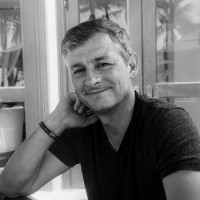
Mark Cook, Ph.D.
AeroLeads people directory · profile

Mark Cook, Ph.D. Email & Phone Number

Scientific Section Lead of the Systemwide Everglades Research Group at South Florida Water Management District
Location: Jupiter, Florida, United States 4 work roles 3 schools
2 work emails found @sfwmd.gov LinkedIn matched
✓ Verified August 2026 4 data sources Profile completeness 100%

Contact Signals · 2 work emails

Work email m****@sfwmd.gov
LinkedIn Profile matched
3 free lookups remaining · No credit card
Role
Scientific Section Lead of the Systemwide Everglades Research Group
Location
Jupiter, Florida, United States
Company size

Who is Mark Cook, Ph.D.? Overview

A concise factual answer block for searchers comparing this professional profile.

Quick answer

Mark Cook, Ph.D. is listed as Scientific Section Lead of the Systemwide Everglades Research Group at South Florida Water Management District, a with 892 employees, based in Jupiter, Florida, United States. AeroLeads shows a work email signal at sfwmd.gov and a matched LinkedIn profile for Mark Cook, Ph.D..

Mark Cook, Ph.D. previously worked as Lead Scientist at South Florida Water Management District and Senior Environmental Scientist at South Florida Water Management District. Mark Cook, Ph.D. holds Doctor Of Philosophy (Ph.D.), Avian Behavioral Ecology from The University Of Glasgow.

Company email context

Email format at South Florida Water Management District

This section adds company-level context without repeating Mark Cook, Ph.D.'s masked contact details.

*@sfwmd.gov
74% confidence

AeroLeads found 2 current-domain work email signals for Mark Cook, Ph.D.. Compare company email patterns before reaching out.

Profile bio

About Mark Cook, Ph.D.

I am a wildlife ecologist and restoration scientist with a particular interest in the conservation and ecology of birds and their critical roles in freshwater and estuarine wetlands. Scientists have traditionally believed that smaller organisms such as microbes and algae are the key players in wetland processes such as food webs and nutrient cycling, and that animals, particularly the larger vertebrates, are relatively unimportant. In contrast to this idea, my work in the Everglades is exploring how the healthy functioning and restoration of wetlands is strongly linked to how larger animals such as fish and birds interact with the ecosystem, especially in relation to their critical roles in nutrient cycling and the structuring of food webs through predatory top-down effects. My work also explores how wetland birds can be used as indicators of ecological health and thereby help guide wetland restoration and management. Much of this has involved research on the interactions among wading bird reproduction, their aquatic prey, hydrologic conditions, and nutrient pollution. My studies range from long-term monitoring of nesting populations to manipulative experiments at multiple temporal and spatial scales. This research has been published widely in the scientific literature and has been used to help guide important management and restoration strategies in the Everglades. Communication of science plays a key role in both my professional and private life, and I strive to enhance the public’s understanding of the value of the natural world. I employ photography and video as a tool to simplify complex scientific stories, and I regularly present to the public on topics about birds, science, conservation, and photography. I have considerable experience with the media, and my scientific work has been featured in multiple media outlets including Audubon Magazine, Associated Press, National Parks Traveler, Tampa Bay Times, Palm Beach Post and Miami Herald. I have been featured in a number of documentaries and tv shows including Nat Geo Wild and Birding Adventures, and have been interviewed by NPR and NBC Nightly News. My photography has also been published in multiple scientific journals and media outlets and is due to be published shortly in Wildlife Photographic Magazine. I was recently an invited guest on Wild and Exposed Podcast where I discussed the role of nature photography in scientific communication.

Listed skills include Environmental Science, Ecology, Wetlands, Endangered Species, and 27 others.

Current workplace

Mark Cook, Ph.D.'s current company

Company context helps verify the profile and gives searchers a useful next step.

South Florida Water Management District
Scientific Section Lead of the Systemwide Everglades Research Group
west palm beach, florida, united states
Website
Employees
892
AeroLeads page
4 roles

Mark Cook, Ph.D. work experience

A career timeline built from the work history available for this profile.

Scientific Section Lead Of The Systemwide Everglades Research Group

Current

West Palm Beach, Florida Area

Section Lead for the Systemwide Everglades Research group, a team of eight ecologists and biologists conducting restoration related research in the Everglades and Florida Bay.Design and direct wildlife related research for guiding Everglades restoration and water management decisions. The research is aimed at understanding the wetland ecosystem processes that control populations of migratory wetland birds, with particular emphasis on hydrology and nutrients. Develop and maintain… Show more Section Lead for the Systemwide Everglades Research group, a team of eight ecologists and biologists conducting restoration related research in the Everglades and Florida Bay.Design and direct wildlife related research for guiding Everglades restoration and water management decisions. The research is aimed at understanding the wetland ecosystem processes that control populations of migratory wetland birds, with particular emphasis on hydrology and nutrients. Develop and maintain successful collaborative projects and relationships with multiple institutions (e.g., National Park Service, U.S. Fish and Wildlife Service, National Audubon Society, various universities).Write scientific papers for peer reviewed journals and reports for management.Coordinate the wildlife research program at the Loxahatchee Impoundment Landscape Assessment (LILA) facility, a 30-ha physical model system of the Everglades (four 7-ha macrocosms) used for multidisciplinary studies of wading birds and aquatic fauna, tree islands, vegetation communities, and peat soils.Editor and contributor to the multi-agency annual South Florida Wading Bird Report, the official data source (nesting and wintering populations) for the Comprehensive Everglades Restoration Plan (2005-present).Communicate avian research and restoration issues with local and national media.Initiated, developed, implemented, and managed scientific contracts with a total value over $1.1 million. Scientific advisor to restoration managers and other agencies on focal migratory bird species.Technical advisor on the strategic goals and wildlife jurisdictional matters of the Comprehensive Everglades Restoration Plan to Senior Planners, the Office of Council and the Executive Office.Implement programs to accelerate the recovery of phosphorous impacted regions of the Everglades for the benefit of wildlife as mandated by the Everglades Forever Act. Show less

Jun 2018 - Present

Lead Scientist

West Palm Beach, Florida

Design and direct wildlife related research for guiding Everglades restoration and water management decisions. The research is aimed at understanding the wetland ecosystem processes that control populations of migratory wetland birds, with particular emphasis on hydrology and nutrients. Develop and maintain successful collaborative projects and relationships with multiple institutions (e.g., National Park Service, U.S. Fish and Wildlife Service, National Audubon Society, various… Show more Design and direct wildlife related research for guiding Everglades restoration and water management decisions. The research is aimed at understanding the wetland ecosystem processes that control populations of migratory wetland birds, with particular emphasis on hydrology and nutrients. Develop and maintain successful collaborative projects and relationships with multiple institutions (e.g., National Park Service, U.S. Fish and Wildlife Service, National Audubon Society, various universities).Write scientific papers for peer reviewed journals and reports for management.Coordinate the wildlife research program at the Loxahatchee Impoundment Landscape Assessment (LILA) facility, a 30-ha physical model system of the Everglades (four 7-ha macrocosms) used for multidisciplinary studies of wading birds and aquatic fauna, tree islands, vegetation communities, and peat soils.Editor and contributor to the multi-agency annual South Florida Wading Bird Report, the official data source (nesting and wintering populations) for the Comprehensive Everglades Restoration Plan (2005-present).Contributor to the annual South Florida Ecosystem Report (www.sfwmd.gov). Expert reviewer/assessor for all avian related RECOVER (Everglades Restoration) research projects and documents.Communicate avian research and restoration issues with local and national media.Initiated, developed, implemented, and managed scientific contracts with a total value over $1.1 million. Scientific advisor to restoration managers and other agencies on focal migratory bird species.Technical advisor on the strategic goals and wildlife jurisdictional matters of the Comprehensive Everglades Restoration Plan to Senior Planners, the Office of Council and the Executive Office.Implement programs to accelerate the recovery of phosphorous impacted regions of the Everglades for the benefit of wildlife as mandated by the Everglades Forever Act. Show less
Apr 2013 - May 2018

Post-Doctoral Researcher

Berkeley, California

Examined the role of environmental constraints (biotic and abiotic) on avian reproductive strategies using an altitudinal gradient in Puerto Rico. Initiated and developed experiments and collaborations (U.S. Forest Service, University of Puerto Rico) to investigate effects of microbial infection and ambient temperatures on avian incubation patterns. Initiated a study to examine the potential consequences of invasive Africanized bee populations for cavity nesting endemic birds… Show more Examined the role of environmental constraints (biotic and abiotic) on avian reproductive strategies using an altitudinal gradient in Puerto Rico. Initiated and developed experiments and collaborations (U.S. Forest Service, University of Puerto Rico) to investigate effects of microbial infection and ambient temperatures on avian incubation patterns. Initiated a study to examine the potential consequences of invasive Africanized bee populations for cavity nesting endemic birds such as the Endangered Puerto Rican Parrot. Monitored, captured, banded and extracted blood samples from Marbled Murrelets off the northern California coast.Helped initiate a graduate project on egg viability in Tree Swallows and Mountain Blue Birds in Mendocino County, California.Provided statistical advice and analyzed data on human tree-use in Africa using information theoretical approaches.Supervised full-time field and laboratory technicians plus two USDA Forest Service personnel for three six-month field seasons (2000-02). Committee member for a graduate student at the University Of Puerto Rico, San Juan. Show less

Jan 2000 - Dec 2003
Team & coworkers

Colleagues at South Florida Water Management District

Other employees you can reach at sfwmd.gov. View company contacts for 892 employees →

3 education records

Mark Cook, Ph.D. education

Doctor Of Philosophy (Ph.D.), Avian Behavioral Ecology

The University Of Glasgow

Studied breeding strategies of Black Guillemots Cepphus grylle on the Orkney Islands, northern Scotland. Focused primarily on causes.

Master Of Science (M.Sc.), Ecology

University Of Durham

Experimentally examined the relationship between food supply and provisioning strategy in the Atlantic Puffin on the Isle of May, Scotland.

Bachelor Of Science (B.Sc.), Zoology/Marine Zoology

Bangor University

BSc in Zoology/Marine Zoology

FAQ

Frequently asked questions about Mark Cook, Ph.D.

Quick answers generated from the profile data available on this page.

What company does Mark Cook, Ph.D. work for?

Mark Cook, Ph.D. works for South Florida Water Management District.

What is Mark Cook, Ph.D.'s role at South Florida Water Management District?

Mark Cook, Ph.D. is listed as Scientific Section Lead of the Systemwide Everglades Research Group at South Florida Water Management District.

What is Mark Cook, Ph.D.'s email address?

AeroLeads has found 2 work email signals at @sfwmd.gov for Mark Cook, Ph.D. at South Florida Water Management District.

Where is Mark Cook, Ph.D. based?

Mark Cook, Ph.D. is based in Jupiter, Florida, United States while working with South Florida Water Management District.

What companies has Mark Cook, Ph.D. worked for?

Mark Cook, Ph.D. has worked for South Florida Water Management District and Uc Berkeley.

Who are Mark Cook, Ph.D.'s colleagues at South Florida Water Management District?

Mark Cook, Ph.D.'s colleagues at South Florida Water Management District include Jeong Park, Thomas Tidmore, Jodie Hutchins, Howard Searcy, and Kyutae Lee.

How can I contact Mark Cook, Ph.D.?

You can use AeroLeads to view verified contact signals for Mark Cook, Ph.D. at South Florida Water Management District, including work email, phone, and LinkedIn data when available.

What schools did Mark Cook, Ph.D. attend?

Mark Cook, Ph.D. holds Doctor Of Philosophy (Ph.D.), Avian Behavioral Ecology from The University Of Glasgow.

What skills is Mark Cook, Ph.D. known for?

Mark Cook, Ph.D. is listed with skills including Environmental Science, Ecology, Wetlands, Endangered Species, Environmental Awareness, Wildlife, Environmental Consulting, and Science.

Find 750M verified contacts

Search by job title, company, industry, location, and seniority. Export verified B2B contact data when you need it.