
Senior Associate Scientist, Immuno Oncology Translational Development
Current
Jul 2016 - Present
Please complete the CAPTCHA to continue
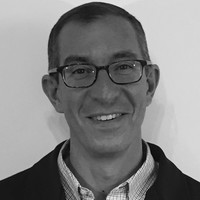
@celgene.com
✓
LinkedIn matched
A concise factual answer block for searchers comparing this professional profile.
Mark Tometsko is listed as Research Scientist | Oncology | Bone Biology | Antibody Drug Conjugates | Inflammation | Tumor Immunology at Celgene, a with 5683 employees, based in Seattle, Washington, United States. AeroLeads shows a work email signal at celgene.com and a matched LinkedIn profile for Mark Tometsko.
Mark Tometsko previously worked as Senior Associate Scientist, Immuno Oncology Translational Development at Celgene and Technical Consultant and Scientific Writer - Oncology at Amgen. Mark Tometsko holds Bachelor Of Science (Bsc), Molecular Biology from Syracuse University.
This section adds company-level context without repeating Mark Tometsko's masked contact details.
AeroLeads found 1 current-domain work email signal for Mark Tometsko. Compare company email patterns before reaching out.
I have been fortunate to work on some really exciting projects at Immunex and Amgen. The experiments we perform in the lab can be incredibly satisfying. I really love being able perform an experiment first, analyze new data, and learn something that no one else in the world yet knows. Even more rewarding is completing a series of experiments that answers a question that could lead to a treatment for a disease that causes someone great suffering. Hearing stories from patients about rheumatoid arthritis, bone metastasis, and multiple myeloma are incredibly sobering. These are horrific diseases, and better treatments are vital. I am comfortable working in multiple therapeutic areas including oncology, inflammation, metabolic bone disease, and tumor immunology. I have experience working independently and as part of a team to design, execute, analyze and interpret in vitro and in vivo experiments. I have learned to always look for a smarter way to achieve a goal. I am eager to tackle challenging problems, learn new techniques, and work with others to answer compelling scientific questions.
Listed skills include In Vitro, Drug Discovery, Molecular Biology, Cell Biology, and 28 others.
Company context helps verify the profile and gives searchers a useful next step.
A career timeline built from the work history available for this profile.
Greater Seattle Area

Greater Seattle Area
I was asked to return to Amgen to support a project that is near and dear to my heart. I came back as a contract employee to write study reports for the Investigational New Drug (IND) regulatory filing for Antibody Drug Conjugate (ADC) AMG 224. Reports summarized some really nice in vitro and in vivo data performed by team members from multiple departments including oncology, protein science, pathology and PKDM. Reports were completed in support of a first in human phase I multicenter open label study to evaluate the safety and tolerability of AMG 224 in subjects with relapsed or refractory multiple myeloma, targeted to begin in November 2015.https://clinicaltrials.gov/ct2/show/NCT02561962
Greater Seattle Area
Research included preclinical support for AMG 224: an ADC being evaluated as a potential treatment for multiple myeloma. Extensive data was compiled from early stage antibody campaign, to choosing a lead candidate based on in vitro data, to evaluation of the lead candidates in vivo. Concise results were necessary for the IND regulatory filing. In vitro experiments involved multi parameter flow cytometry to demonstrate expression of the target on cell lines, as well as primary patient tumor cells. ADC activity was demonstrated on cells in plate based assays including cell viability as well as induction of caspases and phospho-histone H3. Outstanding anti-tumor efficacy was observed in vivo with the lead candidate in bone tropic multiple myeloma models, which gives me great hope for the clinical success of this candidate.Additional research included the evaluation of ADC conjugation techniques. Conventional conjugation methods resulting in heterogeneous antibody conjugate products (with a mixture of different molar ratios of conjugated species to antibody linked at different sites), and site specific conjugation methods resulting in homogeneously loaded ADCs better suited to clinical development, were compared. ADC panels were evaluated in vitro in multiple plate based assays including cell viability, induction of caspases and metaphase arrest. Comparison was also performed in vivo, anti-tumor efficacy models as well as PK studies. Other exciting work included a collaboration with PKDM to achieve novel discovery of ADC catabolism. We were able to demonstrate the kinetics of ADC catabolism in tumor cells, the detection of catabolites in the lysosome, and the discovery of a novel lysosomal transporter critically involved in this process.
Greater Seattle Area
My oncology research was focused on contributing in vitro and pharmacological data in support of the regulatory filing for AMG 162, a fully human antibody to RANKL. Extensive expression analysis was performed on multiple tumor cell lines including breast, prostate and lung. Protein expression was performed by multi-parameter flow cytometry of tumor cell lines and primary cells for RANK, RANKL and OPG. We also demonstrated the direct effects RANKL has on tumor cells in vitro and in vivo. Retroviral transduction was used to overexpress RANK on tumor cells. Orthotopic bone tropic models were used to demonstrate RANK involvement in bone metastasis and osteolytic lesion formation. Bioluminescent imaging techniques were used to show tumor progression to the hind limbs of tumor cells that were transduced with luciferase expressing lentivirus. X-ray analysis was used to reveal the formation of osteolytic lesions. Blocking RANKL in these models led to reduction in tumor burden and osteolytic lesion formation. Preclinical data contributed to the regulatory filing and approval of Denosumab (Xgeva) in 2010 as a treatment for the prevention of bone metastasis.
Greater Seattle Area
Research at Immunex and Amgen led to the discovery of novel members of the TNFR/TNF superfamily. RANK and RANKL were discovered based on homology to this superfamily of proteins. Early work established the ability of RANKL to activate NFkB and this was demonstrated by Western Blot analysis. Reporter assays were also performed to show activation of RANK. Building DNA constructs, transfecting cells, and labeling with 125I was commonplace. We also studied the role of the TRAF proteins and mapped the TRAF binding site on RANK, using in vitro transcription/translation and peptide inhibition of GST fusion protein binding. The real excitement occurred when it was realized that RANKL was the critical mediator of osteoclast differentiation, activity and survival. RANKL could be used in vitro to differentiate a macrophage cell line into a bone resorbing osteoclast. I performed many osteoclast differentiation assays, and still am amazed at the process. After exposing RAW 264.7 cells (or later, primary cells from mouse bone marrow) to RANKL we were able to cover a tissue culture plate with huge, multi-nucleated, TRAP positive, bone resorbing osteoclasts. Seeing what these cells could do in vitro to calcium phosphate, or whale dentin demonstrated how destructive osteoclasts could be to bone when they are up-regulated in the tumor microenvironment. It was equally amazing how osteoclast differentiation could be totally inhibited if the RANKL pathway was blocked.

Greater Seattle Area
Immunex was a place where I realized I could enjoy working on interesting problems with great people. It seems kind of old school now, but this is where I learned about oligonucleotide synthesis, DNA sequencing, plasmid preps, restriction mapping and cloning. We routinely used 32P to kinase oligos to use as probes on Southern Blots hybridizing overnight in big coffin-like water baths. Sometimes I really miss the beeping of the geiger counter.... I also learned the art of isolating RNA (before it became RNeasy), running Northern Blots, and making cDNA libraries. This was a great time to hone my molecular biology skills…I actually saved money so I could get my own copy of the classic Sambrook&Manniatis textbook: Molecular Cloning. I really enjoyed working in the working on discovery research in the molecular biology department…looking at the TNFR/TNF superfamily, and hoping for the approval of Enbrel as a treatment for rheumatoid arthritis.
Other employees you can reach at celgene.com. View company contacts for 5683 employees →
 Henry Rendon
Colleague at CelgeneWarren, New Jersey, United States
View →
XY
Henry Rendon
Colleague at CelgeneWarren, New Jersey, United States
View →
XY
 Xujie Yu
Colleague at CelgeneRandolph, New Jersey, United States
View →
KŞ
Xujie Yu
Colleague at CelgeneRandolph, New Jersey, United States
View →
KŞ
 Kadriye Şenol
Colleague at CelgeneZeytinburnu, Istanbul, Türkiye, Turkey
View →
BH
Kadriye Şenol
Colleague at CelgeneZeytinburnu, Istanbul, Türkiye, Turkey
View →
BH
 Beth Hiers, Cmr
Colleague at CelgeneMiramar Beach, Florida, United States
View →
JL
Beth Hiers, Cmr
Colleague at CelgeneMiramar Beach, Florida, United States
View →
JL
 Jennifer Lopez
Colleague at CelgeneLos Angeles Metropolitan Area, United States
View →
NH
Jennifer Lopez
Colleague at CelgeneLos Angeles Metropolitan Area, United States
View →
NH
 Natalie Hall
Colleague at CelgeneGreater Cleveland, United States
View →
JY
Natalie Hall
Colleague at CelgeneGreater Cleveland, United States
View →
JY
 Judy Young
Colleague at CelgeneSummit, New Jersey, United States
View →
FD
Judy Young
Colleague at CelgeneSummit, New Jersey, United States
View →
FD
 Frank Davis
Colleague at CelgeneHampton, New Jersey, United States
View →
SS
Frank Davis
Colleague at CelgeneHampton, New Jersey, United States
View →
SS
 Sabita Sankar
Colleague at CelgeneSan Diego, California, United States
View →
KB
Sabita Sankar
Colleague at CelgeneSan Diego, California, United States
View →
KB
 Kari Bordewyk
Colleague at CelgeneAurora, Colorado, United States
View →
Kari Bordewyk
Colleague at CelgeneAurora, Colorado, United States
View →

Quick answers generated from the profile data available on this page.
Mark Tometsko works for Celgene.
Mark Tometsko is listed as Research Scientist | Oncology | Bone Biology | Antibody Drug Conjugates | Inflammation | Tumor Immunology at Celgene.
AeroLeads has found 1 work email signal at @celgene.com for Mark Tometsko at Celgene.
Mark Tometsko is based in Seattle, Washington, United States while working with Celgene.
Mark Tometsko has worked for Celgene, Amgen, and Immunex.
Mark Tometsko's colleagues at Celgene include Henry Rendon, Xujie Yu, Kadriye Şenol, Beth Hiers, Cmr, and Jennifer Lopez.
You can use AeroLeads to view verified contact signals for Mark Tometsko at Celgene, including work email, phone, and LinkedIn data when available.
Mark Tometsko holds Bachelor Of Science (Bsc), Molecular Biology from Syracuse University.
Mark Tometsko is listed with skills including In Vitro, Drug Discovery, Molecular Biology, Cell Biology, In Vivo, Cell, Immunology, and Flow Cytometry.
Search by job title, company, industry, location, and seniority. Export verified B2B contact data when you need it.
Start free trial Search contacts