
Controls Researcher
Current• Created novel optimal atmospheric drag control schemes to minimize delta-v cost• Developed the SWARM-EX GNC system as part of a 2-person sub-team
Aug 2020 - Present
Please complete the CAPTCHA to continue
A concise factual answer block for searchers comparing this professional profile.
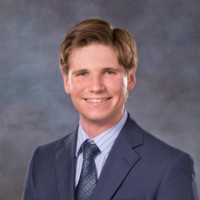
Matthew Hunter is listed as PhD Candidate in Aeronautical and Astronautical Engineering at Stanford University at Space Rendezvous Laboratory, a with 3 employees, based in Stanford, California, United States. AeroLeads shows a matched LinkedIn profile for Matthew Hunter.
Matthew Hunter previously worked as Controls Researcher at Space Rendezvous Laboratory and Community Associate at Stanford University. Matthew Hunter holds Doctor Of Philosophy - Phd, Aerospace, Aeronautical And Astronautical Engineering from Stanford University.
This section adds company-level context without repeating Matthew Hunter's masked contact details.
Review company-level records connected to Matthew Hunter before choosing the right outreach path.
I am a PhD Candidate in Aeronautical and Astronautical Engineering at Stanford. My research focuses on autonomous optimal control of distributed space systems. I have an extensive background in collegiate research and a broad range of experience in the corporate environment from many internships across the aerospace industry.
Company context helps verify the profile and gives searchers a useful next step.
A career timeline built from the work history available for this profile.
Stanford, California, United States
• Created novel optimal atmospheric drag control schemes to minimize delta-v cost• Developed the SWARM-EX GNC system as part of a 2-person sub-team

Stanford, California, United States
• Coordinated multicultural, educational, social, and recreational events for over 2000 residents• Selected through rigorous application and interview process

Virtual
• Derived novel Keep-Out-Ellipsoid constraints for passive safety between two spacecraft• Developed computationally efficient algorithm that verifies passive safety in closed-form• Validated algorithm efficiency through Monte Carlo analysis of maneuver dispersions

Tucson, Arizona, United States
• Directed Shock and Random Vibration testing for mission critical components• Produced formal analysis documentation to compare results to previous test data• Determined optimal vibration profiles and environments for future qualification testing
Tucson, Arizona, United States
• Conducted FEA to determine linear static, buckling, normal mode, and frequency response solutions• Justified dimensional pass/fail criteria for damaged components at peer reviews with management
Georgia Tech
• Conducted final testing and CubeSat payload assembly as part of 6-person sub-team• Machined metal exterior structure and internal sub-system mounts
Georgia Institute Of Technology
• Designed prosthetic hand to provide full musical functionality to an amputee pianist• Incorporated wearable, semi-autonomous arm for drum set as part of an 8-person team• Constructed flexible drumstick assembly to allow the arm to play more naturally

Dallas/Fort Worth Area
• Coordinated with managers, team leads, and inspectors to improve defect analysis• Streamlined company-wide root cause corrective action procedure and training• Generated Alert Service Bulletin to warn fleet of previously undetected composites flaw

Atlanta, Georgia, United States
• Assisted undergraduate students for 7 hours every week on a variety of subjects

Memphis, Tn
• Conducted engineering study with FMEA to reduce the probability of failure for a macro process• Compiled comprehensive list of materials contacted by the product throughout the manufacturing process• Analyzed discrepant product to determine whether to send it to rework or scrap
Memphis, Tn
• Prepared documentation of sterilization and wear-simulation research• Coded MATLAB program to streamline audit paperwork
Georgia Institute Of Technology
• Facilitated communications between Microsoft Kinect and Darwin Mini robot as part of a 5-person team• Manufactured 3D print components that expanded the painting capabilities of the robot
Activities and Societies: Ramblin' Rocket Club, Georgia Tech Marching Band, Symphonic Band
Activities and Societies: Marching Band, Wind Ensemble, Varsity Soccer, VEX Robotic Team
Quick answers generated from the profile data available on this page.
Matthew Hunter works for Space Rendezvous Laboratory.
Matthew Hunter is listed as PhD Candidate in Aeronautical and Astronautical Engineering at Stanford University at Space Rendezvous Laboratory.
Matthew Hunter is based in Stanford, California, United States while working with Space Rendezvous Laboratory.
Matthew Hunter has worked for Space Rendezvous Laboratory, Stanford University, Nasa Goddard Space Flight Center, Raytheon Missiles & Defense, and Raytheon.
You can use AeroLeads to view verified contact signals for Matthew Hunter at Space Rendezvous Laboratory, including work email, phone, and LinkedIn data when available.
Matthew Hunter holds Doctor Of Philosophy - Phd, Aerospace, Aeronautical And Astronautical Engineering from Stanford University.
Search by job title, company, industry, location, and seniority. Export verified B2B contact data when you need it.
Start free trial Search contactsCheck these profiles if this is not the Matthew Hunter you were looking for.