
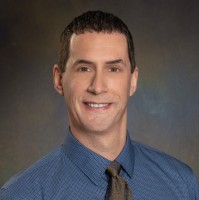
AeroLeads people directory · profile
Matthew Ramsey Email & Phone Number
Senior Scientist, Oncology Targeted Discovery
at
AstraZeneca
1 work email found
@hms.harvard.edu
1 phone found area 617
LinkedIn matched
✓ Verified August 2026
4 data sources
Profile completeness 100%
Current company
Role
Senior Scientist, Oncology Targeted Discovery
Location
United States
Company size
Who is Matthew Ramsey? Overview
A concise factual answer block for searchers comparing this professional profile.
Quick answer
Matthew Ramsey is listed as Senior Scientist, Oncology Targeted Discovery at AstraZeneca, a with 78605 employees, based in United States. AeroLeads shows a work email signal at hms.harvard.edu, phone signal with area code 617, and a matched LinkedIn profile for Matthew Ramsey.
Matthew Ramsey previously worked as Assistant Professor of Dermatology at Harvard Medical School and Assistant Professor of Dermatology at Harvard Medical School. Matthew Ramsey holds Ph.D., Genetics And Molecular Biology from University Of North Carolina At Chapel Hill School Of Medicine.
Company email context
Email format at AstraZeneca
This section adds company-level context without repeating Matthew Ramsey's masked contact details.
{first}.{last}@hms.harvard.edu
86% confidence
AeroLeads found 1 current-domain work email signal for Matthew Ramsey. Compare company email patterns before reaching out.
Profile bio
About Matthew Ramsey
Biomedical Scientist with 20+ years of experience dissecting transcriptional networks to identify therapeutic vulnerabilities in epithelial tumors. Our research combines the use of in vitro biochemical studies with the development of varied in vivo systems (GEMMs with germline and conditional alleles, Xenografts, Orthotopics, CRISPR/Cas9 models) to discover novel drug targets and find effective combinatorial therapies in order to improve the survival and quality of life of patients.
Listed skills include Molecular Biology, Genetics, Biochemistry, Cell Biology, and 33 others.
Current workplace
Matthew Ramsey's current company
Company context helps verify the profile and gives searchers a useful next step.
Astrazeneca
11 roles
Matthew Ramsey work experience
A career timeline built from the work history available for this profile.

Assistant Professor Of Dermatology
Senior Scientist, Oncology Targeted Discovery
Assistant Professor Of Dermatology
Mar 2017 - May 2024
Instructor In Dermatology
Sep 2013 - Mar 2017
Instructor In Medicine
Jul 2012 - Aug 2013
Research Fellow In Medicine
Jul 2007 - Jun 2012

Principal Investigator
In the Ramsey laboratory, we are exploring how alterations in transcriptional programs contribute to the development and progression of Squamous Cell Carcinoma, with the goal of identifying new therapeutic targets that can move from the bench to the bedside. Members of the laboratory employ a variety of classical phenotypic assays (colony forming assays, soft agar assays, trans-well invasion, scratch assays, proliferation/apoptosis analysis by FACS), whole-genome analysis (RNA-seq, ChIP-seq) and biochemical methods (Immunoprecipitation, Chromatin Immunoprecipitation) to dissect transcriptional and signaling pathways regulating key aspects of tumor progression, and to identify potential new therapeutic targets. We also have extensive expertise in the use of in vitro genetic tools including CRISPR/Cas9 (single gene editing, genome-wide screening), shRNA, chemical inhibitors, ORF expression, site-directed mutagenesis, generation of deletion mutants, and luciferase reporter assays, which allow us to carefully dissect gene functions. These tools are complemented by a variety of in vivo pre-clinical systems including CRISPR/Cas9 gene edited models, germline knock-out, conditional knock-out, and transgenic models, orthotopic transplants, carcinogen-induced models, and Xenografts, which allow us to assess the translational potential of our discoveries.
Sep 2013 - May 2024

Assistant In Genetics
A major goal of my postdoctoral research was to understand the in vivo requirement for the transcription factor p63 in Squamous Cell Carcinoma maintenance. I combined a chemical carcinogenesis model with temporally controlled conditional excision of p63 in SCC tumor cells and demonstrated an absolute requirement for p63 in tumor maintenance. I then developed an orthotopic SCC tumor model and identified FGFR signaling as a key p63-regulated pathway, which was activated by release of FGF ligands by fibroblasts in the tumor microenvironment. Finally, I demonstrated the therapeutic efficacy of blocking this pathway in SCC using the FGFR inhibitor AZD4547 in an endogenous tumor model. This work was selected from the submitted abstracts for platform presentations at the 2011 "Mechanisms and Models of Cancer" conference at the Salk Institute for Biological Sciences and at the 2012 "Mechanisms and Models of Cancer" conference at Cold Spring Harbor Laboratories.
Jul 2012 - Aug 2013
Research Fellow In Medicine
During my postdoctoral fellowship in the laboratory of Leif Ellisen, I worked to elucidate the mechanisms by which the transcription factor p63 controlled gene expression in Squamous Cell Carcinoma. I developed a Tandem Affinity Purification (TAP) system in SCC cells and identified multiple p63-interacting proteins, including HDAC1/2. I employed co-immunoprecipitation, glycerol gradient fractionation, and deletion mapping to validate the p63-HDAC1/2 interactions. I employed Chromatin Immunoprecipitation (ChIP), luciferase reporters, HDAC inhibitors (TSA, Vorinostat), and shRNA to demonstrate that HDAC1/2 are required for proper repression of p63 target genes, particularly pro-apoptotic target genes such as Puma. I then demonstrated that HDAC inhibition slows SCC tumor growth, and sensitivity to HDAC inhibition was strongly correlated with p63 levels, suggesting that p63 levels could serve as a biomarker of response to HDAC inhibitors. In addition to HDAC1/2, my TAP studies identified members of the SRCAP co-repressor complex as p63-interacting proteins, and we engaged in a collaborative study to demonstrate that the p63-SRCAP complex mediates H2A.Z deposition in the chromatin of p63-repressed genes, further elucidating the mechanisms of p63-dependent transcriptional repression.
Jul 2007 - Jun 2012
Research Technician
As a research technician in the laboratory of James Rheinwald, I worked to understand the mechanisms controlling senescence and immortalization in cultured keratinocytes. I performed lifespan analysis of keratinocytes with mutations in the p53 and Rb pathways, and examined changes in cell cycle inhibitors such as p16INK4a during passage by western blotting and immunohistochemistry. In addition, I compared the effects of defined media and feeder layer systems on lifespan and immortalization potential. This work allowed us to identify telomere-independent roles of p53 and p16INK4a in limiting keratinocyte lifespan. In addition, I was responsible for growing, maintaining, freezing, and distributing cell lines in the Rhienwald Cell Culture Core, which consisted of over 70 unique primary and immortalized keratinocyte, fibroblast, and mesothelial cell lines, as well as multiple SCC cell lines.
Aug 2000 - Aug 2002
Team & coworkers
Colleagues at AstraZeneca
Other employees you can reach at astrazeneca.com. View company contacts for 78605 employees →
MH
 Matthew Herwig
Colleague at AstrazenecaWashington Dc-Baltimore Area, United States
View →
SB
Matthew Herwig
Colleague at AstrazenecaWashington Dc-Baltimore Area, United States
View →
SB
 Smain Becheur
Colleague at AstrazenecaAlgeria
View →
IM
Smain Becheur
Colleague at AstrazenecaAlgeria
View →
IM
 Ian Menzies
Colleague at AstrazenecaStockport, England, United Kingdom
View →
MA
Ian Menzies
Colleague at AstrazenecaStockport, England, United Kingdom
View →
MA
 Maythem Ali
Colleague at AstrazenecaBaghdad, Baghdad Governorate, Iraq
View →
SF
Maythem Ali
Colleague at AstrazenecaBaghdad, Baghdad Governorate, Iraq
View →
SF
 Sheila Fox
Colleague at AstrazenecaStockport, England, United Kingdom
View →
LM
Sheila Fox
Colleague at AstrazenecaStockport, England, United Kingdom
View →
LM
 Lisa Marie Graf
Colleague at AstrazenecaGreater Hamburg Area, Germany
View →
MI
Lisa Marie Graf
Colleague at AstrazenecaGreater Hamburg Area, Germany
View →
MI
 Matt Iglesias
Colleague at AstrazenecaAustralia
View →
JM
Matt Iglesias
Colleague at AstrazenecaAustralia
View →
JM
 Jérémy Marechal
Colleague at AstrazenecaHazebrouck, Hauts-De-France, France
View →
CR
Jérémy Marechal
Colleague at AstrazenecaHazebrouck, Hauts-De-France, France
View →
CR
 Cristina Rincón Ruiz
Colleague at AstrazenecaBogota, D.C., Capital District, Colombia
View →
MZ
Cristina Rincón Ruiz
Colleague at AstrazenecaBogota, D.C., Capital District, Colombia
View →
MZ
 Mateusz Zięba
Colleague at AstrazenecaWarsaw, Mazowieckie, Poland
View →
Mateusz Zięba
Colleague at AstrazenecaWarsaw, Mazowieckie, Poland
View →
Matthew Herwig
Colleague at AstrazenecaWashington Dc-Baltimore Area, United States
View →
SB
Smain Becheur
Colleague at AstrazenecaAlgeria
View →
IM
Ian Menzies
Colleague at AstrazenecaStockport, England, United Kingdom
View →
MA
Maythem Ali
Colleague at AstrazenecaBaghdad, Baghdad Governorate, Iraq
View →
SF
Sheila Fox
Colleague at AstrazenecaStockport, England, United Kingdom
View →
LM
Lisa Marie Graf
Colleague at AstrazenecaGreater Hamburg Area, Germany
View →
MI
Matt Iglesias
Colleague at AstrazenecaAustralia
View →
JM
Jérémy Marechal
Colleague at AstrazenecaHazebrouck, Hauts-De-France, France
View →
CR
Cristina Rincón Ruiz
Colleague at AstrazenecaBogota, D.C., Capital District, Colombia
View →
MZ
Mateusz Zięba
Colleague at AstrazenecaWarsaw, Mazowieckie, Poland
View →
2 education records
Matthew Ramsey education
Ph.D., Genetics And Molecular Biology
University Of North Carolina At Chapel Hill School Of Medicine
B.S., Biology
Boston College
FAQ
Frequently asked questions about Matthew Ramsey
Quick answers generated from the profile data available on this page.
What company does Matthew Ramsey work for?
Matthew Ramsey works for AstraZeneca.
What is Matthew Ramsey's role at AstraZeneca?
Matthew Ramsey is listed as Senior Scientist, Oncology Targeted Discovery at AstraZeneca.
What is Matthew Ramsey's email address?
AeroLeads has found 1 work email signal at @hms.harvard.edu for Matthew Ramsey at AstraZeneca.
What is Matthew Ramsey's phone number?
AeroLeads has found 1 phone signal(s) with area code 617 for Matthew Ramsey at AstraZeneca.
Where is Matthew Ramsey based?
Matthew Ramsey is based in United States while working with AstraZeneca.
What companies has Matthew Ramsey worked for?
Matthew Ramsey has worked for Astrazeneca, Harvard Medical School, Brigham And Women'S Hospital, and Massachusetts General Hospital.
Who are Matthew Ramsey's colleagues at AstraZeneca?
Matthew Ramsey's colleagues at AstraZeneca include Matthew Herwig, Smain Becheur, Ian Menzies, Maythem Ali, and Sheila Fox.
How can I contact Matthew Ramsey?
You can use AeroLeads to view verified contact signals for Matthew Ramsey at AstraZeneca, including work email, phone, and LinkedIn data when available.
What schools did Matthew Ramsey attend?
Matthew Ramsey holds Ph.D., Genetics And Molecular Biology from University Of North Carolina At Chapel Hill School Of Medicine.
What skills is Matthew Ramsey known for?
Matthew Ramsey is listed with skills including Molecular Biology, Genetics, Biochemistry, Cell Biology, Western Blotting, Cancer Research, Molecular Cloning, and Tissue Culture.
Find 750M verified contacts
Search by job title, company, industry, location, and seniority. Export verified B2B contact data when you need it.
Start free trial