
AeroLeads people directory · profile
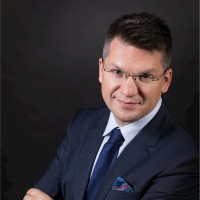
Mihail Neamtu, Ph.D. Email & Phone Number
Founder
at
Elite Communication
LinkedIn matched
✓ Verified Jul 2026
3 data sources
Profile completeness 86%
Current company
Role
Founder
Location
Bucharest, Romania
Company size
Who is Mihail Neamtu, Ph.D.? Overview
A concise factual answer block for searchers comparing this professional profile.
Quick answer
Mihail Neamtu, Ph.D. is listed as Founder at Elite Communication, a with 3 employees, based in Bucharest, Romania. AeroLeads shows a matched LinkedIn profile for Mihail Neamtu, Ph.D..
Mihail Neamtu, Ph.D. previously worked as Founder at Academia De Lideri and Founder at Marile Cărți. Mihail Neamtu, Ph.D. holds Doctor Of Philosophy - Phd, Theology from Kings College London.
Company email context
Email format at Elite Communication
This section adds company-level context without repeating Mihail Neamtu, Ph.D.'s masked contact details.
Elite Communication
Review company-level records connected to Mihail Neamtu, Ph.D. before choosing the right outreach path.
Profile bio
About Mihail Neamtu, Ph.D.
With almost 20 years of experience in classical education and speaking on various topics related to philosophy, politics, and entrepreneurship, I am the founder of the Leadership Academy, podcast producer, and CEO of the Great Books Publishing House. I hold a Ph.D. in Theology from Kings College London, and I am fluent in English and have a working knowledge of French, Italian, and German. For a few months, I have also studied the basics of Latin and ancient Greek.My passion is classical education. I have always defended the foundational values of our Western civilization and exposed the distortions and dangers of Marxism. I have also given hundreds of talks and presentations to diverse audiences, from academics and policymakers to entrepreneurs and students. I have been a faculty member at Acton University, a visiting scholar at Woodrow Wilson Center (Washington DC), and a research fellow at New Europe College (Bucharest). In the autumn of 2010, I founded and led an anti-corruption grassroots movement called 'The New Republic.' As a political consultant, I have worked with MEPs, ministers, MPs, and a former President of Romania. Ever since, my political vision has always favored individual freedom, personal responsibility, economic prosperity, family values, and national sovereignty.
Current workplace
Mihail Neamtu, Ph.D.'s current company
Company context helps verify the profile and gives searchers a useful next step.
Elite Communication
9 roles
Mihail Neamtu, Ph.D. work experience
A career timeline built from the work history available for this profile.

Founder
Current
Aug 2023 - Present

Founder
CurrentMy writing activity has resulted in an extensive body of work, spanning books, scholarly articles, essays, and contributions to various media publications. They seek to illuminate Christianity's role in shaping European civilization and to expose the distortions Marxist doctrines have inflicted on spirituality worldwide. Drawing from philosophy and theology, my work tackles the moral decline in contemporary socio-political life. I have also written several books to the exploration of love, analyzing the concepts of Eros and Agape in depth.After I have ventured into entrepreneurship, I have established a thriving Public Speaking and Leadership school.
Jan 2013 - Present

Oct 2022 - Jul 2023

Chief Executive Officer
I have overseen the operations of a philosophical institution centered around the exploration of classical luminaries, including Plato, Aristotle, and Marcus Aurelius. Our esteemed educators not only delved into the teachings of these ancient thinkers but also the historical aspects of the Bible, the patristic era, and the contemporary advancements in Christian doctrine. Moreover, courses that garnered significant attention focused on the intriguing realms of neuroscience, mindfulness, prayer, and contemplation.
Jan 2019 - Jan 2021
Faculty Lecturer
📖 Navigating the Depths of Christianity: Unraveling St. Paul's Epistle to the Romans in an "Introduction to Christianity" Course 🕊️In the dynamic realm of academia, I had the privilege to guide eager minds through the intricate landscapes of Christianity via an enlightening course titled "Introduction to Christianity." Among the myriad texts that graced our syllabus, one that shimmered with profound significance was St. Paul's Epistle to the Romans.Delving into the rich tapestry of this epistle, we embarked on a journey of exploration, enlightenment, and contemplation. Within its verses, a nexus of theological insights, ethical reflections, and historical context intertwined, inviting us to decipher the essence of Paul's discourse and its relevance in our contemporary world.At the core of St. Paul's Epistle to the Romans lay a captivating interplay between faith and works, grace and righteousness. As we navigated through its chapters, we pondered the intricacies of human nature, salvation, and the transformative power of divine grace. In the company of our students, we traversed the philosophical and theological landscapes that have shaped Christian thought for centuries.But this epistle was not only a canvas for profound theological discourse; it also served as a window into the world of early Christianity. We meticulously examined the historical context, the socio-cultural backdrop, and the interplay between the apostle's words and the communities he addressed. In this exploration, our students gained a deeper appreciation for the multifaceted tapestry of faith and culture.Engaging with St. Paul's Epistle to the Romans was not a mere academic exercise; it was an invitation to contemplate the intricate connections between doctrine and practice, between ancient wisdom and contemporary relevance. Our classroom discussions resonated with the echoes of theological debates, ethical deliberations, and a shared quest for spiritual understanding.
Oct 2011 - Mar 2012

Research Director
As an official of the Romanian Government, I have held a prominent position as the scientific director of a distinguished team comprising over forty researchers specializing in history, philosophy, sociology, and theology. My responsibilities encompassed overseeing the operations of the Institute for the Investigation of the Communist Crimes, and I had the honor of representing it on the international stage. Additionally, I played a vital role in overseeing the publication of our esteemed peer-reviewed Journal titled "History of Communism in Europe."
Mar 2010 - Sep 2011

Visiting Scholar
📚 Exploring Eastern European Dissidence: A Glimpse into Political, Cultural, and Religious Resistance against Communism 🌍Within the halls of the esteemed Woodrow Wilson Center in Washington, DC, my academic odyssey has been dedicated to unraveling the intricate tapestry of Eastern European dissidents' resolute defiance against the shackles of Communism during the tumultuous decades of the 1970s and 1980s.My intellectual pursuit has revolved around a comprehensive examination of the multifaceted strategies employed by these brave dissidents. With a keen eye, I've dissected the profound works of remarkable minds like Alexander Solzhenitsyn, Vaclav Havel, and Andrei Plesu, delving into the profound political, cultural, and religious forms of resistance they embodied.Of paramount significance has been the meticulous study of the transatlantic bridge connecting these Eastern European voices with the American consciousness. The reception of anti-Communist writers within the United States serves as a poignant testament to the global resonance of their narratives and the universal yearning for freedom.One of my focal points has been the subterranean network of forbidden books, elegantly disseminated through the samizdat format. These hidden literary gems, circulated against the backdrop of censorship, illuminated the power of information and the indomitable spirit of those dedicated to unmasking truth.As my academic journey unfurls, the indelible contributions of these Eastern European dissidents resonate profoundly. Their narratives, their audacious resistance, and their unwavering commitment to the principles of liberty transcend borders and epochs. Through their eyes, we witness the enduring pursuit of truth and the unyielding quest for a more just world.#AcademicResearch #EasternEuropeanDissidents #PoliticalResistance #CulturalRevival #GlobalNarratives
May 2009 - Aug 2009
Research Fellow
New Europe College
The eminent British scholar Andrew Louth described the spiritual devastation that followed the October Revolution: The state of the Church in the Soviet Union made it impossible for any theology to flourish; it was hard enough for the Church to survive. According to Marxist theory, after the Revolution the Church, as a manifestation of religion, was meant to fade away. As it didn’t, its disappearance had to be encouraged, and the Church experienced persecution far more severe than ever before. The great persecutions of the early Church under the Roman empire were haphazard and episodic; with the structures of a modern state, the persecution of Christians in the Soviet Union could aim at the extermination of the Church, and very nearly succeeded.This is why, during the twentieth century, the best works of Russian theology were written abroad. Nikolai Berdyaev, for instance, articulated a powerful defense of individual freedom and Christian personalism, in stark opposition to the horrors of censorship and collectivism.It was not just the USSR that attacked religion. The repression of religious sentiments was global.It was not just the USSR that attacked religion. The repression of religious sentiments was global. In post-1948 China, the Communist Party destroyed Tibetan monasteries. Mongolian Marxists imposed strict limitations on traditional Lamaism. Communist activists distributed a sarcastic commentary on the Holy Scripture (called The Jolly Bible) in Eastern Europe to discourage ordinary people from taking Church teachings and the sacraments seriously. Teenagers were taught the basics of “scientific atheism” in public schools instead of religious education, and winter festivals replaced Christmas. Youth organizations such as the Young Pioneers taught children to disrespect family norms and customs of the past. Dictator Enver Hoxha, who ruled Albania from 1944 until 1985, wanted his nation to be the first officially atheistic state on the planet.
Oct 2005 - Jul 2007
5 education records
Mihail Neamtu, Ph.D. education

Doctor Of Philosophy - Phd, Theology

Master Of Arts (M.A.), Theology And Religion, Master Of Arts
Erasmus Student, Theology
Ba, Philosophy
Baccalaureat, Physics And Mathematics
Colegiul Moise Nicoara Arad
FAQ
Frequently asked questions about Mihail Neamtu, Ph.D.
Quick answers generated from the profile data available on this page.
What company does Mihail Neamtu, Ph.D. work for?
Mihail Neamtu, Ph.D. works for Elite Communication.
What is Mihail Neamtu, Ph.D.'s role at Elite Communication?
Mihail Neamtu, Ph.D. is listed as Founder at Elite Communication.
Where is Mihail Neamtu, Ph.D. based?
Mihail Neamtu, Ph.D. is based in Bucharest, Romania while working with Elite Communication.
What companies has Mihail Neamtu, Ph.D. worked for?
Mihail Neamtu, Ph.D. has worked for Elite Communication, Academia De Lideri, Marile Cărți, Canal 33 Romania, and Scoala Neamtu.
How can I contact Mihail Neamtu, Ph.D.?
You can use AeroLeads to view verified contact signals for Mihail Neamtu, Ph.D. at Elite Communication, including work email, phone, and LinkedIn data when available.
What schools did Mihail Neamtu, Ph.D. attend?
Mihail Neamtu, Ph.D. holds Doctor Of Philosophy - Phd, Theology from Kings College London.
Find 750M verified contacts
Search by job title, company, industry, location, and seniority. Export verified B2B contact data when you need it.
Start free trial