
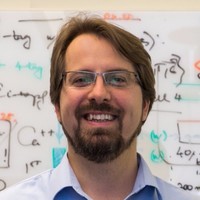
AeroLeads people directory · profile
Mirkó Palla, Phd Email & Phone Number
Principal Scientist
at
Stealth Biotech
LinkedIn matched
✓ Verified August 2026
3 data sources
Profile completeness 100%
Current company
Role
Principal Scientist
Location
Boston, Massachusetts, United States
Who is Mirkó Palla, Phd? Overview
A concise factual answer block for searchers comparing this professional profile.
Quick answer
Mirkó Palla, Phd is listed as Principal Scientist at Stealth Biotech, based in Boston, Massachusetts, United States. AeroLeads shows a matched LinkedIn profile for Mirkó Palla, Phd.
Mirkó Palla, Phd previously worked as Head of Future Technologies at Catalog and R&D Group Lead - Advanced Diagnostics at Quest Diagnostics. Mirkó Palla, Phd holds Postdoctoral Fellow, Department Of Genetics - Church Laboratory from Harvard Medical School.
Company email context
Email format at Stealth Biotech
This section adds company-level context without repeating Mirkó Palla, Phd's masked contact details.
Stealth Biotech
Review company-level records connected to Mirkó Palla, Phd before choosing the right outreach path.
Profile bio
About Mirkó Palla, Phd
I am an R&D lead in an interdisciplinary research environment, specializing in novel biomedical instrumentation and technology development to advance DNA-based data storage and computing.Research Interest:● High-throughput, single-molecule DNA sequencing / synthesis / editing technologies ● Bionano instrumentation in medicine, novel medical devices, BioMEMS ● Relationship between biological system responses and physical, chemical mechanismsSpecialties: ● PacBio, Oxford Nanopore long-read sequencing● Nanopore-based single molecule analysis● Spectroscopy: Raman/SERS, MALDI-TOF MS● Genomics: primer design, DNA barcode generation algorithms, Illumina Genome Analyzer● Biochemistry: PCR, DNA purification, SNP detection, DNA sequencing by synthesis ● Bioinformatics: genomic data analysis, base-calling algorithms, motif finding● Statistics: frequency distribution, signal classifiers, principal component analysis● Computer Languages: Python, Perl, C/C++, MATLAB, R, Java, Scheme ● Software Experience: Pro/ENGINEER, Fluent, LabVIEW, Gromacs, VMD, Simulink, Maple● Operating Systems: Microsoft Windows, Linux, Mac OS● Technical writing and presentations● Hungarian and German (Fluent)
Listed skills include Science, Mathematics, Physics, Computer Science, and 36 others.
Current workplace
Mirkó Palla, Phd's current company
Company context helps verify the profile and gives searchers a useful next step.
34 roles
Mirkó Palla, Phd work experience
A career timeline built from the work history available for this profile.
Head Of Future Technologies
CurrentFocusing on developing cutting-edge synthetic biology technologies for DNA-based data storage and computing to address the world's expanding information storage need.
Oct 2022 - Present

R&D Group Lead - Advanced Diagnostics
As a Development Lead, in collaboration with PacBio R&D, transformed long-read NGS capabilities for repeat expansion testing into product-grade capabilities that included both wet- and dry-lab capability development. Established capability for CRISPR-Cas9-based target enrichment and sequencing that does not rely on amplification (No-Amp) on a Sequel IIe. Using PacBio sequencing, generated highly accurate consensus sequences for regions of the genome that are difficult to address with other sequencing technologies. Demonstrated the method’s utility by capturing and sequencing 20 loci associated with repeat expansion disorders. Using patient DNA samples, sequenced through pathogenic repeats of neurological disorders genes related to Ataxia, Myotonia, ALS/FTD and Chorea.
Nov 2021 - Oct 2022
Manager Essentials For New Supervisors And Managers
Completed a 6-month training curriculum that focused on developing essential management skills as an emerging people leader at the Manager level. Course topics detailed the understanding a manager's role through effectively preparing to one-on-ones, talent acquisition, inclusion, diversity and equity, and recognition. Key sessions also covered the art of connecting through conversations, how to increase employee engagement and finance/budgeting essentials.
Jan 2022 - Jun 2022
Lead R&D Scientist - Advanced Diagnostics
As a Lead Scientist, completed a proof‐of‐concept long‐read sequencing methodology on the PacBio Sequel to establish the feasibility of enabling large‐scale SARS‐CoV‐2 genome surveillance in the United States. During the 12‐week study, demonstrated the ability to lead a cross‐functional team at Quest that engaged bioinformatics in the analytical pipeline development, R&D in the experimental design, and protocol implementation/optimization, and Quest Molecular Department (North Region, Marlborough, MA) in supplying positive samples for our assay development. Established a strong foundation with PacBio's R&D and Business core teams that will enable us to grow and implement new products that align with the Neurology Franchise's future vision for innovation‐based sequencing diversification.
Jan 2021 - Oct 2021
Senior R&D Scientist - Advanced Diagnostics
Developed, validated, launched, and operationally supported the Ancestry Health Plus (AHP) product line. This work represented Quest's largest validation efforts to date and provided actionable genetic risk assessment for the general population. Contributed to product development by integrating between liquid handling equipment and AIIMS lab information system. As the continuation of this effort, was a key team member in developing a strategy to accommodate the increased scale and efficiency of the AHP platform. In partnership with Hamilton, successfully created an automation protocol for the platform that informed future design considerations with HighRes. Parallel to these efforts, developed a vision and strategy for the LIMS for future AHP platform iterations in partnership with L7 Informatics LIMS and HighRes.
Sep 2019 - Dec 2020
Grand Hack - Mit Hacking Medicine
As a mentor, guided multiple teams of 4-6 people - composed of innovators, designers, scientists, doctors, entrepreneurs, programmers, engineers, researchers, artists, and healthcare futurists - through their ideation phase of technological innovation that addressed two separate tracks focusing on either home-based remote patient monitoring (track A) or healthcare data liquidity and transparency (track B). During a 2-day competition, assisted them in creating a sustainable business model that is relevant to their customers and continually incorporates end-user feedback. Prepared them for an effective final pitch encompassing a compelling story of cross-disciplinary expertise in technology development and how they are the best-suited team for business implementation.
Apr 2022 - Apr 2022
Tech Xperience Week - Brainport Eindhoven
Selected as one of the top 10 candidates of high-tech talents from 500 international applicants to participate in a fully paid week to explore the Brainport Eindhoven region. Visited companies and research institutes (Philips, Fujifilm, Holst Centre, Vanderlande, VDL Group, ASML) and learned about their current developments, innovations, and working culture during meetings with employees and representatives. Also attended lectures and solved specific case studies with fellow participants and employees in small group settings.
Oct 2019 - Oct 2019
Research Project Lead
Synthetic Biology Group, Church Laboratory – Boston, MA Led an industrial-academic research collaboration related to the development of an electrode array-based single-molecule DNA sequencing platform (Genia Technologies, Inc). In a small team setting, integrated fundamental research innovations, such as novel protein design, measurement, and analysis techniques, into the partner's corporate objectives for technology advancement. Negotiated and drafted professional contracts on intellectual property (IP), confidentiality and publication procedures with in-house lawyers. Lead weekly collaborative teleconferences to ensure progress in the project and communicated about alignment with joint and individual objectives. On an annual basis, participated in the company's scientific training workshops to learn about the latest technical innovations and gain hands-on experience on laboratory/instrumentation protocols. Co-written NIH grant proposals and updates with an industry partner. Published results in scientific papers of highly ranked peer-reviewed journals (PNAS, ACS Nano). Generated IP (US patent application) for large-scale de novo gene synthesis with the utilization of the nanopore-array platform.
May 2014 - Aug 2019
Leadership Strategies For The Researcher Course
Completed a 2-day, intensive course, accredited by the Massachusetts Medical Society, which featured both interactive and didactic sessions, with a focus on best practices in leading and managing a team, and navigating a career path in research. Session topics detailed how to develop a personal strategy, manage grant finances, effectively use communication styles, resolve conflict, and hire, manage, and terminate team members.
Jun 2018 - Jun 2018
Funding Your Research: Nih Course
Completed a 5-week online course, accredited by the Massachusetts Medical Society, which provided an overview of the NIH grant submission process, with a particular focus on the R01 and K career development grants. Topics explained how to develop a fundable research topic, practice effective project management, work with grant administrators and collaborators to assemble the grant, and navigate the NIH peer review process.
Jun 2018 - Jun 2018
Funding Your Research: Non-Nih Governmental Agencies Course
Completed a 5-week online course, accredited by the Massachusetts Medical Society, which explored the availability of medical research funding beyond the NIH. Topics covered included the grant submission process, with examples drawn from agencies of NSF, Patient-Centered Outcomes Research Institute (PCORI) and DoD. Learn lessons from professors who have successfully acquired these types of grants.
May 2018 - May 2018
Effectively Communicating Research Course
Completed a 2-day, intensive course, accredited by the Massachusetts Medical Society, which was designed to provide fellows and junior faculty with the skills necessary to express their science clearly to diverse audiences; to prepare abstracts, manuscripts, and posters, and to speak effectively. With the guidance and expertise of the course faculty, including journal editors and leading scientists, acquired the tools necessary to convey science effectively.
Oct 2017 - Oct 2017
Hacking Farming Co-Creation Sprint 2017 – Bayer Crop Science
Winner of a 3-day, interdisciplinary team-based consulting competition on the topic of seed sorting – a global challenge. In a small-team setting, mentored by a Bayer industry expert, designed and implemented a scalable, electrostatic seed separation method. After multiple prototyping iterations, pitched a finalized technical solution in form of a demo and oral presentation for a panel of real-world experts in the field of agriculture.
Sep 2017 - Sep 2017
Successful Grant Writing Strategies Course
Completed a 5-week online course, accredited by the Massachusetts Medical Society, on scientific grant writing. The course provided information on the preliminary components needed to apply for funding, with special emphasis on the importance of clear communication of the major grant ideas. Learned about the basic construction of a grant, the budget process and the general peer review process with implications of the final decision.
May 2017 - Jun 2017
Patent Law Essentials Workshop - The Independent Activities Period (Iap)
Completed a 4-hour interactive workshop covering the basics of U.S. patent law, including the patent application process, prosecution, litigation and licensing. Learned about recent developments in patent law specifically for inventors and examples ranging from the computer software to the pharmaceutical industries.
Jan 2017 - Jan 2017

Healthcare Innovation & Commercialization Course (Hic)
Participated in a 10-week hands-on workshop led by accomplished entrepreneurs, venture capitalists, corporate executives, and experts who are closely involved in commercializing innovations in healthcare. Learned about industry trends in the life sciences, regulatory and reimbursement issues, health policy, startups and startup financing, venture capital, licensing and technology transfer process from academia to industry. After selecting a current Harvard technology [DNA nano-origami capsule for targeted drug delivery], in a small team setting, investigated it’s market potential and developed a roadmap for a successful product launch during an 8-week period. Finally, in the form of a 3-minute venture capital pitch, presented the problem, market opportunity and solution to the technology in development.
Sep 2016 - Sep 2016

8Th Annual Harvard Vs. Mit Case Competition - Harvard Graduate Consulting Club (Hgcc)
Competed in a 2-week, fast-paced consulting event to address a real-life business challenge posed by Merrimack Pharmaceuticals, a company that develops therapies and treatment of diseases in the areas of autoimmunity and cancer. In a randomized, 4-person team setting, mentored by consultants and industrialists, proposed an optimal 3-year pricing strategy for an antibody-based drug of novel EGFR inhibitors for colorectal cancer treatment. Focusing on the US market, developed a value-based solution acknowledging balance between profitability and patient benefit, and the complexity of pricing of pharmaceutical drugs considering the full spectrum of stakeholders.
Jun 2016 - Jun 2016
Medical Device Development Course
Completed a 2-day intensive course, accredited by the Massachusetts Medical Society, on medical device development and translation. Designed for clinical and translational researchers, the course provided an opportunity to explore and navigate the principles underlying the challenges of medical device and diagnostics development, with special focus on technology transfer, the regulatory process and commercialization. Gained knowledge on how to identify clinical need, valuate and validate novel technologies, improve on existing medical devices and technologies and conduct pre-clinical and clinical studies and post-market surveillance.
May 2016 - May 2016

Iarpa/Src Workshop On Dna-Based Massive Information Storage
IARPA/SRC Workshop on DNA-based Massive Information StorageSenate Ballroom, Hyatt Arlington – Arlington, VAThis invitation-only workshop explored the near‐term feasibility of developing a massive information storage technology based on DNA organizing principles. In an interactive framework, it encouraged exploratory thinking with a goal of supporting an aggressive DNA‐based memory system development cycle. Leading questions were offered to stimulate discussion for each of the workshop topical areas and these were followed by a set of straw five‐year development objectives.
Apr 2016 - Apr 2016
Minority Access Program (Map) Mentor
Department of Genetics, Church LaboratoryMentored undergraduate summer student (Abbas Adris) in the development of a coarse-grain simulation model to optimize a linker-based protein attachment strategy for single molecule DNA sequencing.
May 2015 - Aug 2015
Grand Hack - Mit Hacking Medicine
Self-assembled an interdisciplinary team composed of medical doctors, engineers, scientist, health professionals, software developers and business-oriented personnel. As a team, (1) formulated a real-world problem focused on monitoring patient progress with chronic disease (such as diabetes), (2) implemented an easy-to-use smartphone-based application to motivate and track health records dynamically personalized to the patient interaction activity, (3) and finally pitched this business idea in front of a panel of VCs and health professional experts.
Apr 2015 - Apr 2015
Minority Access Program (Map) Mentor
Department of Genetics, Church Laboratory – Boston, MA Mentored undergraduate summer student (Aman Aberra) in the developed of a profile based base-caller for single molecule DNA sequencing. Mentee later became an NSF Fellow.
May 2014 - Aug 2014

Doctoral Student
Columbia Medical School, Genome Center – Ju Laboratory – New York, NYResearch Project 1: "Surface-Enhanced Raman Spectroscopy Based Ultrasensitive Biomolecular Quantification Using Large-Area Raman Mapping"Developed a nanosensor device consisting of aptamer-functionalized metallic nanopillars for sensitive surface enhanced Raman spectroscopy (SERS) quantification of biomolecules. The device utilizes surface plasmon resonance with ultra-high sensitivity properties and provides excellent signal reproducibility and uniformity. The automated collection of large number of vibrational spectra paired with a novel statistical method for quantification provides a framework for the development of a novel, cheap and fast sub-nM biodetection device. (April 2012 – December 2013) Research Project 2: "A Mathematical Model for Biomolecular Quantification Using SERS Intensity Distribution"Developed an analytical model to predict experimental hotspot intensity distribution on the aptamer functionalized nanopillar substrates for biomolecular quantification. The statistical model may be generally used for biomolecular quantification on any SERS substrates with planar geometries, in which the hotspots can be approximated as the electromagnetic enhancement fields generated by closely spaced dimers. The potential for single molecule detection was also shown by estimating the number of vasopressin molecules probed by SERS during biomolecular quantification, thus opening up an exciting new chapter in the field of SERS quantification. (April 2012 – December 2013)
Aug 2008 - Feb 2014
R&D Engineer
Department of Genetics, Church Laboratory – Boston, MA Employed as R&D Engineer to develop a new generation, cost-effective, open-source DNA sequencing instrument ("Polonator") in the Church Lab. Conducted both independently and in a team environment optical and heat transfer experiments optimizing the fluidics subsystem of the biomedical device. Gained theoretical knowledge and practical experience in mechanical, electrical, computer a biological engineering.
Aug 2007 - Aug 2008

Cstep Tutor
Instructed and tutored students in courses of the Mechanical Engineering curriculum such as Fluid Mechanics, Finite Element Analysis, Mechanical Vibrations and Control, and Heat Transfer under the Collegiate Science and Technology Entry Program.
Jan 2005 - May 2007
Research Assistant
Department of Genetics, Church Laboratory – Boston, MA Conducted research in the Church lab with an interdisciplinary group of experimental and computational biologists focusing on the development of a wide range of new technologies in the field of genomics/ systems biology. Developed interactive software of genomic promoter sequence design. Analyzed unique, large-scale genomic datasets using state of the art bioinformatics tools, and developed novel algorithms and software tools. Gained strong computer programming skills in Perl and MATLAB.
May 2005 - Aug 2006
Presidential Scholar
Explored bioinformatics and computer aided drug design through the Presidential Scholar Program, which provides recognition and additional financial resources for independent research projects. Visited universities and pharmaceutical research laboratories targeting genomics development. Attended bioinformatics workshops at the Ninth Annual Consortium for Computing Sciences Northeastern Conference at Union College.
Aug 2004 - Jan 2005
Physics Teaching Assistant
Department of Physics, SUNY Potsdam – Potsdam, NY Responsible for entire departmental problem set, exam and lab assignment grading. Assisted lab component of class, emphasizing complete and accurate scientific note taking.
Aug 2004 - Jan 2005
Peer Tutor In Mathematics
Student Success Center, SUNY Potsdam – Potsdam, NY Responsible to help individual students to achieve higher academic results in a drop-in learning center.
Aug 2003 - Jan 2005
Computer Science Teaching Assistant
Department of Computer Science, SUNY Potsdam – Potsdam, NY Graded homework assignments and assisted students with their projects or material they found difficult to understand.
May 2003 - Jan 2005
National Science Foundation Academic Consultant
Supervised and instructed students in the STEM (Science, Technology, Engineering and Mathematics) disciplines. Have focused teaching students to understand core material.
May 2003 - Jan 2005
Coordinator/Counselor
CSTEP Jumpstart Summer Program, SUNY Potsdam – Potsdam, NY Planned and implemented pre-college sessions for first-year students designed to help them make a satisfactory transition to the college experience. Facilitated team meetings, and mentored incoming freshmen in technology, mathematics study skills and time management.
Jun 2004 - Aug 2004
Research Intern
Suny Research Foundation
SUNY Research Foundation, SUNY Potsdam – Potsdam, NY Participated in faculty-undergraduate summer research program designing a computer simulation of the transmission of DNA through multiple generations of isolated populations. Investigated the Hardy-Weinberg Principle through the statistical analysis of the ratio of recessive to dominant genes within a population. Modeled the reproduction and growth of populations with mating behavior and genetic composition according to Mendelian genetic principles. Work involved population genetics, probabilistic computational biology, statistical analysis, software development, theory of random walks and complexity theory.
May 2004 - Aug 2004
7 education records
Mirkó Palla, Phd education
Postdoctoral Fellow, Department Of Genetics - Church Laboratory
Harvard Medical School
Doctor Of Philosophy (Phd), Mechanical Engineering
Columbia University
Master Of Philosophy (M.Phil.), Mechanical Engineering
Columbia University
Master Of Science (Ms), Mechanical Engineering
Columbia Engineering
Bachelor Of Science (Bs), Mechanical Engineering
Clarkson University
Biophysics
Harvard University
Physics; Mathematics
State University Of New York College At Potsdam
FAQ
Frequently asked questions about Mirkó Palla, Phd
Quick answers generated from the profile data available on this page.
What company does Mirkó Palla, Phd work for?
Mirkó Palla, Phd works for Stealth Biotech.
What is Mirkó Palla, Phd's role at Stealth Biotech?
Mirkó Palla, Phd is listed as Principal Scientist at Stealth Biotech.
Where is Mirkó Palla, Phd based?
Mirkó Palla, Phd is based in Boston, Massachusetts, United States while working with Stealth Biotech.
What companies has Mirkó Palla, Phd worked for?
Mirkó Palla, Phd has worked for Stealth Biotech, Catalog, Quest Diagnostics, Massachusetts Institute Of Technology, and Brainport Eindhoven.
How can I contact Mirkó Palla, Phd?
You can use AeroLeads to view verified contact signals for Mirkó Palla, Phd at Stealth Biotech, including work email, phone, and LinkedIn data when available.
What schools did Mirkó Palla, Phd attend?
Mirkó Palla, Phd holds Postdoctoral Fellow, Department Of Genetics - Church Laboratory from Harvard Medical School.
What skills is Mirkó Palla, Phd known for?
Mirkó Palla, Phd is listed with skills including Science, Mathematics, Physics, Computer Science, Chemistry, Programming, Biotechnology, and Biomedical Engineering.
Find 750M verified contacts
Search by job title, company, industry, location, and seniority. Export verified B2B contact data when you need it.
Start free trial