
AeroLeads people directory · profile
Nariman Piroozan, Phd Email & Phone Number
HPC AI and ML Software Engineer
at
Intel Corporation
1 work email found
@intel.com
LinkedIn matched
✓ Verified August 2026
4 data sources
Profile completeness 100%
Current company
Role
HPC AI and ML Software Engineer
Location
San Francisco Bay Area, United States
Company size
Who is Nariman Piroozan, Phd? Overview
A concise factual answer block for searchers comparing this professional profile.
Quick answer
Nariman Piroozan, Phd is listed as HPC AI and ML Software Engineer at Intel Corporation, a with 114813 employees, based in San Francisco Bay Area, United States. AeroLeads shows a work email signal at intel.com and a matched LinkedIn profile for Nariman Piroozan, Phd.
Nariman Piroozan, Phd previously worked as HPC AI/ML Software Engineer at Intel Corporation and Computational Scientist at Air Force Research Laboratory. Nariman Piroozan, Phd holds Doctor Of Philosophy - Phd, Chemical Engineering from University Of Southern California.
Company email context
Email format at Intel Corporation
This section adds company-level context without repeating Nariman Piroozan, Phd's masked contact details.
*@intel.com
71% confidence
AeroLeads found 1 current-domain work email signal for Nariman Piroozan, Phd. Compare company email patterns before reaching out.
Profile bio
About Nariman Piroozan, Phd
Ph.D. graduate from the University of Southern California, Department of Chemical Engineering and Materials Science.Completed a dissertation on the Modeling and Simulation of Semiconductor Materials under High Thermal and Mechanical Stresses. Analysis was performed through the development of a novel computational algorithm which used elements of machine learning to identify patterns and periodicity contained within the data.A versatile and dependable engineer with experience in both computational and experimental methods. Key skills include:Computational:•Materials Modeling•Artificial Intelligence•Neural Network Architecture•Code Optimization•Computational Fluid Dynamics•Data Analysis•Statistical Analysis•Machine Learning•C++, Python, and Fortran Experimental:•Process Design and Control•Atomic Force Microscopy•Spectroscopy•RoboticsDedicated to producing quality work and continually developing a broad engineering skill set. A self-disciplined engineer with the commitment to fulfill responsibilities in the face of adverse conditions or rapidly changing circumstances. Be it working independently or as part of a team, I am devoted to earning the trust and confidence of all project stakeholders.
Listed skills include Spectroscopy, R, Fluid Mechanics, Numerical Analysis, and 22 others.
Current workplace
Nariman Piroozan, Phd's current company
Company context helps verify the profile and gives searchers a useful next step.
Intel Corporation
8 roles
Nariman Piroozan, Phd work experience
A career timeline built from the work history available for this profile.
Hpc Ai/Ml Software Engineer
CurrentEnabling and Optimizing various DNN and GNN frameworks on 4th, 5th, and 6th Generation Intel Xeon CPUs as well as the Ponte Vecchio Data Center GPU.Notable frameworks worked on include:DeePMDLAMMPSNequipAllegroRXMDDCMESHAlphaFold2Experience with enabling and benchmarking Llama3-8B and Llama3-70B on the Gaudi2 Accelerator.
Dec 2021 - Present

Computational Scientist
Developed novel techniques for nonlinear signal reconstruction and de-noising using optimized diffusion-mapping algorithms in C++ and Python with application towards in-space propulsion systems.Developed software tools for the modeling of in-space propulsion systems using C++ and Python.Developed machine learning algorithms and neural network pipelines to predict fluid flow properties at re-entry velocities.
May 2019 - Dec 2021

Adjunct Professor
Managed and Organized a variety of Undergraduate Chemical Engineering courses.Courses Taught:•Heat Transfer•Mass Transfer•Fluid Mechanics•Numerical Analysis•Finite Element Analysis•Kinetics and Reactor Design•Material and Energy Balance•Chemical Process Design and Control•Chemical Engineering Thermodynamics•Applied Mathematics in Chemical Engineering
Jan 2017 - Dec 2021

Materials Modeling Research Assistant
Conducted a wide variety of quantum-based simulations for both organic and inorganic applications. Through the extensive use of molecular dynamics theory as well as post-processing codes written primarily in C++, Python and MATLAB, I was able to examine phenomena in the following cases:1. The misfolding of alpha de-novo based proteins in different nanopores.The group I was a part of wrote an extensive program in Fortran in order to simulate the folding behavior of proteins in different pore geometries. The comparison indicates that the protein is more stable in the spherical cavity than in the cylindrical pore, followed by the slit pores.2. Tribological behavior of sililcon carbide under high performance conditions.Through the use of molecular dynamics theory, I simulated the frictional behavior of silicon carbide under extreme conditions. The results indicated a decrease in the friction coefficient with increasing velocity due to the formation of excess free volume at the interface. These results were verified experimentally through the use of Atomic Force Microscopy.3. Superlubricity of graphene coupled with a variety of precious metals such as gold, silver and platinum.The results verified current experimental findings and expanded upon them by determining a transition from superlubricity to lubricity when one examines gold, silver and platinum crystals.4. Effect of flash heating on the sliding friction between quartz layers at subseismic slip rates.Flash heating events increase in frequency as a function of increasing sliding velocity, contributing to the increase in the interfacial temperature. For small thickness, we saw high rates of heat transfer. The efficiency of the heat transfer is reduced significantly with increased thickness, resulting in a weakened material. Using stress-strain diagrams indicate clearly a decay in the stress, as well as a transition from brittle to ductile behavior, as the sliding velocity increases.
Aug 2012 - May 2019
Graduate Teaching Assistant
Significant experience in assisting Professors in both lecture and laboratory environments. These include guiding students through labs, running discussion sections, acting as a substitute instructor and grading. Course Experience include the following undergraduate and graduate courses:Undergraduate:•Computer-Aided Chemical Process Design•Mass Transfer in Chemical Engineering Processes•Chemical Process Dynamics and Control•Introduction to Separation Processes•Chemical Engineering Laboratory•Sustainable EnergyGraduate:•Chemical Engineering Kinetics•Energy and Process Efficiency•Viscous Flow•Mass Transfer
Aug 2012 - May 2019
Process Design Engineer
California State Polytechnic University-Pomona
This project concerned the design, simulation, optimization and analysis of a Deethanizer, Demethanizer and Cold Box Apparatus of an ethylene plant, for which I was the project manager.The design of the Separations II process initiated from the literature survey done through the use of the text “Plant Design and Economics for Chemical Engineers” by Peters and Timmerhaus. Based upon this information, coupled with the client’s desired unit specifications, the design of this section began on February 22, 2010 with the derivation of the preliminary process flow diagram. Separations II design team consists of three design engineers. Furthermore, each section will be divided into 3 portions with each Engineer responsible for a particular component of the Project.My primary role, as Project Manager, was to consistently monitor the progress of the project as well as to keep close coordination between the Separations I Team as well as the Purification Team and the Utilities Team. The former 2 sections represent the inlet and outlet streams of the Separations II Process. The latter section was of importance with respect to the refrigerant required for the Cold Box Apparatus.In addition to these responsibilities, I also completed an individual design portion of this project in the form of the Deethanizer column.
Sep 2009 - Jun 2010
Robotics Researcher And Project Manager
California State Polytechnic University-Pomona
Lead Project Manager in the design and testing of an autonomous fuel cell-powered model car for entry into the AiChE ChemE Car Competition.In addition, I developed a novel stopping mechanism by applying reaction chemistry coupled with an integrated photosensor for use in the model car. In the first reaction, aqueous iodide is produced upon the reaction of potassium iodide, potassium bromate and hydrochloric acid. The first reaction proceeds as follows:Reaction 1 (Slow)6 I-(aq) + BrO3-(aq) + 6 H+ → 3 I2 (aq) + Br-(aq) + 3 H2OThe second reaction consisted of the aqueous iodide produced in the first reaction dissociating upon reaction with sodium thiosulfate to produce iodine ions which would then bind with the starch indicator present in the solution to reveal the blue color visible when the reaction reaches completion. The second reaction in the overall reaction for the chemical clock is as follows:Reaction 2 (Fast)I2 (aq) + 2 S2O32-(aq) → 2I -(aq) + S4O62-(aq)The method in which the reaction would be implemented into an integrated chemical clock stopping mechanism was based upon the kinetics of the reaction. Due to the fact that the first reaction is the slow reaction, Reaction 1 is the rate-limiting step of the overall process. The overall rate equation for the reaction is a 4th order reaction as follows:Rate = k[I-][BrO3-][H+]2Rate: s-1k: L4/(mol4 *sec)[X]: mol/LIn this equation, the time it takes for the solution to change color from clear to blue is represented by the inverse of the Rate of the reaction. The rate is in turn related to the initial concentration of the three reactants of the rate-determining step of the overall reaction as well as the specific reaction rate constant, k. The value of k is directly based upon the temperature of the system and is independent of the concentrations of the initial reactants.
Jun 2008 - Nov 2009
Team & coworkers
Colleagues at Intel Corporation
Other employees you can reach at intel.com. View company contacts for 114813 employees →
BR
 Brendan Rhoan, Mba
Colleague at Intel CorporationSan Francisco, California, United States
View →
MK
Brendan Rhoan, Mba
Colleague at Intel CorporationSan Francisco, California, United States
View →
MK
 Mohammad Kabir
Colleague at Intel CorporationUrbana-Champaign Area, United States
View →
MM
Mohammad Kabir
Colleague at Intel CorporationUrbana-Champaign Area, United States
View →
MM
 Madhan Mohan
Colleague at Intel CorporationBengaluru, Karnataka, India
View →
TL
Madhan Mohan
Colleague at Intel CorporationBengaluru, Karnataka, India
View →
TL
 Tianyou Li
Colleague at Intel CorporationShanghai, China
View →
EJ
Tianyou Li
Colleague at Intel CorporationShanghai, China
View →
EJ
 Edgar Josue De La Peña Munguia
Colleague at Intel CorporationGuadalajara, Jalisco, Mexico
View →
NH
Edgar Josue De La Peña Munguia
Colleague at Intel CorporationGuadalajara, Jalisco, Mexico
View →
NH
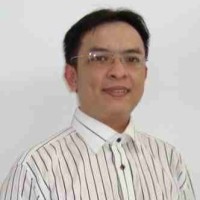 Nguyen Hung Tam
Colleague at Intel CorporationVietnam, Viet Nam
View →
MH
Nguyen Hung Tam
Colleague at Intel CorporationVietnam, Viet Nam
View →
MH
 Manni Huang
Colleague at Intel CorporationShenzhen, Guangdong, China
View →
TP
Manni Huang
Colleague at Intel CorporationShenzhen, Guangdong, China
View →
TP
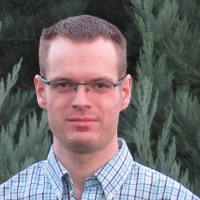 Thomas Phillips
Colleague at Intel CorporationPortland, Oregon, United States
View →
JE
Thomas Phillips
Colleague at Intel CorporationPortland, Oregon, United States
View →
JE
 Joe English
Colleague at Intel CorporationIreland
View →
PV
Joe English
Colleague at Intel CorporationIreland
View →
PV
 Pranjal Verma
Colleague at Intel CorporationFolsom, California, United States
View →
Pranjal Verma
Colleague at Intel CorporationFolsom, California, United States
View →
Brendan Rhoan, Mba
Colleague at Intel CorporationSan Francisco, California, United States
View →
MK
Mohammad Kabir
Colleague at Intel CorporationUrbana-Champaign Area, United States
View →
MM
Madhan Mohan
Colleague at Intel CorporationBengaluru, Karnataka, India
View →
TL
Tianyou Li
Colleague at Intel CorporationShanghai, China
View →
EJ
Edgar Josue De La Peña Munguia
Colleague at Intel CorporationGuadalajara, Jalisco, Mexico
View →
NH
Nguyen Hung Tam
Colleague at Intel CorporationVietnam, Viet Nam
View →
MH
Manni Huang
Colleague at Intel CorporationShenzhen, Guangdong, China
View →
TP
Thomas Phillips
Colleague at Intel CorporationPortland, Oregon, United States
View →
JE
Joe English
Colleague at Intel CorporationIreland
View →
PV
Pranjal Verma
Colleague at Intel CorporationFolsom, California, United States
View →
4 education records
Nariman Piroozan, Phd education
Doctor Of Philosophy - Phd, Chemical Engineering
University Of Southern California
Master Of Science - Ms, Chemical Engineering
University Of Southern California
Bachelor Of Science - Bs, Chemical Engineering
California State Polytechnic University-Pomona
High School Diploma
Concordia Lutheran High School
FAQ
Frequently asked questions about Nariman Piroozan, Phd
Quick answers generated from the profile data available on this page.
What company does Nariman Piroozan, Phd work for?
Nariman Piroozan, Phd works for Intel Corporation.
What is Nariman Piroozan, Phd's role at Intel Corporation?
Nariman Piroozan, Phd is listed as HPC AI and ML Software Engineer at Intel Corporation.
What is Nariman Piroozan, Phd's email address?
AeroLeads has found 1 work email signal at @intel.com for Nariman Piroozan, Phd at Intel Corporation.
Where is Nariman Piroozan, Phd based?
Nariman Piroozan, Phd is based in San Francisco Bay Area, United States while working with Intel Corporation.
What companies has Nariman Piroozan, Phd worked for?
Nariman Piroozan, Phd has worked for Intel Corporation, Air Force Research Laboratory, California State Polytechnic University-Pomona, and University Of Southern California.
Who are Nariman Piroozan, Phd's colleagues at Intel Corporation?
Nariman Piroozan, Phd's colleagues at Intel Corporation include Brendan Rhoan, Mba, Mohammad Kabir, Madhan Mohan, Tianyou Li, and Edgar Josue De La Peña Munguia.
How can I contact Nariman Piroozan, Phd?
You can use AeroLeads to view verified contact signals for Nariman Piroozan, Phd at Intel Corporation, including work email, phone, and LinkedIn data when available.
What schools did Nariman Piroozan, Phd attend?
Nariman Piroozan, Phd holds Doctor Of Philosophy - Phd, Chemical Engineering from University Of Southern California.
What skills is Nariman Piroozan, Phd known for?
Nariman Piroozan, Phd is listed with skills including Spectroscopy, R, Fluid Mechanics, Numerical Analysis, Microsoft Powerpoint, Chemical Engineering, Data Analysis, and Heat Transfer.
Find 750M verified contacts
Search by job title, company, industry, location, and seniority. Export verified B2B contact data when you need it.
Start free trial